Sapta Puri: What are the 7 sacred cities of Hinduism in India?
The Sapta Puri form a group of 7 sacred cities of Hinduism. A major pilgrimage destination, it is said that visiting these holy sites allows one to attain moksha, the liberation from the cycle of
The Sapta Puri form a group of 7 sacred cities of Hinduism. A major pilgrimage destination, it is said that visiting these holy sites allows one to attain moksha, the liberation from the cycle of birth and death. Steeped in mythic legends, history, and millennia-old traditions, these 7 cities invite you to step back in time and explore the true soul of India...
What are the Sapta Puri?
Derived from Sanskrit, the words "sapta" and "puri" translate to "seven" and "cities" (or places). The Sapta Puri thus correspond to the 7 sacred cities of Hinduism in India. These are places where great masters of wisdom and gods were born or lived. Other cities appear on the list because they are considered "Nitya Teerthas," meaning they are naturally endowed with spiritual aura since ancient times.
In Hindu beliefs, the Sapta Puri are important pilgrimage sites. It is said that pilgrims who visit the 7 sacred cities of India can attain Moksha, the liberation from the cycle of birth and death. In other words, Moksha allows one to free themselves from the cycle of reincarnations (samsara).
Did you know?
The number 7 (Sapta) is sacred in India. According to Hindus, the body possesses 7 sources of energy called chakras. It is also found throughout many Hindu rituals and philosophies such as:
- The Sapta Dvipa: the 7 great islands that represent the 7 continents of the earth;
- The Sapta Sindhus: the 7 sacred rivers of India (the Ganges, the Yamuna, the Saraswati, the Indus, the Godavari, the Narmada, and the Kaveri);
- The Sapta Rishi: 7 sages of Hindu mythology who are considered the progenitors of the spirit of Brahmā. They are associated with the 7 stars of the Great Bear...
The list of the 7 sacred cities of Hinduism in India
1. Varanasi
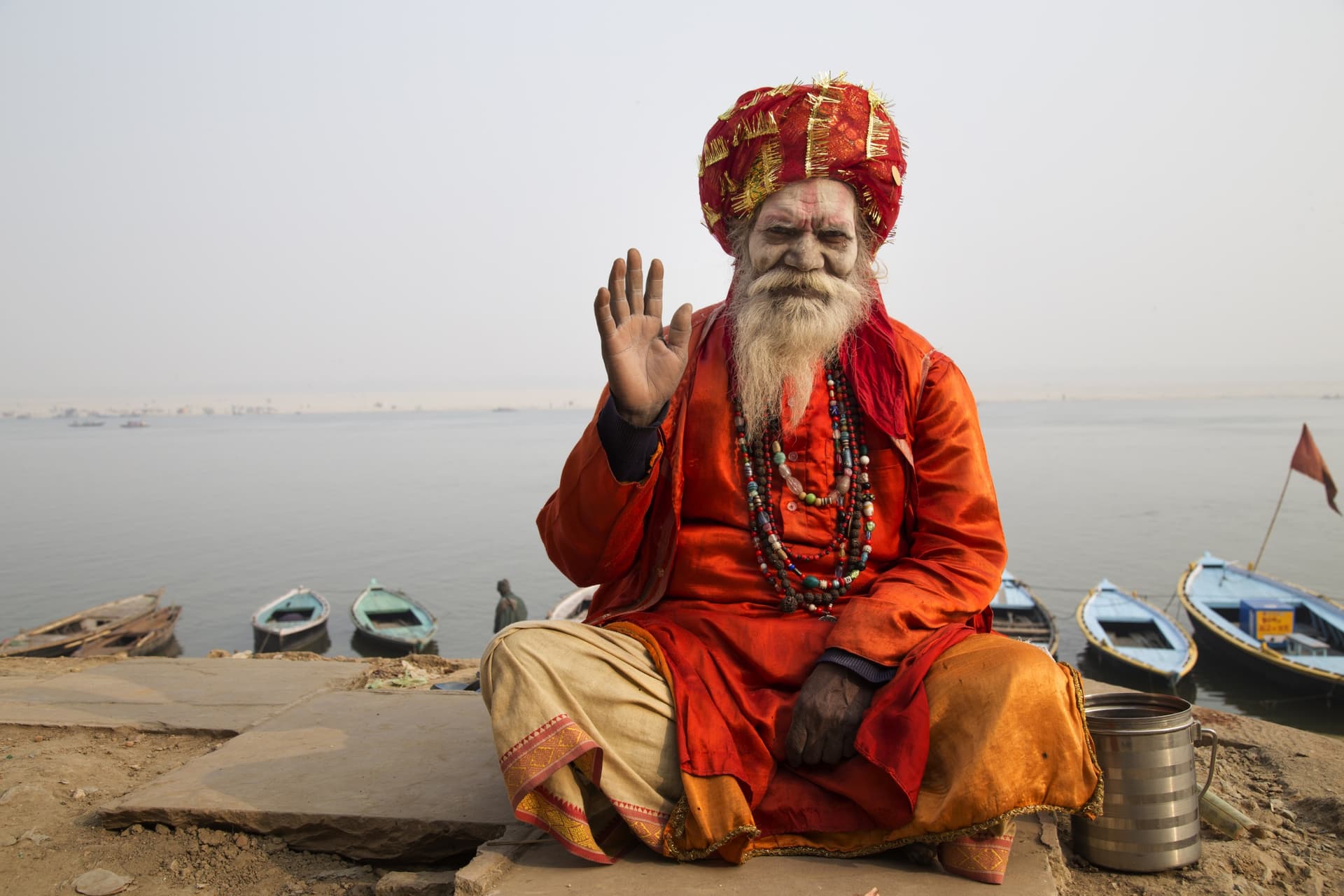
Founded in the 6th century BC, Varanasi is one of the oldest cities in the world. Once known by the names Benares or Kashi (the "City of Light"), Varanasi is regarded as the most sacred city and the spiritual capital of India. And for good reason—Hindu sacred texts recount that the city was created by Shiva himself from atop his resplendent throne. Mentioned in the Ramayana and the Mahabharata, it has since been an important center of Brahmanical learning.
The city is known for its ghats, immense staircases descending into the waters of the Ganges. According to local beliefs, dying in Varanasi allows one to end the cycle of reincarnations. This is why many funeral cremations take place on the ghats. In general, all believers think they must come here at least once in their lifetime to purify themselves in the waters of the Ganges, atone for their sins, and receive the blessing of the God Shiva. Numerous ceremonies take place, such as the Ganga Aarti ritual held daily at the Dashashwamedh Ghat.
Beyond its ghats, Varanasi is known for housing numerous temples. They are estimated to number 23,000. Among the most venerated temples in Varanasi, one can mention the Kashi Vishvanath Temple dedicated to the God Shiva (Golden Temple), the Sankat Mochan Hanuman Temple, the Durga Temple, and the Adi Keshava Temple.
|
Good to know: The region is also an important Buddhist pilgrimage site. Indeed, Buddha is said to have delivered his first sermon after "Enlightenment" at Sarnath, a city located about ten kilometers from Varanasi. |
2. Ayodhya
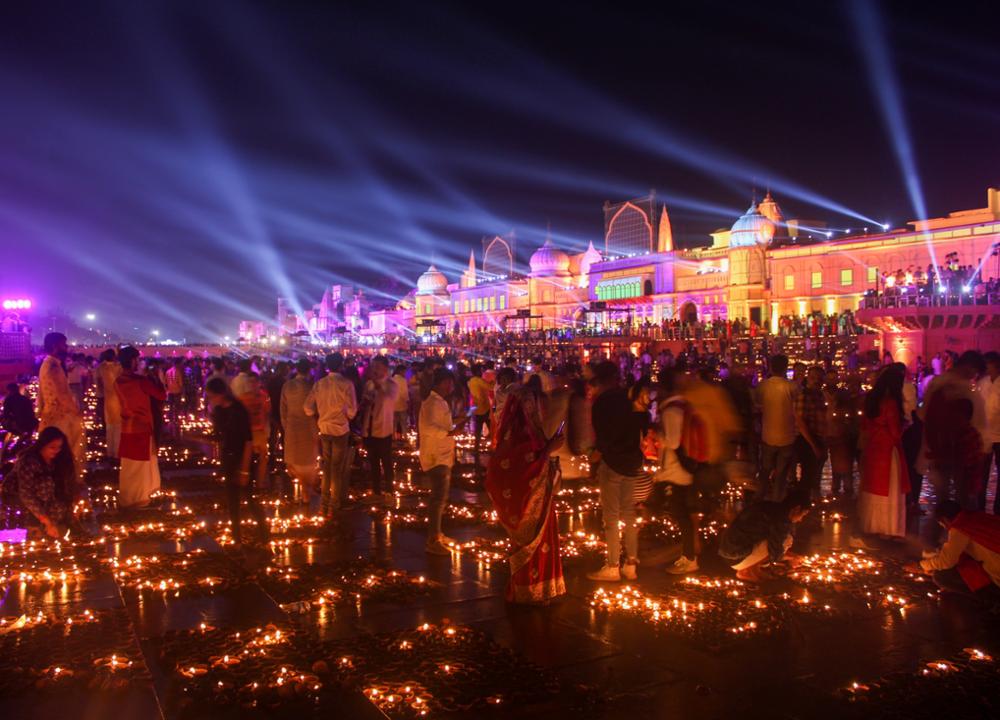
Formerly known as Saketa, Ayodhya is an Indian city situated on the banks of the Sayu River in the state of Uttar Pradesh. It is part of the sacred cities of India because it is considered the birthplace of the God Rama, the seventh avatar of Vishnu and the celebrated hero of the Ramayana. As a reminder, this Sanskrit mythological epic was written between the 3rd century BC and the 3rd century of our era.
It therefore houses numerous temples dedicated to him, the most important of which are the Kanak Bhavan (in honor of Rama and his daughter Sita), the Kshireshwaranath Temple of Sita which was established by Kausalya, Rama's mother, and the Hanuman Temple (Hanuman Garhi) devoted to the Lord Hanuman, the monkey god who dedicated his life to serving the Lord Rama.
Originally, there was also the Temple of Rama's Birth. However, this has been the subject of numerous conflicts for centuries. Indeed, the temple is said to have been destroyed by the Mughal emperor Babur and replaced by a mosque in 1528, known as the Babri Masjid. After many protests and clashes during which the mosque was destroyed, archaeological evidence confirmed the presence of the former temple. It was not until 2019 that the Supreme Court finally allocated the entire land to the Hindu community for the construction of a new temple. The Muslim community, for its part, receives another plot of land.
Beyond its temples, the city boasts numerous kunds (wells) built in honor of characters from the epic as well as ghats, including the famous Lakshman Ghat where Rama's brother is said to have bathed, and the Rama Ghat, also known as Swaragdwar (the Gate of Paradise).
3. Mathura
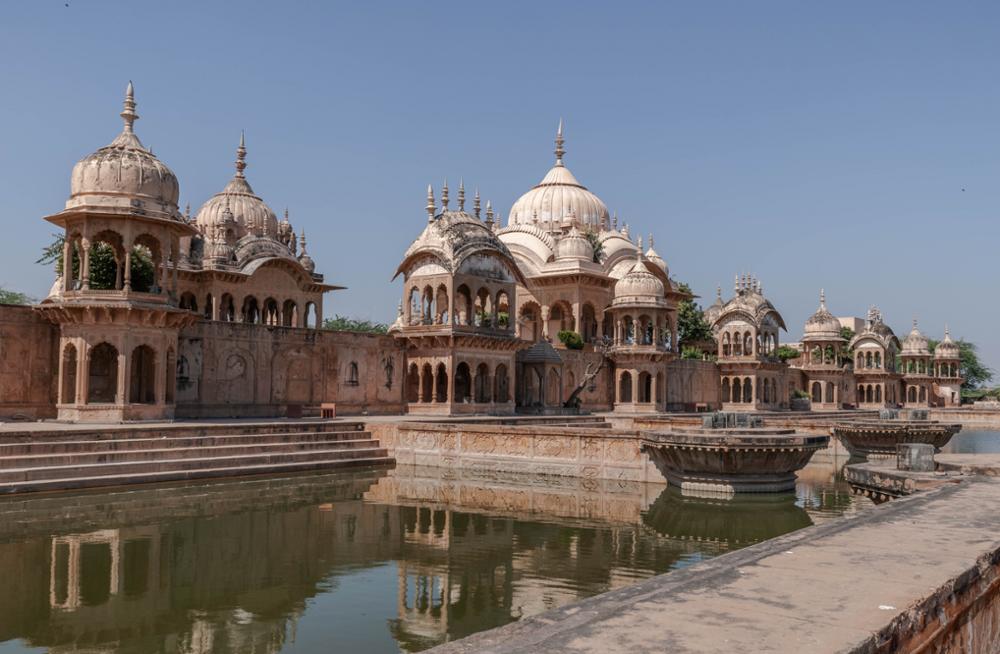
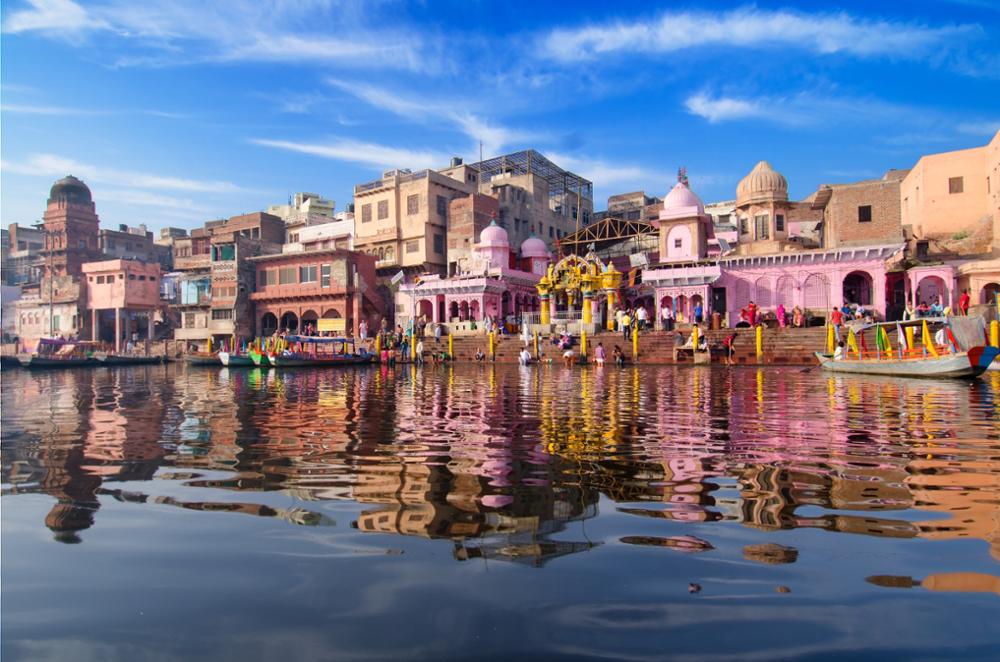
Also located in Uttar Pradesh, on the banks of the sacred Yamuna River, the city of Mathura belongs to the Sapta Puri because of its sacred character. Indeed, it is considered the birthplace of Krishna, the 8th incarnation of Vishnu, one of the most revered gods in Hinduism. He is a mythic figure found in the Bhagavad Gita, the greatest sacred text of Hinduism dating from the 2nd century BC.
The city is home to numerous temples, including the famous Krishna Janma Bhoomi, where Krishna is said to have been born. In reality, it is a complex comprising several temples. One of them, the Keshav Dev, is the subject of controversy, just as in Ayodhya. It is said to be built on the same site as the one constructed 5,000 years ago by Vajranabha, Krishna's great-grandson. Destroyed and rebuilt many times, a mosque was erected there by the Mughal emperor Aurangzeb. Since then, the mosque has coexisted with the temple, and many Hindus are engaged in a legal dispute to restore its original structure.
Among the other sites of importance in the city, one also finds the Potra Kund, one of India's oldest basins (or wells), where Krishna's clothes are said to have been washed, and the Vishram Ghat where he rested after killing King Kamsa. In the surrounding area, the city of Vrindavan is also an important pilgrimage site since Krishna is said to have spent part of his childhood there.
4. Haridwar
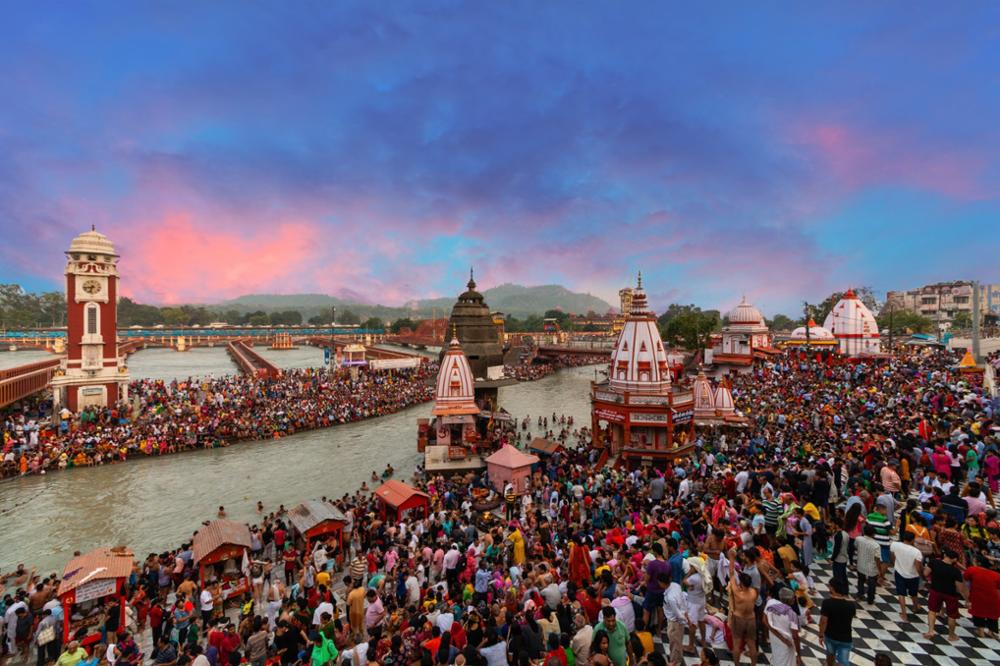
Haridwar is among the most mythical cities in northern India. Nicknamed the "Gate of the Ganges," this is where the Ganges leaves the mountains of the Himalayas, where its source is located, to enter the plains of India. According to local beliefs, this is where the goddess Ganga came to earth after King Bhagirath prayed to Shiva to help his ancestors atone for their sins.
The city is notably known for its ghat Hari Ki Pauri, built at the exact spot where the Ganges descends into the plains. There is a rock upon which the footprints of Vishnu are imprinted. Thousands of pilgrims visit each year.
According to legend, Haridwar is one of 4 sites (along with Ujjain, Nasik, and Prayagraj) where drops of Amrita (the elixir of immortality and drink of the gods in Hinduism) were spilled by the celestial bird Garuda after the churning of the cosmic oceans.
Finally, one cannot speak of the city of Haridwar without mentioning the Kumbh Mela. This is a major Hindu pilgrimage held every 12 years in the city as well as in Allahabad, Ujjain, and Nashik. It is the world's largest religious and human gathering, during which millions of pilgrims come to bathe in the waters to purify themselves of their sins.
5. Kanchipuram
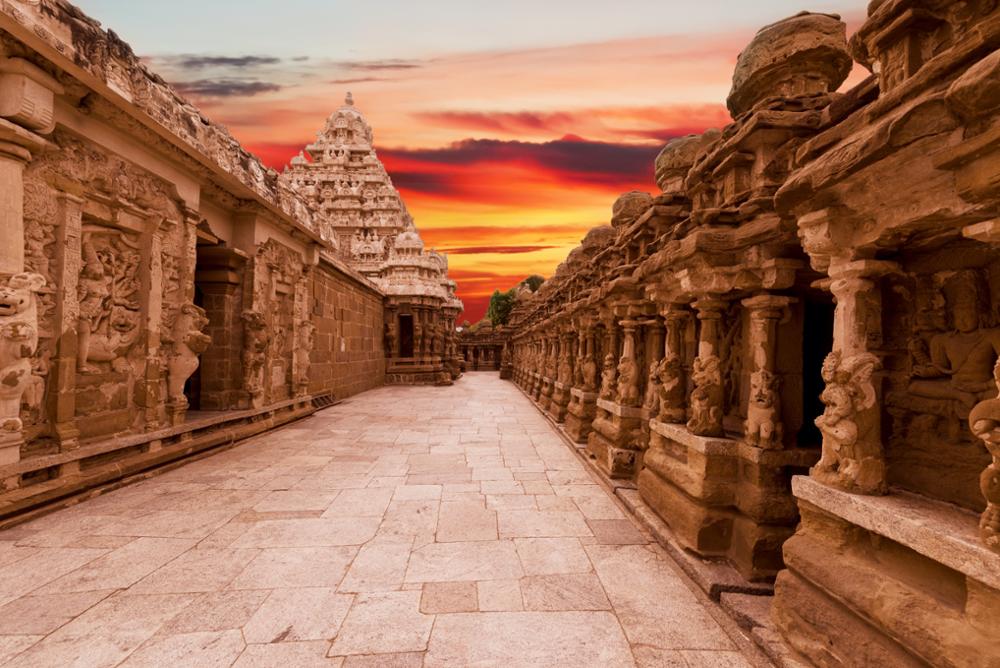
Heading to Tamil Nadu state to discover another city of the Sapta Puri and one of the must-see cities in South India: Kanchipuram. Located on the banks of the Palar River, the city boasts an architectural heritage spanning over 1,000 years, including temples dating from the 6th and 8th centuries.
Nicknamed "the city of a thousand temples," the city actually houses around a hundred temples, primarily Shaivite and Vaishnava temples, the two major streams of Hinduism. There are also structures dedicated to Jainism and Buddhism, which underscores how much the city has always been a pluralistic religious center.
The temples are distributed across 3 zones: temples of Vishnu in the Eastern zone, sanctuaries of Shiva at the city's periphery in the Northern zone, and Jain mandirs in the South of the city, on the other side of the Palar River.
Among the most famous is the Kailasanatha Temple. Considered one of the most beautiful temples in India, it is associated with Adi Shankara and was erected in the 8th century by King Rajasimha Narasimhavarman II. According to legend, the goddess Shakti, in the form of Kamakshi, built a heap of sand on the site and offered prayers to Shiva so that she could become his consort.
6. Ujjain
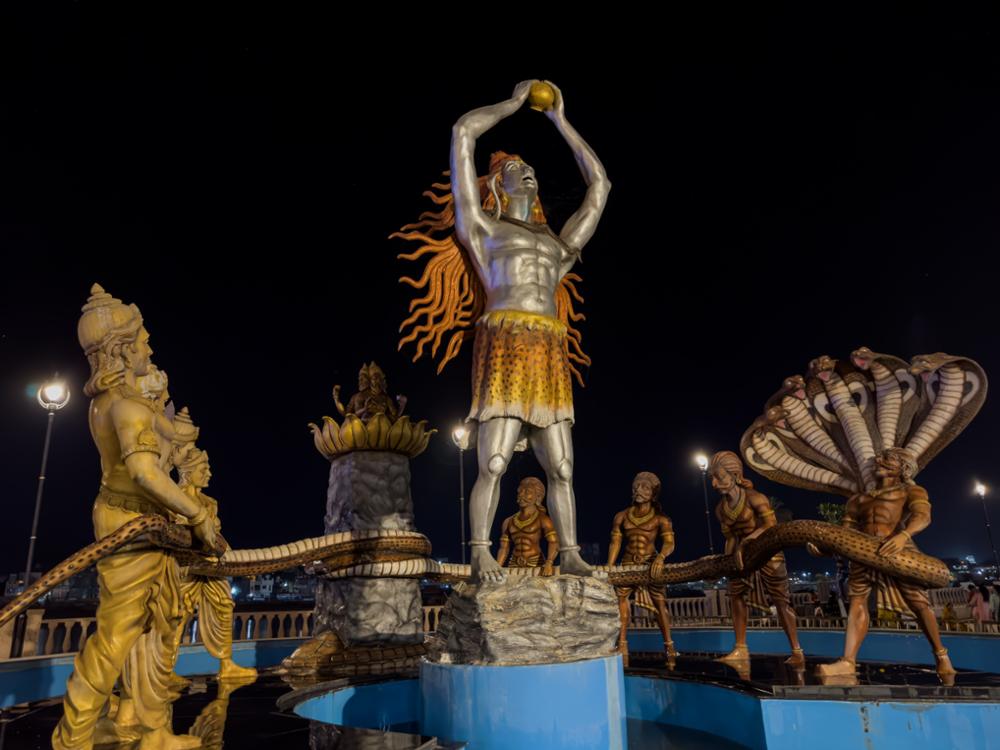
Located on the right bank of the sacred Kshipra River, one of the tributaries of the Ganges, in Madhya Pradesh, the city of Ujjain was formerly called Avantika. Its current name comes from the word "Ujjainyini," which means "to conquer with pride." It refers to the religious tradition of the city which recounts that this is where the god Shiva killed the demon king Tripuasura.
But that is not the only reason for its inclusion on the list of holy cities of India. In reality, the city is sacred in various respects.
On one hand, it is home to the Mahakaleshwar Jyotirlinga, a Hindu temple dedicated to Shiva and one of the twelve Jyotirlingas (or lingams of light), that is to say, sanctuaries considered the most sacred dwellings of Shiva. On the other hand, the city is the place where Krishna, Balarama, and Sudama received their education from Sandipani.
The city is also considered the home of the Hindu goddess Harsiddhi, one of the 51 Shakti Peetha. Finally, Ujjain is also one of the cities that hosts the Kumbh Mela (also spelled Kumbha Mela) just like Prayagraj, Haridwar, and Nashik.
It should be noted that the city of Ujjain has been a center of astronomy since ancient times. The Ved Shala observatory, built by Maharaja Jai Singh II, perfectly testifies to the astronomical importance of the city.
7. Dwarka
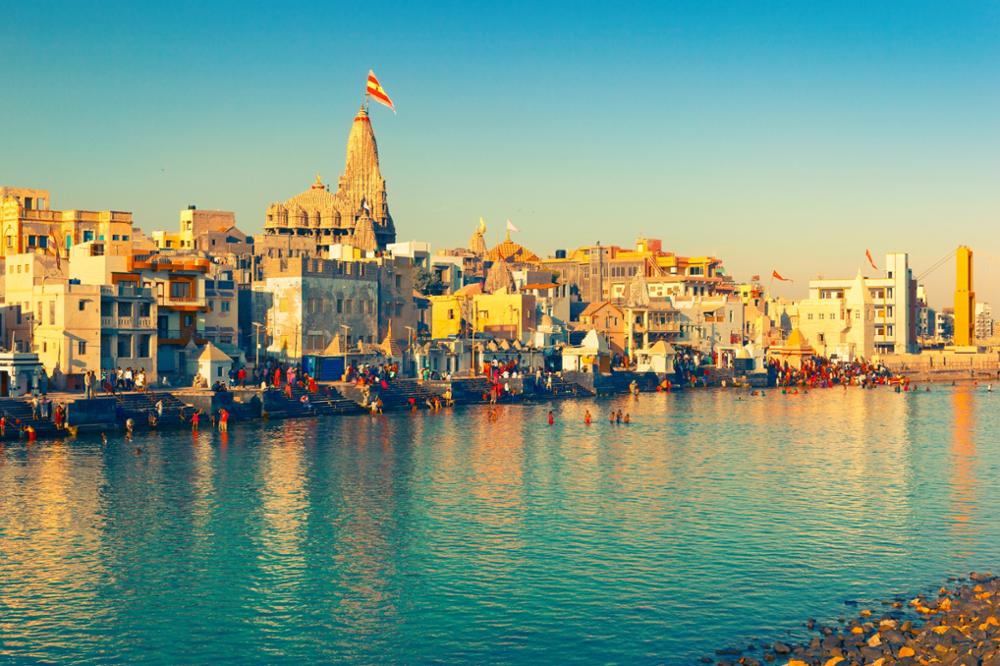
Situated on the shores of the Arabian Sea, in the state of Gujarat, the city of Dwarka is the last city belonging to the Sapta Puri. Why? It was the residence of Krishna until his death. Indeed, the Bhagavata Purana recounts that Krishna migrated from Mathura to Dwarka 5,000 years ago to make it his capital.
It is believed that the city was designed by Vishvakarma, the architect of the gods, using the finest materials. Upon Krishna's death, the city was submerged by the sea. Whether one believes in the divine or not, archaeological excavations have truly proven the presence of the remains of a city buried beneath the waters.
Among the sacred sites not to miss in the present-day city, one can mention the Jagat Mandir, more commonly called the Dwarakadheesh Temple. It is the oldest temple in the city: its original structure is said to have been built by Vajranabha, Krishna's great-grandson. Destroyed and rebuilt many times throughout history before being submerged, it today consists of a 7-story structure, standing 43 meters high.
The city is also associated with Mirabai, a holy poetess who renounced material life to dedicate herself to worshipping Krishna. She spent the last years of her life in Dwarka during which she wrote the famous love poems celebrating Krishna.
Would you like to discover the holy and sacred cities of India? Feel free to contact us to organize your journey along the route of the Sapta Puri. We can plan a tailor-made itinerary according to your wishes and budget!