The 12 Most Beautiful Temples in India: Architecture & Spirituality
A great religious nation, India is dotted with sacred sites dedicated to divinities. Whether Hindu, Buddhist or Sikh, these edifices feature stunning traditional (or modern) architecture and
A great religious nation, India is dotted with sacred sites dedicated to divinities. Whether Hindu, Buddhist or Sikh, these edifices feature stunning traditional architecture (or modern) and offer devotees places of contemplation where ancestral customs endure. Discover the 12 most beautiful temples in India, from north to south, passing through the west – and the dress code to observe when visiting.
1. Golden Temple (Punjab): India's Largest Sikh Temple
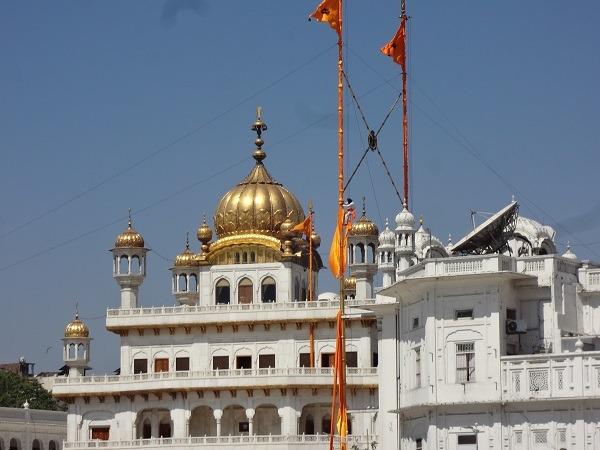
Known as the Golden Temple because of its gilt facades, Harmandir Sahib is the most sacred temple of Sikhism – the world's fifth-largest religion. In 2011, it represented 21 million Sikhs in India, roughly 1.7% of the population.
The edifice, located in the province of Punjab, was built in the 17th century by the fifth spiritual master of the Sikhs, Guru Arjan. The location was chosen at the very spot where the first Guru would meditate. It was destroyed twice (in 1757 and again in 1984) before being rebuilt.
The temple is situated at the base of the city to signify that it welcomes all disciples, regardless of rank. As for the architecture? You can admire its white marble domes and superb golden sanctuary, reflected in the waters of the sacred pool Amrit Sarovar.
Harmandir Sahib is a vast complex, comprising several Sikh places of worship (gurdwâras), as well as langars (refectories) where meals are distributed to all (pilgrims, locals, tourists) for communal purposes. More than 30,000 meals are served each day!
|
Practical Information ● Address: Atta Mandi, Katra Ahluwalia, Amritsar, Amritsar Cantt., Punjab 143006, India ● Opening hours: open 24/7 ● Entry: free ● Notable event: the Palki ceremony (held in the evening) or an opportunity to listen to sacred hymns (kirtan). ● To know: all visitors, men or women, must cover their heads to enter the temple. |
CTA
Looking to take a spiritual journey through India? Discover our custom-tailored itinerary!
Between sacred temples and leading meditation sites, our English-speaking local agency guides you through the emblematic sites of Indian spirituality… To refocus on what truly matters – and without organizational concerns.
2. Akshardham (Delhi): The New Temple with IMAX Cinema
Located on the banks of the Yamuna River in Delhi, this Hindu temple is quite recent, with construction completed in 2005. It was built by more than 7,000 workers (and 3,000 volunteers), as a tribute to the founder of the modern Hindu movement, Swaminarayan. Its architecture blends traditional and modern India…
Indeed, beyond its religious structures, the complex features musical fountains, exhibition halls (where you'll discover notably the life and journey of the Hindu founder, as well as art exhibitions), themed gardens, and even an IMAX cinema.
The entire complex spans approximately 400,000 m² (of which 8,021.4 m² for the temple itself) and is recognized by Guinness World Records as the world's largest complete Hindu temple. Akshardham is also an important pilgrimage site, where many devotees come to meditate and participate in ceremonies.
|
Practical Information ● Address: NH 24 Pramukh Swami Maharaj Marg, New Delhi, Delhi 110092 ● Getting there: located 45 km from Delhi railway station ● Opening hours: Tuesday to Sunday, 10 a.m. to 6:30 p.m.; exhibitions from 11 a.m. to 6 p.m. ● Best time to visit: in the evening, from 7:30 p.m., you can enjoy a water and light show. ● Entry: free ● To know: all visitors, men or women, must cover their heads to enter the temple ● Official website: https://akshardham.com/ |
3. Mahabodhi (Bodh Gaya): A Buddhist Temple on UNESCO's List
Located in the state of Bihar, the Mahabodhi temple is renowned as one of four sacred sites associated with Buddha's life. The first temple, built in the 3rd century BC by Emperor Ashoka, is not the one we know today.
The current temple dates from the 5th or 6th century. It is also one of the oldest Buddhist temples in India that has not been destroyed. Just behind the temple, you'll find the Bodhi tree.
The site has been inscribed on UNESCO's World Heritage List since 2002 as "one of the rare surviving examples of ancient brick construction in India."
|
Practical Information ● Address: Bodh Gaya, Bodh Gaya, Bihar 824231, India ● Getting there: the temple is accessible by train and car from Gaya (17 km) ● Opening hours: daily from 6 a.m. to 12:30 p.m. and 4 p.m. to 8:30 p.m. ● Entry: free ● Notable events: in December (or January according to the lunar calendar), the Bodhi Puja is celebrated; a ritual during which pilgrims sing prayers and make offerings at the foot of the Bodhi tree (in honor of Buddha's enlightenment). ● Official website: https://bodhgayatemple.com/ |
4. Jagannath (Odisha): A Major Pilgrimage Destination
In the state of Odisha, you'll find the Jagannath temple. Built in the 12th century in honor of the eponymous god, it is a major pilgrimage site as it is one of four temples that Hindus must visit during the Char Dham – a pilgrimage to sacred temples that every Hindu should make at least once in their lifetime.
The edifice was designed in the pure Kalinga architectural style (the traditional style of Odisha), featuring imposing towers (shikharas), stone sculptures, and a hall for the faithful situated in front of the sanctuary.
|
Practical Information ● Address: Puri, Puri, Odisha 752001, India ● Opening hours: the temple is open daily, but entry is restricted to Hindus. Non-Hindu visitors can only view it from the outside. ● Notable event: the Ratha Yatra festival (in June). On this occasion, you can witness processions outside the temple. |
5. Sun Temple (Konark): One of the Country's Most Spectacular Temples
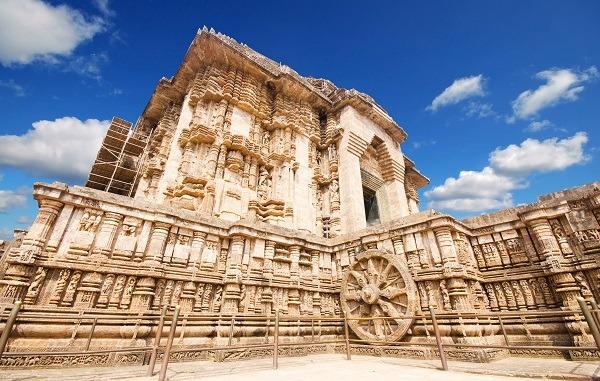
Still in Odisha, venture to discover the Temple of Surya. Dedicated to the Sun God in Hindu mythology, it was erected in the 8th century by King Narasimha Deva I of the Ganga dynasty. The entire temple represents the chariot of this Sun god. It consists of 24 wheels and is pulled by 7 horses.
The site has been inscribed on UNESCO's World Heritage List since 1984 and is considered one of the most impressive in the country – it welcomes nearly 2.5 million visitors annually! You can admire its Kalinga-style architecture, numerous pillars, and ornaments depicting deities (mythological creatures, gods, animals, etc.).
|
Practical Information ● Address: Konark, Konark, Odisha 752111, India ● Opening hours: daily, from sunrise to sunset (6 a.m. to 8 p.m.), but closed to the public during prayer hours (12 p.m. to 4 p.m.). ● Entry: entry is 600 rupees for foreign visitors (approximately €6); much cheaper for locals (30 rupees). Free for children under 15. ● Notable event: the Konark Dance & Music Festival (in February), which celebrates traditional Indian dance and music. Performances do not take place within the temple grounds, but the temple serves as a backdrop for the performances. ● Dress code: men and women must remove their shoes at the entrance and wear long clothing (sleeves and pants/skirt). ● Note: photography is prohibited inside the building |
6. Annamalaiyar (Tiruvannamalai): One of the Pancha Bhoota Sthalams
The Annamalaiyar temple (also called Arunachaleswarar) was built in the 9th century in the state of Tamil Nadu, approximately 100 km west of Pondicherry. This site is an important pilgrimage destination for Hindus and particularly for followers of Shaivism – a branch of Hinduism.
The temple belongs to the Pancha Bhoota Sthalams, a religious ensemble comprising five of the largest temples dedicated to the god Shiva in South India. Each of the temples symbolizes one of the five elements:
- Fire (Agni): Annamalaiyar temple,
- Earth (Prithvi): Ekambareswarar temple,
- Water (Apas): Jambukeswarar temple,
- Air (Vayu): Srikalahasteeswara temple,
- Ether or space (Akasha): Nataraja temple.
The temple extends across 10 hectares and stands out for its six towers 66 meters high!
|
Practical Information ● Address: Pavazhakundur, Tiruvannamalai, Annamalai R.F., Tamil Nadu 606601, India ● Getting there: accessible from Tiruvannamalai railway station located 2 km away ● Opening hours: daily from 5 a.m. to 12:30 p.m. and 3:30 p.m. to 9:30 p.m. ● Entry: free (but donations welcome) ● Notable events: daily, six rituals are performed in the temple. The building also hosts the Karthigai Deepam festival annually (between November and December). Fire is lit for the occasion: it symbolizes Shiva in the form of cosmic light. Many processions can then be witnessed. ● To know: photography is not permitted inside the establishment |
7. Kailasanatha (Kanchipuram): The Most Beautiful Temple in Tamil Nadu
Renowned as the most beautiful temple in Tamil Nadu, the Kailasanatha temple was erected in the 8th century by King Rajasimha Narasimhavarman II. Dedicated to Shiva, it houses numerous sculptures from Indian mythology carved in stone.
Traces of ancestral wall paintings and numerous wall ornaments can still be seen on the exterior facades. Located outside the city, the temple sits in a quiet area, far from tourist crowds.
|
Practical Information ● Address: Pillaiyarpalayam, Karuppadithattadai, Tamil Nadu 631502, India ● Opening hours: daily from 9 a.m. to 12:30 p.m. and 4 p.m. to 6:30 p.m. ● Notable event: the Kailasa temple hosts the Maha Shivaratri festival every year in February-March. This event, in honor of Shiva, is an opportunity to see processions (and the temple illuminated). ● To know: photography is not permitted inside the establishment |
8. Brihadishvara (Thanjavur): A Temple and Monkeys
Also dedicated to Shiva, the Brihadishvara temple is one of the largest in South India. Built in the 11th century by Emperor Rajaraja Chola, it is part of the three "Living Great Chola Temples" along with the Rajendreshvara and Airavatesvara temples. It was also the first of the three to be inscribed on the World Heritage List in 1987.
According to UNESCO, the complex is a remarkable "architectural design of the pure form of the Dravidian temple type" – a type of temple architecture originating from South India.
Another asset? The temple is renowned for its animal colonies. Squirrels, parakeets, and monkeys can be spotted in its surroundings!
|
Practical Information ● Address: Balaganapathy Nagar, Thanjavur, Tamil Nadu 613001, India ● Opening hours: daily from 6 a.m. to 12:30 p.m. and 4 p.m. to 8:30 p.m. ● Entry: free ● To know: photography is allowed with smartphones. For videos or photos taken with actual cameras, however, authorization is required. |
9. Laxminarayan (Birla Mandir): A Temple Inaugurated by Gandhi
The first major Hindu temple built in the Indian capital, this temple is dedicated to Laxminarayan, a form of the Hindu god Vishnu. When its construction was completed in 1939, the site was inaugurated by Mahatma Gandhi. The event, open to all, broke social barriers by welcoming people from all walks of life.
The temple (also called Birla Mandir) attracts thousands of devotees annually during the festivals of Janmashtami and Diwali, two major religious events. The rituals and prayers then celebrate Shiva, as well as other deities such as Buddha or Krishna.
|
Practical Information ● Address: Shri Sanatan Dharma Sabha Lakshmi Narayan Temple Trust, (Birla Mandir) Mandir Marg New Delhi -110001 ● Opening hours: Monday to Saturday, 4:30 a.m. to 1:30 p.m. and 2 p.m. to 9 p.m. Sunday 4:30 a.m. to 9 p.m. ● Entry: free (donations appreciated) ● Notable events: the Janmashtami and Diwali festivals ● To know: it is mandatory to cover your legs and arms to enter the temple and to remove your shoes at the entrance. |
10. Sri Ranganathaswamy (Srirangam): The Largest Temple in the World
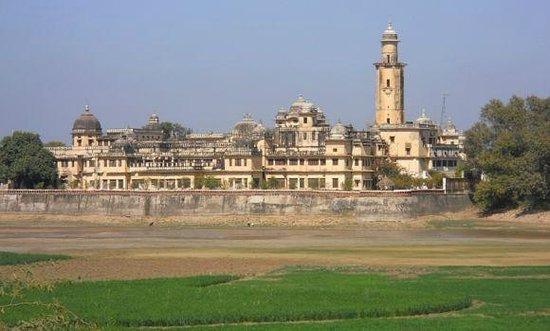
Dedicated to Ranganatha (a form of Vishnu – a Hindu god), Sri Ranganathaswamy is a temple featuring Dravidian architecture. Spanning over 600,000 m², this vast religious complex is one of the largest Hindu temples in the world (still in use) – while the Angkor complex, located in Cambodia, is the largest without active worship.
It stands out for its seven prakarams (concentric walls) with a total length of 9,934 meters and its stunning hall of thousand pillars adorned with superb sculptures.
Every year, in June-July (the month of Aani), the temple organizes the Jyestabishekam Festival, lasting three days. On the first day, the statues of the icons are adorned with diamond armor, on the second with pearl armor, and on the third with gold armor!
|
Practical Information ● Address: Srirangam, Tiruchirappalli, Tamil Nadu 620006, India ● Getting there: the temple is located 12 km from Central railway station and 5 km from the Chathiram Bus Stand. ● Opening hours: daily from 6 a.m. to 9 p.m. (note that certain hours are dedicated to prayer). ● General entry: free ● Specific entries: there are also paid entries. ● To know: tourists are allowed to enter the building, but access stops at the sixth prakaram (before the sanctuary). ● Official website: https://srirangamranganathar.hrce.tn.gov.in/ |
11. Minakshi (Madurai): A Treasure of Dravidian Architecture
In Tamil Nadu, you'll also find the Minakshi temple, an architectural masterpiece of Dravidian style. A major pilgrimage site, it is also one of the largest active Hindu temples. Construction took 120 years (1560 – 1680)! It is dedicated to Shiva and Minakshi (the avatar of his wife Parvati).
In Hindu religion, Shiva is a male god. He is one of the three principal deities, along with Brahma and Vishnu. In his Ardhanarishvara form (another symbolic form), Shiva is half-man and half-woman (Parvati).
|
Practical Information ● Address: Madurai Main, Madurai, Tamil Nadu 625001, India ● Opening hours: daily from 6:30 a.m. to 8:30 p.m. ● Entry: free ● Notable events: every year in April, the temple organizes the Minakshi Thirukalyanam festival and celebrates the wedding of the divine couple of Minakshi. Several major events are held on this occasion, including the chariot festival (Ther Thiruvizha). |
12. Virupaksha (Hampi)
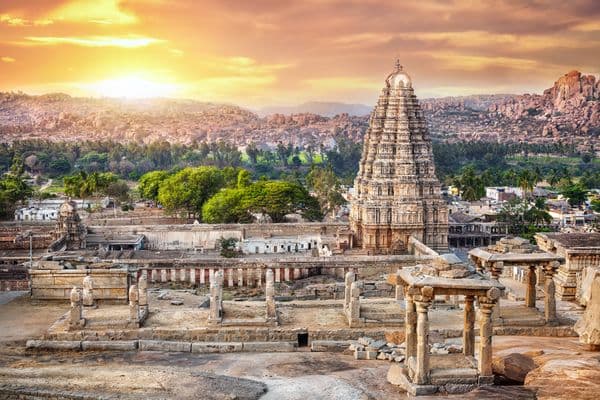
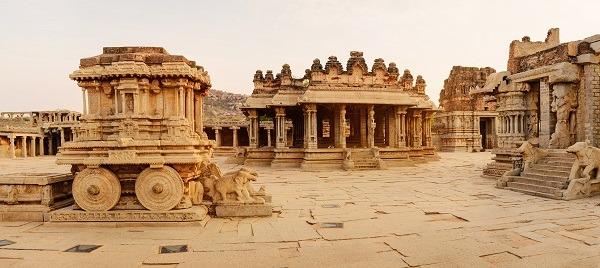
The Virupaksha temple, dedicated to Shiva, was built in the 7th century by clan chief Lakkan Dandesh in the Karnataka region. It is the oldest temple in the city. It is part of the monumental complex of Hampi, which is listed as a UNESCO World Heritage site.
Initially, in the 7th century, the site was a simple sanctuary that transformed into a vast religious complex over time. You can notably admire icons and a central pillar hall, called Ranga Mandapa. The site welcomes a large number of pilgrims throughout the year.
|
Practical Information ● Address: Hampi, Karnataka 583239, India ● Opening hours: daily from 6 a.m. to 12 p.m. and 4:30 p.m. to 9 p.m. ● Entry: paid (approximately €5.50/pers.) ● Notable event: the festival celebrating the divine wedding of Virupaksha and the goddess Pampa (in December). ● Official website where you can buy tickets online: |
How to Dress and Behave When Visiting a Temple in India?
To respect Indian religious beliefs, it is important to adopt a specific dress code before entering a temple. Regardless of faith (Hinduism, Sikhism, Buddhism, Jainism), you must:
- cover your arms and legs (even men cannot wear shorts)
- remove your shoes at the entrance (there is often a designated cloakroom). Alternatively, put your shoes in your bag, but don't leave them in the entrance.
Moreover, each religion has its own additional rules. For example, it is:
- mandatory to cover your head in a Sikh temple (even men) – it is possible to use a shawl, turban, or scarf.
- forbidden to enter with leather items in certain ancient and very traditional temples (leather being considered impure).
Photography is often prohibited in active temples. However, it is sometimes allowed outside the sanctuaries (where the faithful pray) or only with a smartphone (actual cameras or professional equipment being prohibited).
Frequently Asked Questions
What is the largest Hindu temple in India?
With over 600,000 m², the Srirangam temple, located in the state of Tamil Nadu, is the largest active Hindu complex in India. It is a major pilgrimage site dedicated to Vishnu. It is renowned for its impressive gopurams, tall towers typical of traditional architecture.
Are women allowed to visit temples in India?
Historically, women aged 10 to 50 were not allowed to enter temples, as they were considered "impure" during their menstrual cycle. Furthermore, their presence violated the celibacy vow of the deity Ayyappa (as in the Sabarimala temple). Since 2018, these restrictions have been completely prohibited by the Indian Supreme Court.
Can non-Hindus visit all temples?
Some religious buildings prohibit entry to non-Hindu visitors (with the exception of Sikh and Buddhist temples). Generally, this restriction applies from the kodimaram: an architectural element located just before the entrance to the main sanctuary (garbhagriha). It marks a symbolic boundary. Beyond it, the space is reserved for the faithful. Signs often indicate to foreigners not to go past this limit.