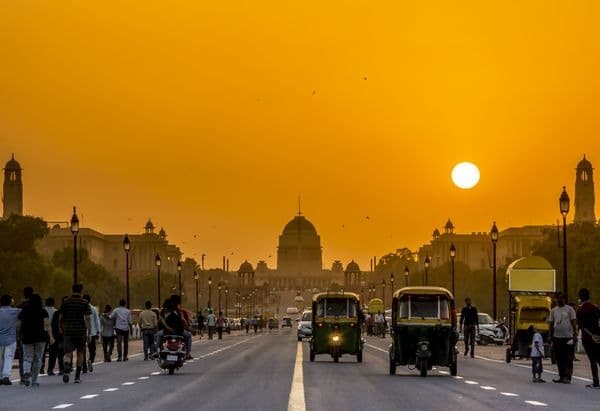
New Delhi, a Survival Guide for English-speaking Interns
As summer arrives, New Delhi welcomes a wave of new expatriates: interns, students, and young professionals. Their questions span housing, budgeting, and health. Here are essential guidelines and insider t
As summer arrives, New Delhi welcomes a wave of new expatriates: interns, students, and young professionals. Their questions are as varied as they come—housing, budgeting, healthcare. Without claiming to answer everything, this guide reviews the most common questions and provides essential reference points.
Where to settle?
"People often ask me which neighborhoods are nice, which ones to avoid, and which are the most affordable," says Guillaume Fauché, a student who helps newcomers willingly. He's even left his email address on the Delhi Welcome website for their benefit.
A large portion of expatriates live in South Delhi, in residential and green neighborhoods. To give you an idea if you've never been to New Delhi before, these are houses or small buildings of no more than four stories on tree-lined streets, more or less green and peaceful depending on the area. Each neighborhood has one or more markets to meet all your needs.
How do you find an apartment or room?
This is THE essential question. Without being exhaustive, there are a few starting points to consider. Clara Kanner, who has been in Inde for over six months, sums it up this way: "You either go through a broker (real estate agent) whom you pay to find an apartment, or look for a roommate situation on forums—there are plenty. The ideal approach is probably to get hosted when you arrive or stay in a guest house while you visit rooms yourself and meet people, rather than trying to settle everything from home".
Unless you know people already settled in New Delhi, all interns first turn to forums and information sites such as the France India forum, the Yahoo Yuni Net group, or the French expatriate site Delhi Welcome, to name the most well-known. You can easily find local contacts, answers to your questions, and future roommates there.
Keep in mind that brokers typically charge one month's rent as commission. For shorter periods, particularly for internships of a few months, shared housing is the better option—it's friendly and more affordable. As a ballpark figure, expect between 10,000 and 20,000 rupees per month (€150 to €300) to share a pleasant apartment where typically each roommate has their own bedroom with bathroom, and only the kitchen and living room are shared.
How much does it cost to live in New Delhi?
On a typical student budget, you can live here like royalty. And with just a handful of euros per week, you can get by quite comfortably. For example: €2 for delivered pizza, €1 or €2 for an Indian meal at home or from a street vendor. Budget €8 for a meal at a Western-style restaurant. A bottle of water costs 12 rupees (€0.18), as does a loaf of packaged bread. A cinema ticket costs €2.20. A train ticket for a trip to Rishikesh costs €7.
"I'd say I spend between 100 and 250 rupees per day (€1.50 to €3.60), depending on entertainment," estimates Clément Fourreau, who arrived three months ago. Electricity, water, and internet bills remain the biggest expense, though still considerably less than in France.
For getting around, the most practical and cost-effective transport remains the auto-rickshaw. A fifteen-minute ride costs around 40 rupees.
Should I pack a pharmacy?
After reading through the health page of the Foreign Ministry about Inde, we all felt a little panic—completely unjustified, particularly for those who will be living in New Delhi.
Thus, expatriates taking antimalarial medication are quite rare. Zero risk doesn't exist, of course, but the cost and long-term side effects of the treatment often aren't worth it. Dengue, on the other hand, does more damage. But the only protection against it is mosquito prevention.
Disinfectant, paracetamol, and a few remedies for diarrhea are always useful, but if you get sick in New Delhi, you'll visit a good doctor who will tell you how to care for yourself and what medications to buy. There's no need to pack a large pharmacy.
Smart packing and things you can't find in Inde
There's almost nothing you can't find in a large city like New Delhi. As the Indian saying goes: In India, Everything is possible. It's better to ask what you won't bring.
Skip the mosquito repellent—€9 for a spray in France—Odomos, the Indian equivalent, is just as effective, costs a fraction (around €1 per tube), and smells pleasant. Women will also find sanitary pads and tampons available locally.
You can bring your mobile phone and have it unlocked in Inde to use very affordable Indian SIM cards.
Clothes? Very few. Inde is the perfect opportunity to refresh your wardrobe at unbeatable prices—even custom-made! The real question is how you'll fit everything back in your luggage!
A final thought on psychological preparation?
In Inde, extreme wealth sits alongside extreme poverty. Knowing this is one thing; preparing for it is another matter. Everyone reacts differently, and you can't necessarily know in advance what will shock or frighten you. Moreover, the unexpected reigns supreme on the subcontinent, and nothing truly prepares you for it. That's also the charm of this country.
Welcome to Inde…