Indian trains: a complete adventure... to prepare well!
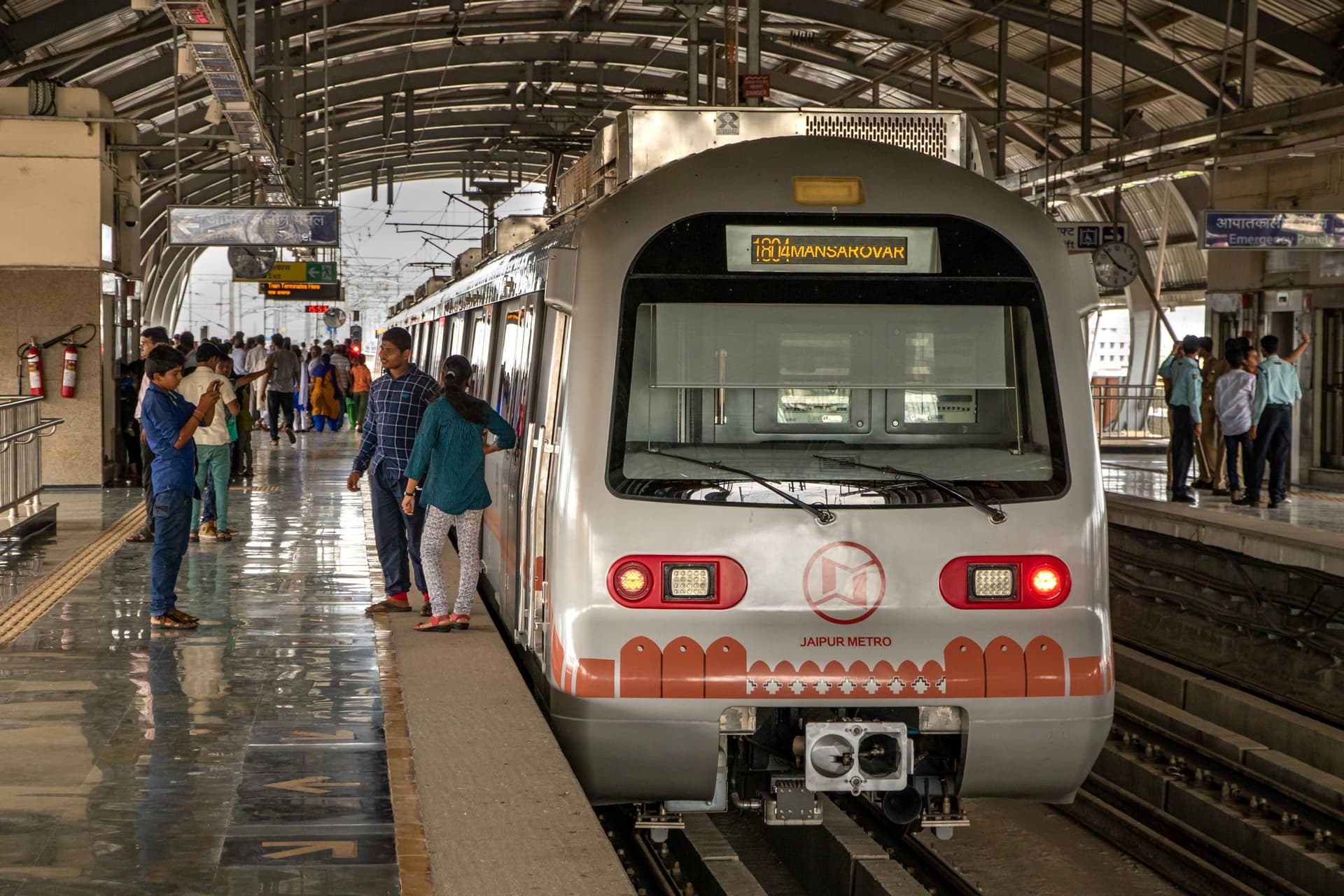
With more than 60,000 km of railway and 7,000 stations, India boasts one of the world's largest railway networks. Each year, 5 billion people travel between major cities or throughout regions!
With more than 60,000 km of railway and 7,000 stations, India boasts one of the world's largest railway networks. Each year, 5 billion people travel between major cities or throughout regions! Forward planning is therefore an essential element… Train types, classes, booking and waiting lists: discover our tips for taking the train in India.
1/ Understanding Indian train types and classes

The main railway company in India is Indian Railways (IR). It is a public company that manages virtually the entire railway network of the country (and its 7,500 stations). It transports more than 20 billion passengers per day!
Train types
There are several types of trains. It is important to note that these are not particularly fast (even trains dubbed Express or SuperFast). The main categories of trains are:
Express trains
This type of train is the equivalent of France's high-speed rail. This category connects the most important cities in the country and offers good travel conditions. Some routes sometimes make stops at intermediate stations. It is a fast and comfortable option.
Passenger trains
Passenger trains are those that operate more locally (regionally) and serve all stations along the route. Inexpensive, these trains are hugely popular with local travelers, who often lack the budget for higher-end trains.
These trains allow you to travel among the local population and experience genuine authentic moments, but they are not very comfortable – and lack air conditioning. Furthermore, they are quite slow (some run at 40 km/h!), with irregular schedules.
Luxury trains
Luxury trains are somewhat separate. Their routes are managed by Luxury Trains India. These are very (very) high-end trains. Among the main lines:
● Palace on Wheels,
● The Maharaja Express,
● Royal Rajasthan on Wheels,
● Golden Chariot,
● Deccan Odyssey, etc.
Less authentic than Indian Railways trains, they promise a thoroughly comfortable journey (inspired by royal splendor) and will give you the impression of being a maharaja for the duration of your trip – with refined cuisine, modern amenities and exceptional services (onboard hair salon, boutiques, medical assistance, etc.).
Class types

Before choosing your class, know that traveling in India without air conditioning can be challenging, especially in summer when temperatures hover around 40°C! During this season, it is therefore preferable to opt for an "AC Chair" class (AC = air conditioned) and avoid Sleeper Class (non-AC).
Beyond that, the choice mostly depends on the type of journey you wish to undertake. Here is a list of the different classes you can find on an Indian Railways train, and their abbreviations – which will greatly facilitate your online booking.
● AC Chair or Car CC: compartment with seats and air conditioning. The seats are like those in a conventional train. This class offers higher comfort than the following classes, with reclining seats. Class generally recommended for daytime travel.
● Sleeper Class [SL]: non-AC class at a low price, equipped with three-tier berths (but without bed linens). Hygiene (especially in restrooms) is not always optimal. Food vendors (tea or other items) regularly pass through the car… Not always easy to get good sleep.
● Third AC or AC 3-tier [3A]: this is a mid-range class, with three-tier berths and air conditioning. It is quite spacious and comfortable (but offers less privacy than first class). Bed sheets are provided.
● AC Executive class [EC]: class superior to Third AC. A sort of "business class" with fewer rows of seats (providing more space). These cars are generally very quiet and peaceful. Ideal for resting, but less representative of the lively atmosphere of Indian trains.
● Executive Anubhuti [EA]: some Third AC trains also have a more upscale class than EC. This one is still fairly rare.
● Second Class [2S]: this is the most widely used class in India, as it is the least expensive (and therefore the most crowded). In some trains, seats may be simple benches. Berths are somewhat more comfortable than Third AC class (with curtains and a small individual table).
● Second Class AC [2AC]: second class with air conditioning, and two-tier berths (bed sheets are provided).
● First AC [1A]: featuring greater luggage space and air conditioning, first class is the most comfortable of all (aside from luxury trains obviously). The cabins are separate and accommodate 2 or 4 berths. Bed sheets and pillows are provided. Shower available and clean restrooms. Note that 1A class is not available on all trains and is mainly booked by tourists.
● Unreserved (UR): this is a very inexpensive class without reservations. Comfort is basic (if not minimal), and cars are often crowded. This class is rarely favored by tourists!
Note that berths located in a train corridor are less comfortable than others, as they are smaller than those in compartments.
|
Dining on the train in India On certain routes, there is dining service in a buffet car (food is prepared on board). On other trains, vendors pass through offering Indian dishes (easy to eat) and bottles of mineral water. The safest bet is to bring snacks and avoid hunger in case of delays. |
2/ Purchasing your ticket to take the train in India

Since train travel is highly popular in India, tickets sell out fast once they go on sale. If you can, purchase your tickets well in advance to ensure you have a seat (or avoid the UR class, which is uncomfortable). Most reservations are possible 120 days before departure!
Choosing your ticket type
Standard tickets
Standard tickets are for:
● Express trains (long-distance trains connecting major cities, such as the Vande Bharat Express which links New Delhi to Chandigarh).
● Passenger trains: regional trains that run slower and stop more frequently.
Foreign tourist quota tickets
There are seats exclusively reserved for tourists. These tickets can only be booked at railway station ticket windows (not online).
These seats sell very quickly (and can be reserved 120 days before your train journey, like standard tickets).
Tatkal scheme tickets (last-minute)
Tatkal tickets (meaning immediate) refer to a limited number of seats and berths, whose booking opens only the day before departure at 10 a.m. (at the window or online). Sometimes Sleeper class tatkal tickets can be booked from 8 a.m.
These tickets cost more than standard tickets (averaging €4 more). There are no tatkal tickets for 1A class (and these are non-refundable).
A tip? If you book online on the IRCTC website, log in at least 30 minutes before the ticket office opens and be very responsive. After that, the site is overloaded and it is no longer possible to access booking. If this happens to you, turn to a non-governmental website, such as Ixigo.
Purchasing your ticket online
On official Indian Railway and IRCTC sites
If you book in advance, you can reserve your train ticket online via the official Indian Railway website or its subsidiary IRCTC – or through non-governmental websites.
At first glance, the choice naturally falls on the official sites… except that Indian Railway only accepts Indian bank cards for payment, while IRCTC requires an Indian phone number…
If you don't have an Indian bank card, you can still book through the IRCTC website once you arrive, using your hotel's phone number, for example. Be aware that for this to work, you will also need to provide a postal address in India (your hotel or elsewhere), so that the +91 country code appears. Otherwise, you will get the Invalid number message.
On non-governmental websites
If you have neither an Indian bank card nor an Indian phone number, you will need to make your reservation through non-governmental online booking sites, such as Yatra, Ixigo, Cleartrip, etc., which do accept reservations from foreign users. Obviously, booking a train ticket through these sites generates additional fees.

Purchasing your ticket at the station
Complete the reservation slip before booking at the ticket window
Indian railway stations are immense and crowded… But know that there are (in some stations) Tourist Reservation Centers. If you spot one: go directly to these ticket windows dedicated to tourists – armed with your properly completed reservation slip (these slips are available at the station entrance or at the windows).
If you want berths, here are some details that may help you complete the form:
● UB = Upper berth, the upper berth.
● SU = Upper berth along the corridor, upper berth in the corridor.
● SL = Lower bed along the corridor, lower berth in the corridor.
● LB = Lower berth, lower berth.
● MB = Middle berth, middle berth.
To fill in all the information about the train you wish to book, refer to the details provided by the Indian Railway website. A tip? Always have a pen with you; you won't necessarily find one at the ticket windows…
Choose your waiting list (if there are no available seats)
If you don't book your ticket in advance, you may not get a seat and could be put on a waiting list…
● The waiting list (WL)
Attention: if you are placed on the WL, it means you buy a train ticket marked as waiting list: with this type of ticket, you travel standing between two cars "waiting" for a seat to become available once on board!
This type of reservation is strongly discouraged on a long journey (especially since WL tickets can be numerous on the same train)!
● The RAC
If you wish to avoid the WL, try instead to purchase a RAC train ticket (reservation against cancellation): this is another waiting list that is more "priority" than the standard waiting list (WLGN). As soon as a ticket is cancelled, travelers with RAC tickets are prioritized to obtain a seat.
|
How do you know if you are no longer on the waiting list? When you book online or at a ticket window, you provide a phone number. You will be notified via SMS, which will indicate the seat number assigned to you. |
● The current counter
The current counter is the last-chance ticket window. It opens just before a train departs if, by chance, there are still a few empty seats remaining, due to last-minute cancellations. In fact, if a train is full, there is no current counter.
Purchasing your ticket through an agency
The simplest (and most common) approach is to book your train ticket through a local travel agency! This saves time and means you don't have to worry about administrative details.
3/ Tracking your train with a mobile app

Once on the train, be vigilant: station names are not announced! Normally the departure and arrival times help you get your bearings. But in case of delays, things get complicated…
To find out where your train is, download the "Where Is My Train" mobile app. This allows you to track its location in real time. Use is simple – just enter the PNR code (reservation number) from your ticket.
4/ Check train schedules
While most trains depart on time, it is not uncommon for incidents to cause delays en route… To find out your train's schedule on the day of travel, simply consult the Reserved Train Schedule page on Indian Railways and enter your ticket number.
|
To know In India, school summer vacations occur earlier than in France, with summer break running from early May to mid-June in the north of the country, and mid-May to early July in the south. During these periods, it is advisable to book tickets at least 2 to 3 weeks in advance. |
Frequently asked questions
How can I go to India without taking a plane?
It is possible to travel to India by train from France, but the journey is long. You will need to take a train from Paris heading to Istanbul (Turkey). From there, you can reach India via Pakistan (this country requires a visa)
What are the main transportation problems in India?
The main transportation problem in India is the poor quality of roads (unpaved, they become impassable during heavy rains). Furthermore, traffic is very dense and it is not uncommon to encounter animals or carts among bicycles and pedestrians!
What are the risks for traveling to India?
High risk of terrorism, risk of infection or violence related to domestic politics: India can sometimes present drawbacks. To stay informed of any potential risks, it is recommended to consult the French government's France Diplomatie website before your trip.