Mussoorie, India's Premier Hill Station: A Colonial Gem of Uttarakhand
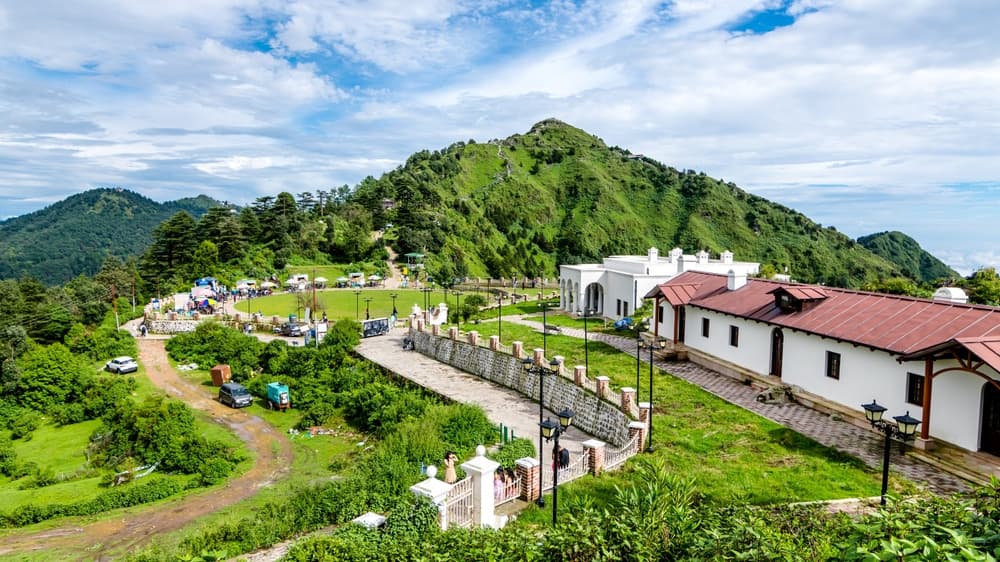
Perched in the mountains of Uttarakhand, Mussoorie is a hill station celebrated for its breathtaking Himalayan views. Built at high altitude by British colonists seeking respite from the heat, Mussoorie retains a remarkable architectural heritage from the British Raj…
Perched in the mountains of Uttarakhand, Mussoorie is a hill station celebrated for its breathtaking Himalayan views. Built at high altitude - by British colonists seeking respite from the heat - Mussoorie's Hill preserves a remarkable architectural heritage from the British Raj… Want to learn more? Join us as we explore this legendary retreat of bygone eras!
|
Mussoorie Hill Station at a Glance ● Location : Mussoorie is a hill station situated above 2,000 meters in altitude, in the state of Uttarakhand. It offers panoramic views of the Himalayan range. ● A cultural and heritage site : beyond its lush natural surroundings, the station is an emblematic 19th-century landmark, intimately connected to the country's colonial past. ● Best time to visit : the hill station is accessible year-round, but in summer it becomes a sought-after destination for those seeking cool relief (with summer temperatures around 29°C versus 40°C in the plains). |
Discovering Mussoorie's British Colonial Heritage
The Founding of Mussoorie Hill Station
In the early 19th century, in 1825, British officer Frederick Young established a hill station on the heights of Mussoorie. His objective: to escape the oppressive summer heat, which could reach up to 40°C in neighboring towns - such as Dehradun, situated below in the plains, approximately 80 minutes away by road.
The station quickly gained popularity among British officials, unaccustomed to such extreme temperatures and seeking cooler refuge far from the scorching plains and bustling urban centers. Mussoorie soon became a prized retreat, marked by the construction of residences, clubs, and hotels.
Colonial Architectural Heritage
Today, the station's colonial past remains visible through numerous structures of British architectural style. Wandering through the old lanes, you can admire historic colonial buildings, including the Neo-Gothic Christ Church Mussoorie, constructed in 1836.
The Neighboring Town of Landour
Near Mussoorie (approximately 20 minutes by road) lies Landour. This second hill station was established two years after Mussoorie, in 1827, as a convalescence center. Indeed, it served as a sanatorium for British military personnel - a facility specializing in the treatment of tuberculosis and certain pulmonary diseases.
This small suburb also preserves several architectural remnants from the colonial era, such as the Landour Clock Tower and Kellogg Memorial Church. It also houses the prestigious Landour Language School.
Enjoying Mussoorie's Cool Climate During Summer
If, like Captain Frederick Young, you cannot tolerate heat during your journey through northern India, plan a few days at Mussoorie! Perched above 2,000 meters in altitude, this iconic station offers a refreshing escape from the oppressive heat of the plains.
Indeed, while summer temperatures often exceed 40°C in neighboring regions, Mussoorie boasts a more pleasant climate, with temperatures around 29°C (and a mild annual average of 15.3°C).
Here is an overview of temperatures by season:
- Warm season (March-September) : 28°C on average, with peaks of 31°C in June (the warmest month).
- Cool season (late November-late February) : 18°C maximum, with temperature variations of 2°C to 14°C in January (the coldest month).

|
When is the Best Time to Visit Mussoorie? The ideal season to visit Mussoorie depends on the activities you plan to enjoy. ● In summer (March to June), Mussoorie reveals splendid flower-filled and colorful landscapes, with ideal temperatures around 26°C. This is also the peak tourist season (and when you'll encounter the most visitors). ● The monsoon (July to September), during this humid period, Mussoorie displays lush and verdant scenery. ● In autumn (October to November), the hills take on reddish hues and offer perfect contrasts for photography. Another advantage? Pleasant weather, but with fewer tourists than summer. ● In winter (December to February), the station and its surroundings are covered in snow, offering a timeless experience. |
Admiring Multiple Himalayan Peaks
Mussoorie is located in Uttarakhand, approximately 35 kilometers south of Dehradun (the state capital). Due to its geographical position, the "Queen of the Hills" offers, on clear days, spectacular views of several Himalayan mountains, including:
- Swargarohini : composed of three peaks, this massif is nicknamed Stairway to Heaven due to a Hindu legend, according to which this mountain serves as a staircase for the gods.
- Bandarpunch : located within the Govind Pashu Vihar National Park and Sanctuary, this massif also has three summits - with the highest, Black Peak, rising above 6,380 meters in altitude.
- Garhwal : endowed with several mountains (including Chaukhamba which reaches 7,138 meters), this massif is known for housing the Gangotri Glacier, as well as Kedarnath Temple - a famous pilgrimage site.
- Nanda Devi : at 7,816 meters, this peak is one of the highest summits in the Himalayan range. Closed to mountaineers (to protect its ecosystem), it harbors Nanda Devi National Park - a UNESCO World Heritage site.

Trekking in Mussoorie and Visiting Iconic Spots
While trekking through the Indian Himalayas attracts adventurers from around the world each year, the areas surrounding Mussoorie have much to offer as well. With a wealth of routes available, the heights around the town promise wonderful hiking through pristine wilderness!
George Everest Peak
George Everest Peak is an emblematic trek of the region. Of moderate difficulty, this 3-hour round-trip hike does not require serious hiking experience - but does demand good physical fitness, with a positive elevation gain of 258 meters.
During the walk, you'll traverse forested and rocky landscapes that lead to the summit. Once at the top, you'll enjoy a spectacular 360° panorama of Doon Valley and certain Himalayan peaks.
Did you know? George Everest Peak is named after the celebrated geographer, who served as Surveyor General of British India from 1830 to 1843. The hike begins at George Hill, at the parking area of George Everest House - the museum located at Khanij Nagar, Mussoorie, Uttarakhand 248179. It takes about ten minutes of walking to reach the trail start from the house.
|
Visit the Cartography Museum George Everest House is the former residence (and observatory) of the celebrated geographer. Built in 1832, the building, now transformed into a museum, allows visitors to discover the world of cartography, as well as Sir Everest's trigonometric work. The location also provides another vantage point over the surrounding massifs. Plan to spend about 1€ for museum entry (approximately 100 rupees). |
Nag Tibba Trek
Suited for experienced hikers (with a positive elevation gain of 1,610 meters), the Nag Tibba trek is nonetheless one of the most popular in the region. Lined with lush forests, it shelters numerous bird species, as well as abundant fauna and flora. This route is not recommended during the monsoon season, which makes the trail more challenging and hazardous.
Har Ki Dun Trek
Perfect for beginner trekkers, this moderate-level itinerary is also one of the oldest routes in the Swargarohini massif. It offers spectacular views throughout the journey and is crossed by several streams, including the Thamsa River. You may spot wild orchids, golden eagles, and larches (endemic conifers).
Lal Tibba
Rising above 2,200 meters in altitude, Lal Tibba is the highest point in Mussoorie. The trail to reach the summit is fairly easy and accessible to all.
Well-marked and not overly steep (except for a few sections), this hike, starting from Landour Clock Tower, extends 3 kilometers to the summit. On clear days, from the top you can see the peaks of Nilkantha, Swargarohini, Kedarnath, and Badrinath!
At the end of the trail stands a café equipped with a telescope, installed there in 1967 during the British occupation. Café entry is paid, budgeting around 1€ per person (50 rupees). Visitors can enjoy tea while taking in the mountain beauty or watching the sunset.
Gun Hill
At 2,024 meters in altitude, Gun Hill is Mussoorie's second-highest peak. Once, the site served as a lookout post for British officers. Moreover, a cannon fired daily at noon to allow townspeople to set their watches. Its name "Gun Hill" references this old tradition.
Gun Hill is accessible by cable car from Mall Road in just 10 minutes (budget around 1€ per person). From the cable car or summit: you'll enjoy spectacular views over Doon Valley and the Himalayan ranges!
Camel's Back Road
Camel's Back Road is a pleasant 3-kilometer walk between Library Point and Kulri Bazaar (a local marketplace). It owes its charming name to zoomorphic rock formations whose contours resemble a camel's silhouette. This small stone spot is a must-see location, perfect for memorable photos.
This place is also prized for its tranquility and landscapes, particularly at sunrise and sunset, when the horizon glows with gold and ochre tones. Along the path, you'll find small shops where you can enjoy tea or coffee.
Benog Wildlife Sanctuary
About 40 minutes by car northwest of Mussoorie, discover Benog Wildlife Sanctuary in Dehradun district. Located near the renowned Rajaji National Park, this protected area, since 1993, shelters numerous bird species. Among them? The Red-billed Prinia, the White-fronted Redstart, and the Himalayan Monal (recognizable by its stunning electric blue plumage).
The sanctuary comprises many forested zones and deodar trees (or Himalayan cedars)… While walking through the sanctuary is fairly easy, it is not well-suited for children, due to its dense and lush nature. The site also offers spectacular views of several peaks, including Bandarpunch and Chaukhamba mountains.
Sanctuary entry, located about ten kilometers from the town center, costs approximately 1.60€ per person.
Cloud's End
About 7 kilometers from Mussoorie, don't miss the iconic Cloud's End. This spot not only offers spectacular views of the Aglar River (and several peaks) but also a unique spectacle on misty days, as clouds seem to dissipate precisely there, at the peak's crest!
The Cloud's End walk, spanning 3 kilometers (and 1.5 hours of hiking), also allows you to observe numerous birds, butterflies, and rich endemic vegetation. At the path's end, you'll discover a British colonial bungalow dating from 1838. This fairly easy and pleasant route is also an ideal spot for picnicking on Mussoorie's heights.
|
3 Other Spots to Discover Within an Hour of Mussoorie...
|

Cultural Attractions at Mussoorie Hill Station
Company Garden
Company Garden is a park created during the British Raj period, in 1842. It was designed to offer a space for leisure and relaxation for colonists… Located 3 kilometers from the main Mall Road, the garden features a pond - where boating is possible for approximately 150 rupees.
Cambridge Book Depot
At The Mall Rd, Mussoorie, Uttarakhand 248179, you'll find Cambridge Book Depot, where it's not uncommon to encounter the celebrated author Ruskin Bond! If you have time, take advantage of the opportunity to pose in traditional attire under the camera of a local photographer strolling the street.
|
A Spotlight on Anglo-Indian Author Ruskin Bond Ruskin Bond is an Indian author of British descent, born May 19, 1934 in Kasauli (a town located 200 kilometers from Mussoorie). The author has written over 300 short stories, and published numerous essays, novels, and children's books. While today he is recognized and appreciated by all, the author was not always universally accepted. Indeed, in the 1970s, Ruskin Bond published The Sensualist, a semi-erotic short story for which he nearly faced imprisonment for "obscenity"! Over time, the author has made his Anglo-Indian identity a lens through which to explore the complexities of race, society, and economy during the colonial and post-colonial eras. In 2025, the nonagenarian lives in Mussoorie with his family. |
How Many Days Do You Need to Explore Mussoorie?
If you wish to discover Mussoorie Hill Station without rushing, ideally spend 3 days there. This duration allows you to explore the station's core, undertake a day trek, and enjoy 2 or 3 walks - to admire a waterfall or iconic viewpoint. Here's an example to help plan your stay:
Day 1
- Visit to Lal Tibba + picnic in nature.
- Stroll along Mall Road to soak in local atmosphere and visit Cambridge Book Depot.
Day 2
- Hike to George Everest Peak for views over the valley.
- Visit to George Everest House museum (during the trek).
Day 3
- Exploration of Benog Wildlife Sanctuary
- Final stroll through the town center to admire colonial architecture.
If you can only stay two days, you won't have time for a full-day trek. Instead, opt for a shorter walk or visit Company Garden.
Frequently Asked Questions
Why is Mussoorie Called the Queen of the Hills?
Mussoorie Hill Station is nicknamed the Queen of the Hills because it overlooks Doon Valley and the Shiwalik ranges. Nestled in the foothills of the Himalayas, it offers spectacular views of the region's terrain. The station's name itself comes from an indigenous shrub called Mansuri.
Is It Safe to Visit Mussoorie in January?
You can visit Mussoorie in January, but note that temperatures are quite low (around 5°C), and snow can affect certain roads and complicate travel… It's best to check road conditions before departing!