Kerala and South India
The South unfolds at a slower pace: backwaters by kettuvallam, tea plantations at 1,600 meters in the Ghats, and living Dravidian temples in Tamil Nadu.
South India forms a world apart, separated from the North by the Deccan plateaus and by Dravidian languages (Malayalam, Tamil) bearing no relation to Hindi. Our team organizes itineraries around two complementary states: Kerala on the west coast, a narrow green strip wedged between the Arabian Sea and the Western Ghats, and Tamil Nadu on the eastern slope, drier, structured by its temple cities. Travel here moves at a different rhythm than in Rajasthan: the roads through the Ghats wind and curve, distances look modest on the map but demand real time on the ground.
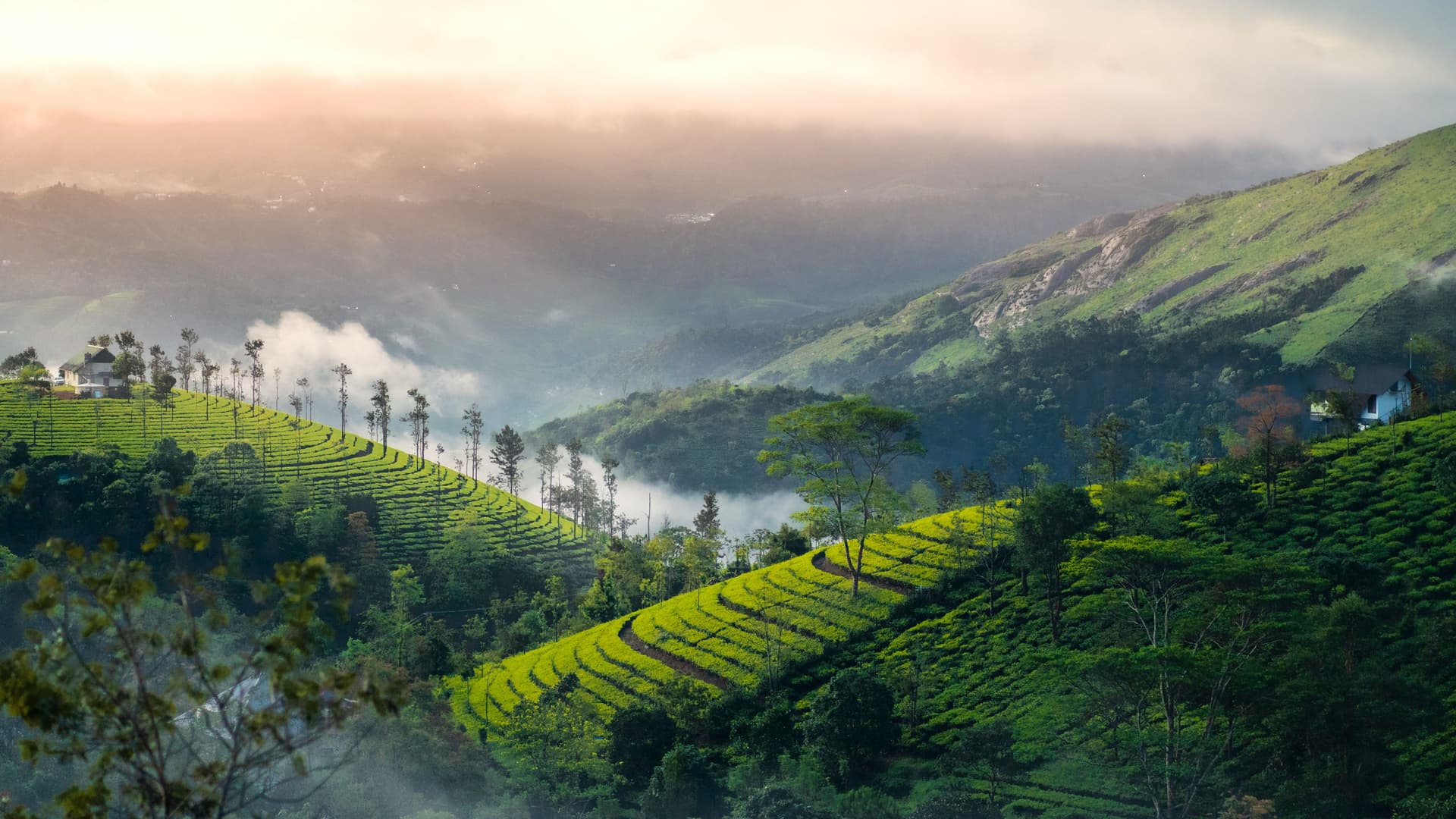
In Kerala, the landscape transforms every fifty kilometers. The coastal plain is woven with canals, lakes and rivers forming the backwaters, a navigable network of nearly 900 kilometers connecting Alleppey, Kollam and Kumarakom. Here you board a kettuvallam, a former rice barge repurposed for tourism, for one or two nights according to your preferred pace. Inland, the road climbs to Munnar at 1,600 meters, where Tata's tea plantations have blanketed the hillsides since the late nineteenth century. Further south, the Periyar reserve around its artificial lake concentrates elephants, gaurs and water birds, observable from small boats at early dawn.
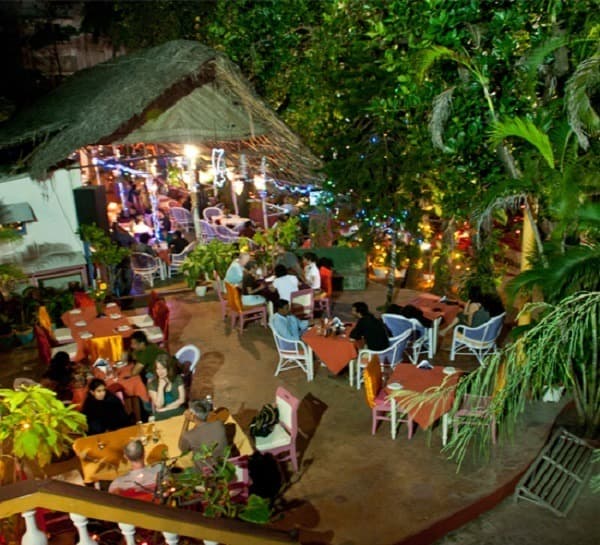
Kerala stands out too for its human composition. Hindu, Muslim (the Mappilas, descendants of Arab merchants), Syrian Christian (present since the first millennium according to the tradition of Saint Thomas) and Jewish communities (the Mattancherry synagogue in Kochi dates to 1568) coexist in a state with a literacy rate exceeding 95%. Kochi, formerly Cochin, bears the successive imprints of the Portuguese, Dutch and British: Chinese fishing nets on the Fort Kochi promontory, spice warehouses of Mattancherry, Dutch palaces. In the evening, theaters offer kathakali performances—masked dance theater whose makeup takes two hours to apply before the show.
In Tamil Nadu, the journey takes on another character. Dravidian temples here are living monuments, visited daily by tens of thousands of devotees. In Madurai, the Meenakshi temple lines up fourteen gopurams covered in painted statues, and the evening ceremony where the god Sundareshwara is carried to the goddess's chamber has been held for centuries. Thanjavur houses the Brihadishwara, an eleventh-century Chola temple on UNESCO's list, its shikhara rising 66 meters. Chidambaram, more understated, welcomes a dancing Shiva and harbors a community of hereditary priests identifiable by their frontal lock of hair. Pondichéry, a former French trading post, offers an architectural interlude with its grid-pattern streets, French names and fusion cuisine from a few tables run by descendants of Franco-Tamil families.
The tempo is slow, almost contemplative. Food is spiced but different from the North: coconut milk curries of Kerala, fish grilled in banana leaves at Kovalam, Tamil thalis served on leaves with sambar, rasam and rice-papad. Strict vegetarianism (eggs and onions absent in certain Brahmin families) is more widespread here than elsewhere. Festivals punctuate the year: Onam in Kerala in August-September, with its serpent-boat races at Alleppey, and Pongal in Tamil Nadu mid-January, a harvest festival spanning four days. Our English-speaking drivers, based in Kochi and Madurai, know the narrow mountain roads through the Ghats and alternatives when a convoy of trucks blocks the descent toward Thekkady.
To discover
Night on a kettuvallam in the backwaters. Boarding at Alleppey or Kumarakom for slow navigation between rice fields and villages where life continues at the water's edge: laundry, uniformed schoolchildren, fishermen with square nets.
Tea plantations of Munnar. At 1,600 meters in the Ghats, hillsides tailored in dark green checkerboard patterns. Visit a working tea factory and hike to the Eravikulam viewpoint, where the Nilgiri tahrs live.
Meenakshi Temple in Madurai. Fourteen polychrome gopurams and a labyrinth of corridors alive from dawn to dusk. Attend the closing ceremony around 9:30 p.m., open to respectfully dressed visitors.
Kathakali in Fort Kochi. Arrive an hour before the show to watch makeup application: rice paste, vegetable pigments, layered application on actors trained since childhood.
Pondichéry and the Coromandel coast. French colonial quarter with distinctive architecture, Aurobindo ashram, and an excursion to Auroville. A breathing space before or after the intensity of Tamil temples.
When to go
The favorable season runs from October to March, with coastal temperatures between 24 and 32 degrees and manageable humidity. December and January are the driest and most crowded months, particularly around Christmas in Kochi and Varkala. In Munnar and the Ghats highlands, nights dip to 12 degrees in January: pack a fleece for early morning outings through the tea plantations.
The southwest monsoon strikes Kerala from June through late August, with cumulative rainfall often exceeding 2,500 mm over the season. This period remains viable for travelers who appreciate warm rain, saturated green landscapes and Ayurvedic treatments (considered the ideal season for therapy). September is unstable. Tamil Nadu, sheltered by the Ghats, receives its own monsoon from the northeast in October and November: late afternoon showers in Chennai and Pondichéry, often clear mornings. April and May should be avoided: 35 degrees and higher, high humidity, little comfort outside altitude stations.
Practical advice
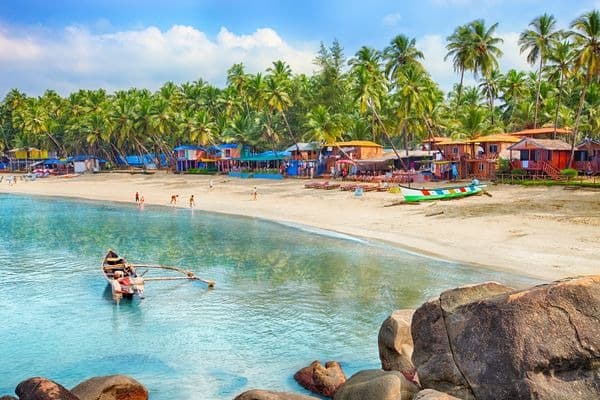
To explore Kerala well on your own, allow 10 to 12 days starting from Kochi: 2 days in Fort Kochi, 2 days in Munnar, 1 to 2 nights at Periyar, 1 night on a kettuvallam, finishing at Varkala or Kovalam for the beach. Combining Kerala and Tamil Nadu requires a minimum of 15 to 18 days: crossing via Madurai, Thanjavur and Pondichéry adds driving days (4 to 6 hours per stage on secondary roads). Domestic flights from Kochi, Trivandrum or Madurai facilitate connections with the North.
The South logically combines with Rajasthan for stark contrast between dry and tropical India, or with Uttar Pradesh and the Ganges to confront two distinct religious fervor. Hotel comfort levels are high in Kerala (heritage homes in Kochi, plantation lodges in Munnar, resorts at Varkala) and more uneven in Tamil Nadu, where we favor carefully selected properties in Madurai and Thanjavur. The region suits contemplative travelers, sacred architecture enthusiasts, families with children from age 8 onward (few long road stages if you stay in Kerala), and couples seeking an India less confrontational than the North.