Search and filter among 8 contents
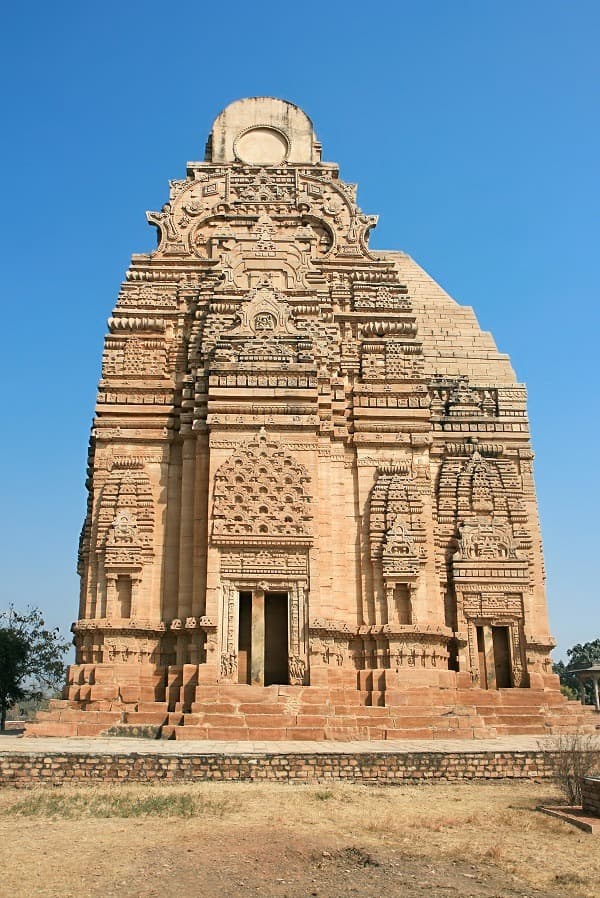
Teli Ka Mandir, within Gwalior Fort, stands as one of Central India's oldest temples. Its distinctive tower—Dravidian style rising above a North Indian plan—and intricately carved façades make it an exceptional architectural monument.
Perched on the Gwalior Fort plateau, the 11th-century Sas-Bahu temples display carved friezes of exceptional density, testament to the refinement of medieval Vaishnavite art.
A medieval palace from the 15th century built at the foot of Gwalior Fort by Man Singh Tomar, Gujari Mahal now houses an archaeological museum with remarkable Gupta and Jain sculptures.
Perched on the Gwalior Fort plateau, Man Singh Palace (15th century) impresses with its towers adorned in blue and yellow glazed tiles, inner courtyards, and historic underground chambers.
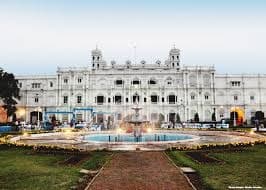
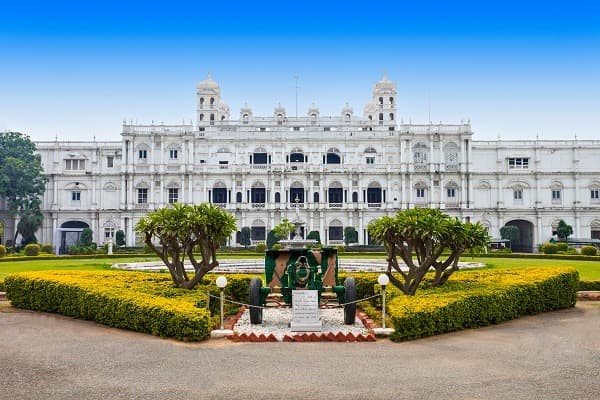
Once a royal residence of the Scindia dynasty, Jai Vilas Palace in Gwalior now houses a museum with 35 rooms of princely collections: towering Bohemian chandeliers, a silver miniature train, and Mughal armours.
Perched on a hundred-meter sandstone outcrop, Gwalior Fort brings together the blue-tiled Tomara Palace, 8th-century temples, and monumental Jain sculptures carved directly into the cliff face.
Jai Vilas Palace
A princely residence of the Scindia in Gwalior, Jai Vilas Palace blends European architecture with Indian splendor. Museum, monumental chandeliers and rare collections.
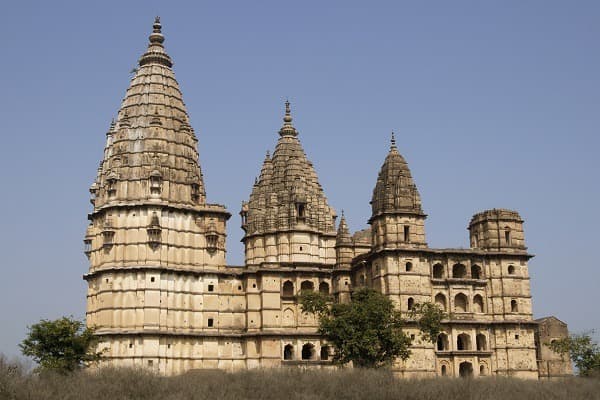
In Orchha, Chaturbhuj Mandir dedicated to Vishnu blends Hindu temple architecture with Bundela palatial codes, offering panoramic views over the city.
8 of 8 results
We use cookies to improve your experience and measure our site's audience. You can choose what you accept. Learn more.