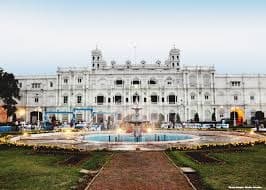
Jai Vilas Palace & Museum
Jai Vilas Palace & Museum
Once a royal residence of the Scindia dynasty, Jai Vilas Palace in Gwalior now houses a museum with 35 rooms of princely collections: towering Bohemian chandeliers, a silver miniature train, and Mughal armours.
Jai Vilas Palace rises at the heart of Gwalior, home to the royal Scindia family since the 19th century. One wing has been converted into a museum, displaying exceptional princely collections ranging from Mughal armours to ceremonial carriages, including the famous silver miniature train once used to circulate digestifs around royal banquets. The building itself—a blend of Tuscan, Italian, and Corinthian architecture—is as rewarding as the treasures within.
Practical Information at a Glance
- Admission: Paid entry (separate rates for Indian and foreign visitors)
- Weekly closure: Mondays
- Recommended duration: 1.5 to 2 hours to explore the museum galleries
- Photography: Additional fees apply for cameras; check permitted zones at the entrance
- Dress code: No specific restrictions, smart casual recommended
What to See
The museum occupies 35 rooms of the palace. Star pieces include two Bohemian glass chandeliers among Asia's largest, suspended in the ballroom. Legend has it that elephants were hoisted onto the roof to test their strength before installation. The silver miniature train—which once transported whisky and brandy around the banquet table—remains the most photographed attraction.
Collections also encompass:
- Armours and weapons from the Mughal and Maratha periods
- Victorian-era European furniture
- Paintings, sculptures, and artworks from the Scindia court
- Royal carriages and palanquins
- Solid gold and silver tableware
History and Context
The palace was built in 1874 during the reign of Maharaja Jayajirao Scindia of Gwalior, designed by architect Sir Michael Filose. The Scindia family, descended from the Maratha Confederacy, was one of central India's most powerful princely dynasties. Part of the palace remains the family's private residence; only the museum wing is open to the public.
Gwalior occupied a strategic position along the commercial and military routes between northern and central India, explaining the wealth accumulated by its successive rulers.
Highlights of Your Visit
The Ballroom and Its Monumental Chandeliers
The ballroom is the palace's most spectacular room. The two Bohemian glass chandeliers, of considerable weight, required exceptional ceiling reinforcement. Daylight reveals their intricate complexity in full splendour.
The Silver Miniature Train
This train ran on rails laid across the banquet table, dispensing spirits and digestifs to guests. Entirely crafted in silver, it remains the collection's most singular object and exemplifies the grandeur of the Scindia court.
The Weapons Gallery
Swords, shields, ornate rifles, and armours bear witness to the military alliances and conflicts that shaped Gwalior's history between the 17th and 19th centuries.
Photography Tips
Natural light is best in the morning in east-facing rooms. The ballroom chandeliers photograph best from the room's corners to capture their full scale. Check at the entrance whether your camera requires a separate photography ticket—smartphones are usually permitted without additional fees, though policies may change.
Location and Access
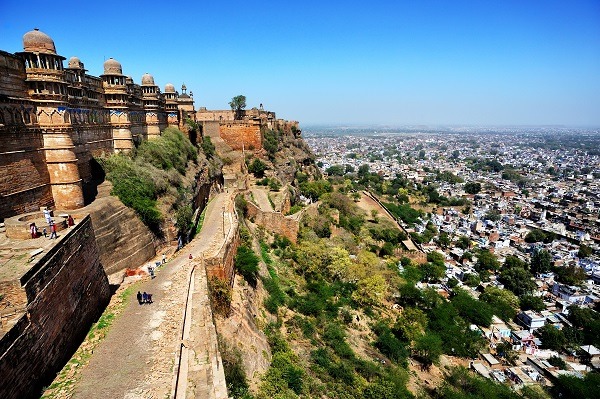
Jai Vilas Palace stands in Gwalior's Lashkar quarter, just minutes by rickshaw from the city centre. The Gwalior Fort, the city's iconic monument, is visible from several vantage points within the palace grounds. Gwalior Railway Station, well served by trains from Delhi, Agra, and Bhopal, lies at a reasonable distance by vehicle.
Nearby Attractions
- Gwalior Fort — one of central India's best-preserved fortresses, dominating the city from a rocky outcrop.
- Gwalior Tombs — a collection of medieval Islamic mausoleums with refined architecture.
- Teli Ka Mandir — an 8th-century temple within the fort, blending Dravidian and Nagara influences.
- Saas-Bahu Temples — a pair of 11th-century Hindu temples with finely carved sculptures, within the fort's enclosure.
Frequently asked questions
No, the museum is closed on Mondays. Plan your visit for a weekday or weekend.
No. Part of the palace remains the private residence of the Scindia family. Only the 35 museum rooms are accessible to the public.
Allow 1.5 to 2 hours to explore the rooms at a leisurely pace and examine the collections in detail.
Yes, this is the most common pairing. The fort is best visited in the morning (better light, less heat); the Jai Vilas museum works well in early afternoon.
Photography is generally permitted for an additional fee for cameras. Check at the counter when purchasing your entrance ticket.
October to March offers pleasant weather. Summers (April-June) are very hot; the monsoon (July-September) can make travel difficult.
Interested in this visit?
We can include it in your personalised itinerary.