Thangshing
Thangshing is an alpine camp at 3,900 m in Khangchendzonga National Park (Sikkim). An essential stage on the Goecha La trek, it offers a direct view of Kangchenjunga and access to the glacial Samiti Lake.
Thangshing is a high-altitude camp located in Khangchendzonga National Park, in Sikkim (India). Perched at approximately 3,900 meters, it constitutes one of the key stages on the trek to Samiti Lake and the Goecha La base camp. The site offers a direct view of the foothills of Kangchenjunga, the world's third-highest peak.
Practical information at a glance
- Access: on foot only, from Yuksom via Sachen, Bakhim and Tshoka — plan for several days of hiking.
- Mandatory permits: Restricted Area Permit (RAP) and Khangchendzonga National Park permit, to be obtained before departure.
- Regulated trekking: foreign nationals must be accompanied by an approved guide and a registered trekking agent.
- Accommodation: camping only; basic shelters (fixed tents) are available on site depending on the season.
- Recommended season: April-May (rhododendrons in bloom) and October-November (clear skies).
- Accessibility for people with reduced mobility: none — demanding high mountain terrain.
What to see there
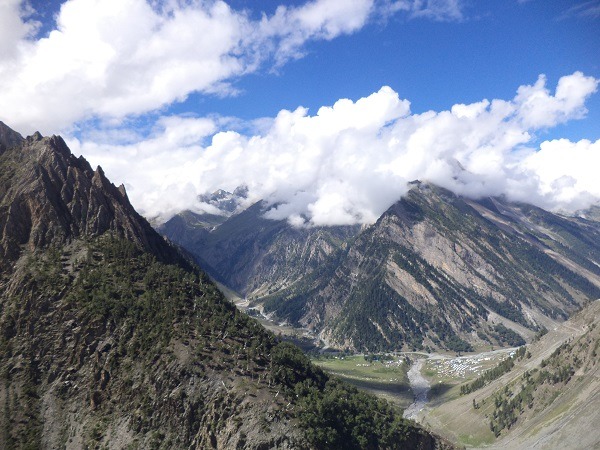
The camp extends across an alpine meadow (bugyal) framed by moraines and glacial streams. In clear weather, the south face of Kangchenjunga (8,586 m) and several satellite peaks dominate the horizon. Vegetation, composed of dwarf rhododendrons and junipers, gradually gives way to rock and snow as you climb towards Zemathang.
History and context
Khangchendzonga National Park, inscribed as a UNESCO World Heritage Site in 2016, is considered sacred by Lepcha and Sikkimese communities. Thangshing lies on the traditional pilgrimage route to high-altitude sanctuaries associated with Kangchenjunga, venerated as the protective deity of Sikkim.
Highlights of the visit
The alpine meadow
The vast grassy clearing of Thangshing offers a rare camping space at this altitude. In spring, red and pink rhododendrons frame the camp. This is where most groups spend the night before heading on to Samiti Lake.
Samiti Lake
Approximately one hour's walk above Thangshing, this glacial lake reflects the snow-capped peaks. Considered sacred, swimming or fishing is prohibited. It is one of the most striking viewpoints of the entire Goecha La trek.
The Kangchenjunga viewpoint
From the heights above the camp, in clear weather, the view of the Kangchenjunga massif is direct and unobstructed. The first hours after sunrise, before clouds roll in, offer the best viewing conditions.
Photography tips
The golden light of sunrise directly illuminates the snow-covered faces of Kangchenjunga from Thangshing. Plan to be up before dawn. During the day, clouds frequently cover the peaks by mid-morning. A wide-angle lens works well for meadow panoramas; a telephoto lens is useful for capturing details of the glacial faces.
Location and access
Thangshing is located in West Sikkim district, within Khangchendzonga National Park. The usual starting point is Yuksom, accessible by vehicle from Gangtok (approximately 5-6 hours' drive). The trek to Thangshing typically takes 3 to 4 days of hiking depending on pace and acclimatization. No motorized access exists beyond Yuksom.
Nearby attractions
- Yuksom — Sikkim's first capital, the starting point for the trek and site of historical coronation.
- Samiti Lake — sacred glacial lake, the next stage above Thangshing.
- Tshoka — mountain village and intermediate trekking stage, surrounded by rhododendron forests.
- Dzongri — high-altitude plateau offering a 360° panorama of Himalayan peaks, accessible as an alternative route.
Frequently asked questions
April-May for blooming rhododendrons and October-November for maximum visibility of the peaks. Summer (June-September) coincides with the monsoon: trails are slippery and views often obscured.
A Restricted Area Permit (RAP) for Sikkim and a specific permit for Khangchendzonga National Park are mandatory. Foreign nationals must go through an approved trekking agent to obtain them.
No. Park regulations require the presence of an approved guide and a registered agent for foreign visitors. Indian nationals have different rules depending on the season.
The trek is classified as moderate to difficult. The altitude (3,900 m at Thangshing, over 4,900 m at Goecha La pass) requires good physical condition and several days of progressive acclimatization.
Shelters and fixed tents are available depending on the season, managed by local operators. Most organized groups bring their own camping equipment. No permanent hotel or lodge exists on site.
Yes. Yuksom, the starting point, has monasteries and historical significance of its own. Gangtok, Sikkim's capital, is a natural logistics base before and after the trek.
Interested in this visit?
We can include it in your personalised itinerary.