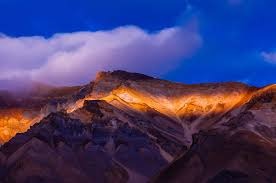
Tashiding Main Gompa
Perched on a hilltop at the confluence of two rivers, Tashiding Monastery is western Sikkim's holiest Buddhist site, renowned for its Thongwa Rangdol stupa and the Bumchu festival.
Perched on a triangular hilltop at the confluence of the Rathong Chu and Rangit rivers, Tashiding Monastery stands as one of Sikkim's most sacred Buddhist sites. Founded in the 17th century by lama Ngadak Sempa Chempo, it belongs to the Nyingma school of Tibetan Buddhism. Its central stupa, the Thongwa Rangdol, is believed to purify of sin anyone who gazes upon it. The site draws pilgrims and travellers seeking an authentic place of contemplation, far removed from mass tourism circuits.
Practical Information at a Glance
- Access: Tashiding lies in western Sikkim, roughly 40 km from Geyzing (Gyalshing), the region's main town.
- Transport: Shared jeep or taxi from Geyzing or Yuksom; the road is partly unpaved.
- Dress Code: Modest clothing required; shoulders and knees must be covered.
- Footwear: Remove shoes before entering the main temple.
- Recommended Duration: 1 to 2 hours for the monastery and stupa circuit.
- Permit: An Inner Line Permit (ILP) is required to visit western Sikkim; obtain it before departure.
What to See
The complex comprises the main temple adorned with frescoes and thangkas, a collection of Buddha statues and protective deities, plus an extensive stupa cemetery highlighted by the celebrated Thongwa Rangdol. The hilltop commands expansive views over surrounding valleys and, on clear days, the snow-capped peaks of Kangchenjunga.
History and Context
The monastery was founded in the 17th century, according to tradition, after a rainbow guided lama Ngadak Sempa Chempo to this promontory. The name "Tashiding" roughly translates to "centre of glory planted in the middle." The site is revered by Nyingma Buddhists as Sikkim's holiest. It also houses the Bumchu, a sacred vessel whose water level is interpreted each year during the namesake festival as an omen for the region's future.
Highlights of Your Visit
The Thongwa Rangdol Stupa
This impressive white stupa forms the site's spiritual heart. Circumambulating it (kora) clockwise while spinning prayer wheels is a central practice for pilgrims. Its reputation for purification makes it a place of intense devotion.
The Bumchu Festival
Each year, at the full moon of the first month of the Tibetan calendar (usually February), monks open the sacred Bumchu vessel. The water level inside is interpreted as an oracle for the year ahead. It ranks among Sikkim's most authentic and least touristy festivals.
The Main Temple and Its Frescoes
The temple interior houses murals depicting Nyingma pantheon deities, ancient statues, and thangkas. The contemplative atmosphere, sustained by resident monks, is especially striking outside peak hours.
Etiquette and Visiting Rules
- Remove your shoes before entering the temple.
- Dress modestly: shoulders and knees covered for all visitors.
- Perform kora (circumambulation) in a clockwise direction.
- Ask permission before photographing monks or the temple interior.
- Maintain silence in prayer spaces.
- Do not touch statues or ritual objects.
Photography Tips
Morning light is ideal for capturing the white stupas against lush valley backdrops. In winter (November to February), snow-capped summits appear in the background on clear days. Avoid flash inside the temple. Colourful prayer flags offer striking foreground elements.
Location and Access
Tashiding is located in Sikkim's West District. The usual starting point is Yuksom, roughly 20 km to the north, or Geyzing, the district headquarters. The road from Geyzing winds through forests and terraced rice paddies. An Inner Line Permit is essential for all of western Sikkim; obtain it in Gangtok, Siliguri, or online. The monastery itself is reached on foot from Tashiding village via a short ascent.
Nearby Attractions
- Yuksom — Sikkim's former capital and launch point for Kangchenjunga treks.
- Pemayangtse Monastery — One of Sikkim's oldest and most important Nyingma monasteries, near Geyzing.
- Khecheopalri Lake — Sacred lake surrounded by forests, revered by both Buddhists and Hindus.
Frequently asked questions
The dry season from October to December offers clear mountain views and passable road conditions. February is worthwhile for the Bumchu festival. Avoid the monsoon (June–September): roads may be impassable.
Yes. An Inner Line Permit (ILP) is mandatory for all of western Sikkim. Obtain it in Gangtok, Siliguri, or online before you depart. Carry it with you throughout your stay.
Yes. Yuksom (the Kangchenjunga trek hub), Khecheopalri Lake, and Pemayangtse Monastery are all accessible within the same region in one to two additional days.
Photography is generally tolerated outside and around the stupas. Inside the temple, always ask the monks for permission before using your camera. Flash photography is prohibited.
Plan for one to two hours to tour the temple, perform the kora around the stupas, and enjoy the panorama. If you wish to attend a monk prayer session, ask about timings upon arrival.
Interested in this visit?
We can include it in your personalised itinerary.