Kalatop Forest Rest House
Kalatop Forest Rest House
Nestled at 2,400 meters altitude within the Kalatop Sanctuary, this colonial forest bungalow is the ideal starting point for exploring deodar forests and observing Himalayan wildlife near Dalhousie.
Kalatop Forest Rest House is a colonial forest bungalow nestled in the heart of the Kalatop Nature Reserve, a few kilometers from Dalhousie in Himachal Pradesh. Perched at approximately 2,400 meters altitude, it serves as a launch point for exploring the coniferous forest and observing Himalayan wildlife. It is one of the few accommodations authorized within the Kalatop-Khajjiar Sanctuary.
Quick practical facts
- Access: Entry permit to the sanctuary is mandatory, issued by the Dalhousie Forest Department.
- Vehicles: Private motorized vehicles are generally not permitted inside the sanctuary; access is on foot or horseback.
- Booking: The Rest House is operated by the Himachal Pradesh Forest Department; advance reservation with forest authorities is required.
- Recommended duration: A minimum of one night to enjoy the forest at dawn and dusk.
- Clothing: Warm clothing essential, even in summer; temperatures drop significantly at night.
What to see here
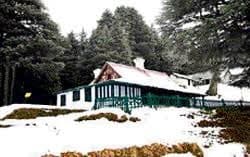
The Kalatop Reserve is covered in dense forests of Himalayan cedar (deodar), pine, and rhododendron. Wildlife includes leopards, Himalayan black bears, sambar deer, and a rich variety of birdlife. The Rest House itself is a modest colonial-style British building, surrounded by alpine meadows.
History and context
Dalhousie was founded by the British in 1854 as a hill station. The network of forest bungalows—including Kalatop—dates from the colonial era, when British administration actively managed Himalayan forests. The Kalatop-Khajjiar Sanctuary, created to protect local wildlife, now encompasses this historic Rest House.
Highlights of your visit
The deodar forest at dawn
The early morning hours are ideal for birdwatching and, with luck, spotting deer in clearings. The forest silence at this hour is striking.
Trails to Khajjiar
A forest trail connects Kalatop to the Khajjiar meadow, nicknamed "India's mini-Switzerland." The walk traverses dense forest and offers clear views of snow-capped peaks on clear days.
Wildlife observation
The sanctuary is home to leopards, though direct sightings are rare. Tracks, nocturnal calls, and birds of prey are more frequently spotted by attentive visitors.
Photography tips
Golden morning light filters between deodar trunks, creating remarkable atmospheric shots. Focus on the hours just after sunrise. Frequent monsoon mists add particular depth to forest photographs. Avoid using flash to prevent disturbing wildlife.
Location and access
Kalatop Forest Rest House is located approximately 9 km from Dalhousie by road, then accessible on foot from the forest checkpoint. Dalhousie is connected by road to Pathankot (approximately 80 km), the nearest railway station. From Dalhousie, taxis or horses can be arranged to the sanctuary entrance.
The nearby location of Khajjiar is accessible on foot from Kalatop via the forest trail.
Nearby attractions
- Khajjiar — Alpine meadow surrounded by deodar forests, often compared to Swiss landscapes.
- Dalhousie Mall Road — Lively colonial promenade in the heart of the hill station.
- Subhash Baoli — Historic site linked to Subhas Chandra Bose, in the Dalhousie area.
- Dainkund Peak — The region's highest point, with panoramic views of the Dhauladhar range.
Frequently asked questions
Yes, an entry permit is mandatory. It can be obtained from the Dalhousie Forest Department before entering the sanctuary.
Booking is done through the Himachal Pradesh Forest Department. It is advisable to plan well in advance, as availability is limited.
April to June and September to November offer the best conditions. Winter brings snow and can make access difficult. The monsoon (July-August) is beautiful but trails can be slippery.
Yes, the forest trail between the two sites is manageable in half a day of walking. A reasonable level of fitness and appropriate footwear are recommended.
The sanctuary is home to leopards. Direct encounters are rare, but it is advisable not to venture alone on trails at dawn or dusk and to follow guidance from forest staff.
Photos
Interested in this visit?
We can include it in your personalised itinerary.