Jallianwala Bagh
Jallianwala Bagh
Memorial to the 1919 massacre in Amritsar, Jallianwala Bagh preserves bullet-riddled walls, the Martyrs' Well and a historical gallery, 5 minutes from the Golden Temple.
The Jallianwala Bagh is a memorial garden located in the historic heart of Amritsar, just a short walk from the Golden Temple. It commemorates the massacre of April 13, 1919, one of the most defining events in the struggle for Indian independence. Today transformed into a national memorial, the site blends a historical gallery, commemorative monuments and direct remnants of the tragedy.
Why visit Jallianwala Bagh
This garden spanning 28,000 m² holds a singular place in India's collective memory. It offers a tangible understanding of a political turning point: it was here that nationalist sentiment shifted decisively, leading Gandhi to launch the Non-Cooperation Movement the following year. For visitors, the appeal is threefold: understanding a key episode in the waning days of the British Raj, observing authentic remnants (bullet-scarred walls, the Martyrs' Well), and naturally complementing a visit to the nearby Golden Temple with historical and political context. The visit is emotionally dense yet remains accessible: bilingual signage, clear pathways, reasonable duration.
History: the massacre of April 13, 1919
On April 13, 1919, during the Baisakhi festival, thousands of Amritsar residents gathered in Jallianwala Bagh, an enclosed space accessible through a single narrow passage. The crowd, composed of men, women and children, came to hear speakers denounce the Rowlatt Act, a colonial law that strengthened British repressive powers.
Informed of the gathering, Brigadier-General Reginald Dyer entered the garden with his troops, composed of Sikh, Gurkha, Baloch and Rajput soldiers. Without warning, he ordered his men to open fire on the unarmed crowd. More than 1,600 bullets were fired in minutes. The official British death toll was 379, but Indian estimates spoke of several hundred victims, possibly more than a thousand, plus many wounded.
The massacre, endorsed at the time by Sir Michael O'Dwyer, the Lieutenant-Governor of Punjab, sent shockwaves through the land. In the British Parliament, Winston Churchill, then Secretary of State for War, called it a "monstrous outrage." In India, poet Rabindranath Tagore renounced his knighthood in protest. The incident marked a turning point: it fueled nationalist sentiment and led Gandhi to launch the Non-Cooperation Movement the very next year, calling on Indians to boycott British institutions and goods.
What to see on the site
The entrance and the Udham Singh statue
You enter the garden through the same narrow passage used by General Dyer, which vividly illustrates how trapped the space was. At the entrance, a statue honors Udham Singh, a massacre survivor who later avenged the victims by assassinating Sir Michael O'Dwyer in London in 1940.
The Martyrs' Well
At the heart of the site, a well protected by a commemorative structure marks one of the most poignant points of the visit. According to Indian memorial sources, more than 120 bodies were found in it: people had thrown themselves in to escape the gunfire. A plaque commemorates their memory.
The bullet-scarred walls
Several walls still bear bullet marks, carefully circled and numbered. Explanatory plaques detail the circumstances: gunfire without warning on an unarmed crowd in an enclosed space with no exit.
The Torch of Liberty
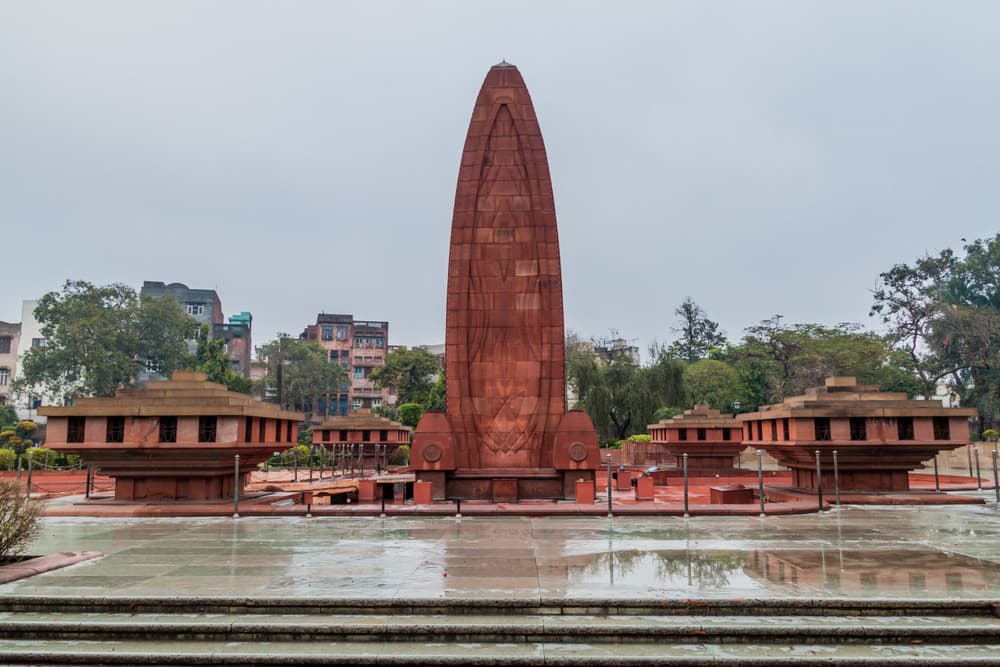
At the center of the garden stands a pylon shaped like a flame, engraved with the faces and names of martyrs. It is the memorial's central monument, around which annual commemorations are organized.
The gallery and museum
The memorial houses a gallery featuring paintings, letters, newspaper articles and contemporary documents relating to the massacre. It includes writings by Gandhi and Tagore, a portrait of Udham Singh and an urn containing part of his ashes.
Practical information
The site is open daily, from early morning until early evening (hours may vary by season; check on arrival). Admission is currently free. Allow 1 to 1.5 hours for a thorough visit of the entire garden and gallery. Respectful dress is recommended given the site's memorial character. Photography is permitted, though discretion should be observed in the gallery and near the Martyrs' Well.
When to go
The best time to visit Amritsar and Jallianwala Bagh spans October to March, when Punjab's climate is dry and mild. April to June brings intense heat (temperatures often exceeding 40°C), and the monsoon from July to September makes travel less pleasant. For your visit itself, choose morning or late afternoon: fewer crowds and softer light. April 13, the anniversary of the massacre, sees official ceremonies: a significant moment commemoratively, but with large crowds.
How to get there
Jallianwala Bagh is located in Amritsar's historic center, about 5 minutes' walk from the Golden Temple.
- On foot: from most central hotels, access is immediate.
- By auto-rickshaw or cycle-rickshaw: the most common and economical option for getting around Amritsar.
- By taxi or car with driver: practical from hotels outside the center.
- From Amritsar Junction railway station: about 10 minutes by car or rickshaw.
- From Sri Guru Ram Dass Jee International Airport: approximately 30 to 45 minutes by taxi depending on traffic.
Nearby attractions
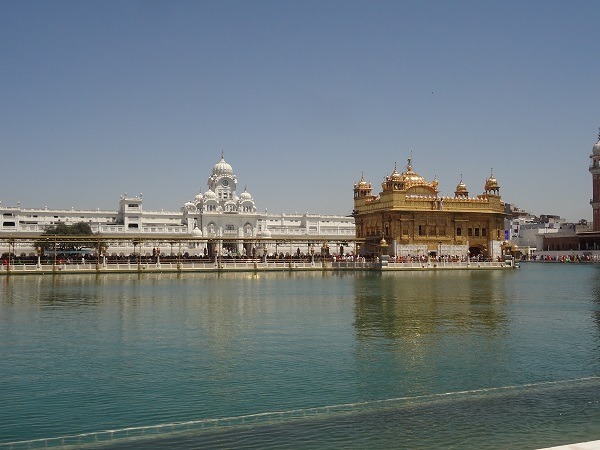
- Golden Temple (Harmandir Sahib): the central sanctuary of Sikhism, a short walk away.
- Partition Museum: museum dedicated to the partition of India and Pakistan in 1947, a few minutes' walk away.
- Hall Bazaar: bustling market for fabrics, spices and local crafts.
- Durgiana Temple: Hindu temple dedicated to the goddess Durga, with architecture inspired by the Golden Temple.
To explore other sites of memory and spirituality in northern India, see for example the Gurudwara Bangla Sahib in Delhi, another major Sikh landmark.
Frequently asked questions
Frequently asked questions
The official British death toll was 379, but Indian estimates speak of several hundred victims, possibly more than a thousand, as well as many wounded. The exact figure remains disputed due to the lack of a comprehensive census at the time.
Yes, the memorial is located about 5 minutes' walk from the Golden Temple (Harmandir Sahib). Both sites are typically visited on the same day.
Allow between 1 and 1.5 hours to walk through the entire garden, observe the remnants (walls, well, Torch of Liberty) and visit the historical gallery.
Admission is currently free. This information may change; it is advisable to check on arrival or with your accommodation.
No strict dress code is enforced, but respectful and discreet attire is recommended out of respect for the site's memorial character. If you plan to visit the Golden Temple afterward, bring a scarf to cover your head.
Plan your trip
Jallianwala Bagh fits naturally into an itinerary combining Sikh heritage, partition history and major stops in northern India. To build a tailor-made trip incorporating Amritsar, Delhi and Rajasthan, explore our suggestions for travel to India.
Nearby
Interested in this visit?
We can include it in your personalised itinerary.