Durgiana Temple
Dedicated to the goddess Durga, this Hindu temple in Amritsar mirrors the architecture of the Golden Temple: a central sanctuary on a lake, gilded facades and an atmosphere of intense devotion.
Durgiana Temple stands at the heart of Amritsar, dedicated to the goddess Durga. Built on an artificial lake, it mirrors the architecture of the nearby Harmandir Sahib: a central sanctuary connected to the shore by a causeway, gilded facades and white marble. A major Hindu pilgrimage site in Punjab, it draws devotees and visitors year-round, offering an atmosphere of intense spiritual devotion far from the tourist bustle of the Golden Temple.
Essential Practical Information
- Admission: free
- Dress code: head covering required, shoulders and legs covered
- Shoes: must be removed before entering the temple grounds
- Recommended duration: 45 minutes to 1 hour
- Access: central Amritsar, reachable by rickshaw or on foot from the old city
What You'll See
The main sanctuary sits on a lake whose waters are considered sacred. The causeway leading to the temple is lined with devotees at prayer. The interior houses representations of Durga and Lakshmi, adorned with flowers and offerings. The outer walls display painted mythological scenes. An ancient banyan tree grows within the grounds, traditionally associated with Hanuman according to local lore.
History and Context
The current temple dates to the early twentieth century, though the site has been revered for far longer. Its design deliberately mirrors the Sikh Harmandir Sahib, a testament to the coexistence of religious traditions in Amritsar. The place is also known as the Lakshmi Narayan Temple. Successive renovations have added the gilded coverings that give it its present-day appearance.
Highlights of Your Visit
The Causeway Over the Lake
Walking across the passageway above the water, surrounded by devotees bearing offerings, is the most striking moment. Early in the morning, the soft light on the lake creates a particularly reverent atmosphere.
The Sacred Banyan Tree
In the inner courtyard, an imposing banyan fig tree is linked to the legend of Hanuman. Pilgrims tie red threads here as a sign of their wishes. It's a quiet gathering point, often overlooked by hurried visitors.
The Aarti Ceremonies
The aarti rituals—offerings of light—are performed several times daily. Witnessing the evening aarti, with chanting and bells, gives a vivid sense of Hindu devotion in Punjab.
Etiquette and Visiting Rules
- Cover your head before entering: a scarf or cloth will do, and fabric is sometimes available at the entrance.
- Remove your shoes at the threshold of the temple grounds and place them in the designated areas.
- Modest dress is required: shoulders and knees covered for both men and women.
- Avoid turning your back to the main sanctuary during communal prayer.
- Photography is generally permitted in outdoor spaces; be discreet inside the sanctuary.
Photography Tips
The golden morning light (about an hour after sunrise) reflects beautifully on the lake and facades. From the causeway, a low-angle framing highlights the gilded dome against the sky. Avoid using flash inside the sanctuary and ask permission from devotees before photographing them.
Location and Access
Durgiana Temple is located in the Lohgarh neighbourhood, just a short walk from the old city bazaar in Amritsar. It's easily accessible by cycle-rickshaw or auto-rickshaw from Amritsar railway station. The Golden Temple (Harmandir Sahib) is about 1.5 km away, making it possible to combine both visits in the same half-day.
Wheelchair access to the outer grounds is possible, but the steps leading to the central sanctuary may present challenges.
In the Surroundings
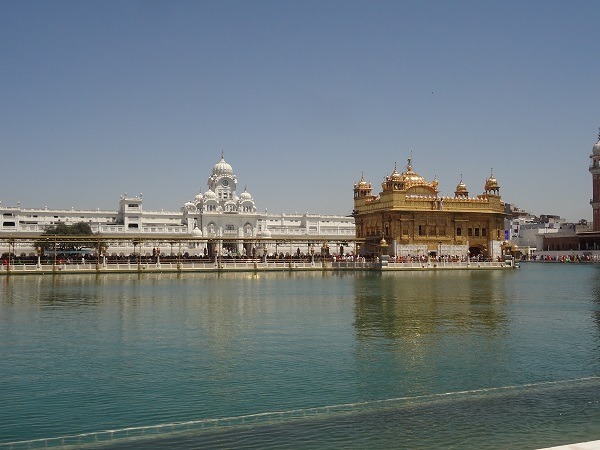
- Golden Temple – Harmandir Sahib: the most sacred Sikh shrine in the world, less than 2 km away.
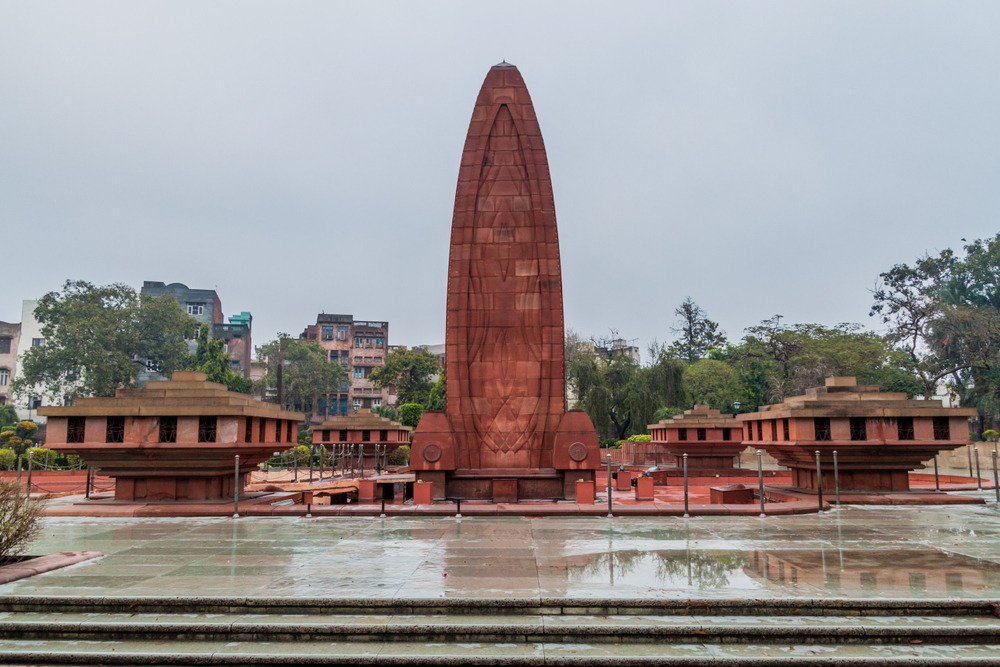
- Jallianwala Bagh: memorial garden of the 1919 massacre, near the Golden Temple.
- Wagah Border Ceremony: Indo-Pakistani military spectacle, about thirty kilometres from Amritsar.
- Gobindgarh Fort: eighteenth-century fortress converted into a cultural space in central Amritsar.
Frequently asked questions
Yes, the temple is accessible throughout the year. Crowds are larger during major Hindu festivals such as Navratri and Diwali.
Yes, your head must be covered within the temple grounds. A scarf or light cloth is sufficient. Fabric is sometimes available at the entrance.
Absolutely. The two sites are about 1.5 km apart. A half-day is enough for both if you start early in the morning to avoid crowds.
It is generally permitted in outdoor spaces and on the causeway. Inside the sanctuary, be discreet and avoid flash during ceremonies.
October to March offer pleasant weather. Summer (May-June) is very hot. The monsoon season (July-August) is manageable but humid.
No, admission is free for all visitors, as is the case with most major Hindu temples in Punjab.
Interested in this visit?
We can include it in your personalised itinerary.