Dalai Lama Complex
Dalai Lama Complex
Seat of Tibetan Buddhism in exile in Dharamsala, the Dalai Lama Complex brings together a temple, monastery, museum and archives. Practical visiting guide.
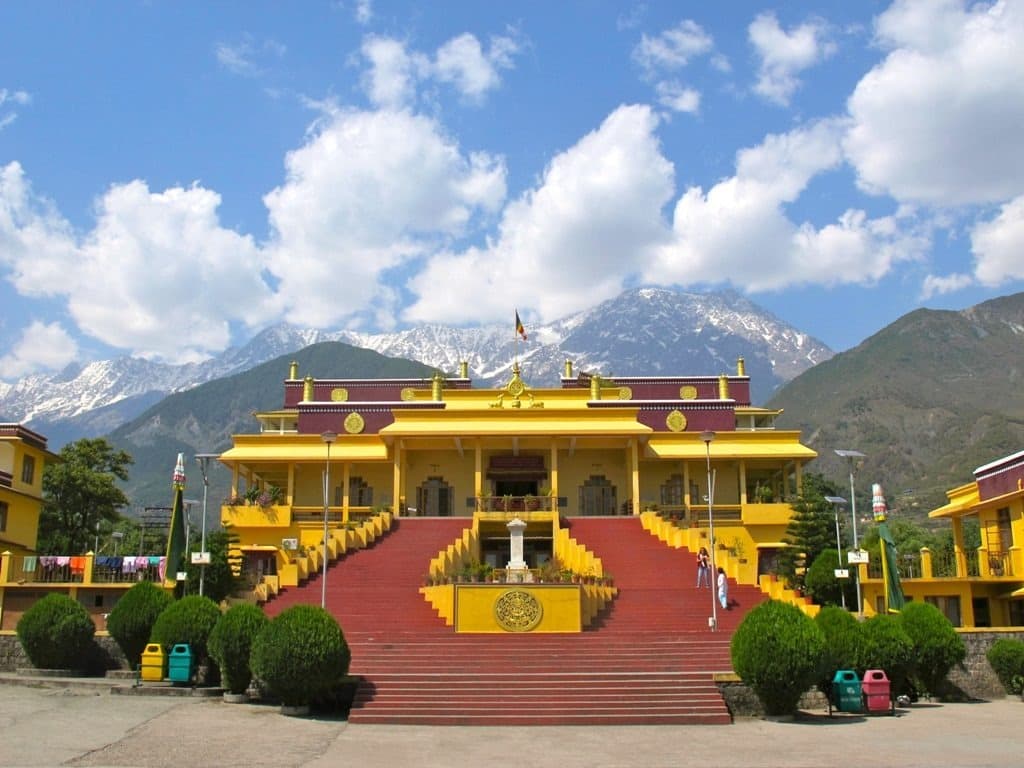
The Dalai Lama Complex, located in Dharamsala in Himachal Pradesh state, houses the seat of Tibetan Buddhism in exile. Situated on Temple Road, in the southern part of McLeod Ganj, it brings together the residence of the 14th Dalai Lama, Namgyal Monastery, Tsuglakhang Temple, an archive library and a museum devoted to Tibet's recent history.
Why visit the Dalai Lama Complex
The site is one of the principal centers of Tibetan Buddhism outside Tibet and the administrative heart of the Tibetan community in exile. You can observe monastic life in its daily rhythm: prayers, philosophical debates between monks, circumambulations of pilgrims around the temple. It is also a place where the political and cultural dimension of the Tibetan diaspora is particularly evident, through the museum and archives.
The visit thus combines three dimensions: spiritual (an active monastic complex), historical (the memory of Tibetan exile since 1959) and cultural (the preservation of texts, arts and rituals of Tibetan Buddhism).
History of the Complex
Upper Dharamsala, the upper part of the city also called McLeod Ganj or Little Lhasa, owes its current role to a specific event. In 1959, the 14th Dalai Lama Tenzin Gyatso fled Tibet following the Chinese People's Republic's suppression of the Tibetan national uprising. He found refuge in India with part of his community.
In 1960, Indian Prime Minister Jawaharlal Nehru offered him Dharamsala as a place of refuge. This former British hill station, equipped with existing infrastructure at altitude, quickly became the center of the Tibetan diaspora. The complex was then organized around the Dalai Lama's personal residence and Namgyal Monastery.
In 1970, the Library of Tibetan Works and Archives was inaugurated and confirmed the site's vocation as a place of preservation of Tibetan culture. The main temple, Tsuglakhang, was built as a replica of Lhasa's central temple, establishing a symbolic link with the Tibetan capital.
What to See On Site
Tsuglakhang Temple
The main temple of the complex, it hosts daily prayers, rituals and, at certain periods, public teachings. Three major statues occupy the sanctuary:
- Shakyamuni Buddha: the historical Buddha, Siddhartha Gautama, who attained enlightenment under the Bodhi tree.
- Avalokiteshvara (Chenrezig): bodhisattva of compassion, depicted with his multiple arms and faces, one of the central figures of Tibetan Buddhism.
- Padmasambhava (Guru Rinpoche): the master who introduced Buddhism to Tibet in the 8th century, considered the "second Buddha".
Namgyal Monastery
Also called Namgyal Dratsang, this monastery is directly attached to the Dalai Lama. Its monks participate in the prayers and rituals that accompany him. Late in the afternoon, it is often possible to attend philosophical debates between monks, codified by precise gestures (hand clapping, postures), a living teaching tradition.
The Dalai Lama's Residence
Located in the immediate vicinity of the temple, it remains closed to the public but is visible from the outside. It is the home of the spiritual leader when he stays in McLeod Ganj.
Library of Tibetan Works and Archives
It preserves sacred texts and philosophical writings in Tibetan, Sanskrit and English. It is a recognized study center, open to researchers as well as visitors interested in Buddhist thought.
The Tibetan Museum
Located within the complex, it documents Chinese occupation of Tibet and the history of exile through photographs, videos and objects. The visit usefully sheds light on the political context of the site.
Practical Information
- The complex is open to the public during daylight hours every day. Hours vary by building (temple, museum, library), so it is best to plan your visit for late morning or early afternoon.
- Access to the temple and monastery is generally free; certain areas (museum, library) may request a modest donation.
- Proper dress required: shoulders and legs covered in the temple. Shoes are removed at the entrance to prayer halls.
- Photography is tolerated outside; inside sanctuaries, follow posted signs.
- Plan for 2 to 3 hours to explore the entire complex at a leisurely pace.
When to Visit
The most comfortable period extends from March to June, with mild temperatures at altitude, then September to November after the monsoon, when views of the Himalayan foothills are clear. The monsoon (July-August) brings heavy rain and sometimes impassable roads. Winter (December-February) is cold and may be snowy, which limits travel but offers a quieter atmosphere.
Check the Dalai Lama's calendar before planning your trip: public teachings, given at certain times of year, attract many devotees. Major Tibetan festivals (Losar in February-March, the Dalai Lama's birthday in July) are also significant occasions.
How to Get There
Dharamsala can be reached from Delhi by several options:
- By air: Gaggal (Kangra) Airport, about ten kilometers away, is connected to Delhi by direct flights. This is the fastest option.
- By train: the nearest station is Pathankot (about 90 km), followed by a taxi or bus journey to McLeod Ganj.
- By bus: overnight connections link Delhi to Dharamsala (12 to 14 hours of travel).
From the center of McLeod Ganj, the complex can be reached on foot (Temple Road, southern part of town) or by local taxi.
Nearby Attractions
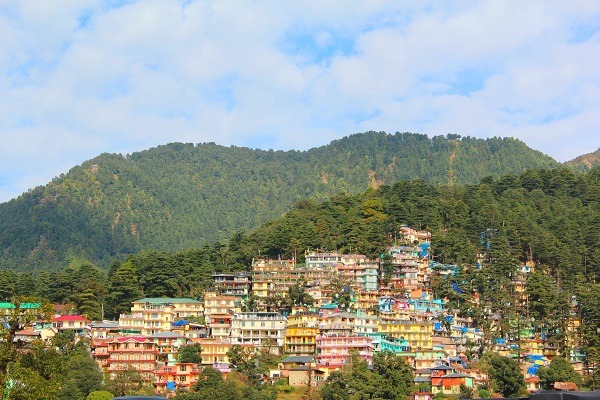
Dharamsala and its surroundings offer several natural extensions to your visit: McLeod Ganj's Tibetan market, Bhagsu waterfall, the village of Dharamkot and hiking trails to Triund. More broadly, the entire Dharamsala region deserves several days of exploration.
If you extend your journey to other Himalayan regions, Alchi Monastery in Ladakh is a major destination for Tibetan Buddhism in India.
FAQ
Frequently asked questions
It is rare but possible. When he is present, the Dalai Lama sometimes organizes public audiences called "blessing lines", usually Monday, Wednesday and Friday mornings. Registration must be done several weeks in advance at the security office, with presentation of your passport.
March-June and September-November offer the most favorable conditions. The monsoon from July-August makes access more difficult, and winter can be snowy.
Plan for 2 to 3 hours for the temple, monastery, museum and library. If you attend a prayer session or monastic debates, plan for a half-day.
Access to the temple and monastery is generally free. The museum and library may ask for a modest contribution. Donations are possible at the entrance.
Preparing Your Trip
The Dalai Lama Complex naturally fits into an itinerary combining the Indian Himalaya, Tibetan culture and Buddhist heritage. To build a tailor-made journey including Dharamsala, consult our travel ideas for India.
Interested in this visit?
We can include it in your personalised itinerary.