Basheshwar Mahadev Temple
Basheshwar Mahadev Temple
The largest stone temple in Kullu Valley, dedicated to Shiva, in Bajura near Bhuntar: Pahari architecture, Yoni Lingam and a thousand-year tradition.
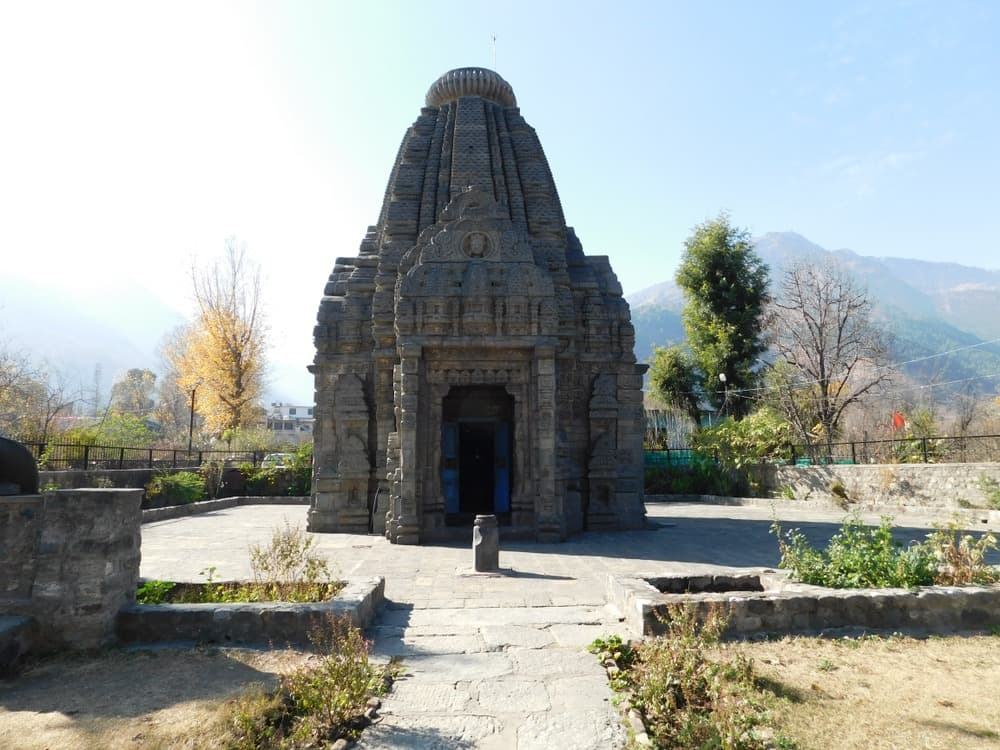
The Basheshwar Mahadev Temple stands in Bajura, about fifteen kilometres from Bhuntar, on the banks of the Beas River. It is the largest stone temple in Kullu Valley, in the state of Himachal Pradesh. This Shaivite sanctuary, also known as the Visveshvara Mahadev Temple, is today classified as a protected monument.
Why visit the temple
The Basheshwar Mahadev stands out for its size, age and resilience. Built in the typical Pahari architectural style of the western Himalayas, it survived the 1905 earthquake that struck the Kangra region and destroyed many neighbouring structures. The temple remains an active place of worship today, with pujas celebrated daily, making it both an architectural testament and a living sanctuary.
History and tradition
Local tradition attributes the temple's construction to the 8th century, and legend associates it with the Pandavas, the five heroic brothers of the Mahabharata. This legendary origin is shared by many Himalayan temples and is more akin to foundational narrative than verified historical dating. Historians place the building within the lineage of Kullu Valley's stone temples, erected between the 8th and 10th centuries.
After surviving more than a millennium and weathering the 1905 earthquake, the temple was placed under heritage protection by the Archaeological Survey of India.
What to observe on site
Pahari architecture
The Pahari style, characteristic of the mountainous regions of Himachal Pradesh, is recognised by its flat sikharas (sanctuary towers with flattened peaks), sloping roofs and extensive use of dressed stone. The outer façade is adorned with sculptures and carvings depicting Hindu deities and geometric motifs.
The main sanctuary
The central element is a large Yoni Lingam, symbolising the union between Shiva and his consort Parvati. Like most Shaivite temples, the entrance faces east, towards the sunrise, in accordance with the precepts of Hindu sacred architecture treatises (Vastu Shastra).
Secondary sanctuaries
Around the main sanctum, smaller chapels are dedicated to other deities in the Hindu pantheon:
- Vishnu, the preserver
- Ganesh, the elephant-headed god
- Lakshmi, goddess of prosperity
Practical information
Entry is free. The temple is open throughout the day, with a puja celebrated twice daily, usually in the morning and late afternoon. Visitors are asked to remove their shoes before entering, to wear clothing covering shoulders and knees, and to avoid photography inside the sanctum without permission. The visit itself is brief, taking about 30 to 45 minutes.
When to visit
The most favourable window runs from late September to November, after the monsoon: the skies clear, daytime temperatures remain mild and the surrounding peaks become visible again. Spring (March-May) also offers good conditions. Winter (December-February) is possible but cold, with possible snowfall at altitude. The monsoon months (July-August) are best avoided due to the risk of landslides on the Bhuntar-Bajura road.
How to get there
Bajura is located about fifteen kilometres from Bhuntar, which has the regional airport serving Kullu Valley and Manali. From Bhuntar, you can reach the temple by taxi or private car in approximately 30 to 45 minutes depending on road conditions. Local buses also connect villages on the right bank of the Beas, but frequencies are irregular. From Kullu, allow approximately one hour's journey.
In the surroundings
Kullu Valley is home to several stone temples of the same architectural style, including the Bijli Mahadev Temple perched on the heights and the Manikaran Temple renowned for its hot springs. More broadly, Himachal Pradesh and northern India offer a rich sacred heritage. To extend your exploration, you may turn to other sites on the subcontinent such as the Alchi Monastery in Ladakh or the State Museum in Bhopal for broader context on Indian religious art.
Frequently asked questions
Frequently asked questions
Yes, the temple is accessible to all visitors, provided they respect dress codes and remove their shoes before entering.
Allow approximately 30 to 45 minutes to observe the architecture, Yoni Lingam and secondary sanctuaries. If you attend a puja, plan for more time.
This attribution belongs to oral tradition and legendary narrative. Historically, the building dates to around the 8th century, with no certainty about its patrons.
No, access to the temple is free. A symbolic offering to the priest is customary if you participate in the puja.
Manali is approximately 50 km to the north. Allow 1.5 to 2 hours of travel via Kullu and Bhuntar, by taxi or private vehicle.
Planning your visit
The Basheshwar Mahadev Temple naturally fits into an itinerary combining Kullu Valley, Manali and, more broadly, Himachal Pradesh. To build a bespoke trip blending religious heritage and Himalayan landscapes, explore our travel suggestions in India.
Interested in this visit?
We can include it in your personalised itinerary.