City Tour by bike in Jodhpur
Cycling through Jodhpur means traveling through the Blue City at eye level: indigo alleyways, Sardar Market, sculpted havelis and neighborhood temples far from conventional itineraries.
Cycling through Jodhpur is a journey through the Blue City at ground level: narrow old town streets, bustling markets, indigo facades and the aroma of spices. This slow-paced approach reveals neighborhoods that tuk-tuk tours merely brush past. The Mehrangarh Fort dominates every corner; below, daily life revolves around bazaars and neighborhood temples.
Quick facts
- Activity type: guided or self-guided bike tour of the old town
- Recommended duration: 3 to 4 hours (half-day)
- What to wear: comfortable clothing, closed-toe shoes; cover shoulders and knees to enter temples
- Best time to visit: October to March, with comfortable temperatures for cycling
- Accessibility: not suitable — uneven pavement and slopes throughout the old town
What you'll see
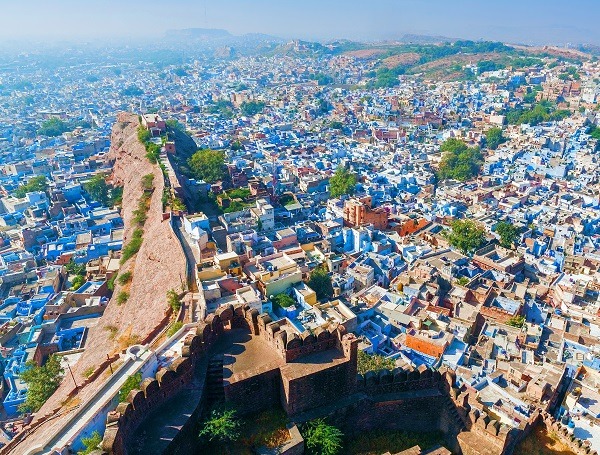
The route winds through the Blue City's historic quarters, where houses are painted in Jodhpur blue — a tradition rooted in Brahmin caste practices, now embraced by all residents. You'll pass through the Sardar Market, bustling from dawn, with stalls selling textiles, spices and copper goods. The alleyways lead to havelis (ancestral mansions) with intricately carved facades, often overlooked by hurried visitors.
History and context
Jodhpur was founded in 1459 by Rao Jodha, chief of the Rathore clan. The old town developed in the shadow of Mehrangarh Fort, whose ramparts still tower over the entire urban fabric. The blue color of the facades, characteristic of the historic quarter, dates back to the Mughal era; it also served a practical purpose, as indigo-based blue repels insects.
Highlights of your visit
Sardar Market
The commercial heart of the old town, this circular market around a Victorian clock tower concentrates spices, textiles and artisan workshops. By bike, you can stop freely without worrying about parking.
The blue alleyways of Brahmpuri
This densely packed quarter, nestled at the foot of the fort, offers the most iconic views of indigo facades. The lanes are too narrow for vehicles: the bike is ideal here.
The old town havelis
Several merchant mansions from the 18th and 19th centuries retain sculpted sandstone facades. Some are open to visitors; others reveal themselves from the street.
Neighborhood temples
Beyond the major circuits, small temples dedicated to Shiva or Ganesh dot the alleyways. Active and frequented by locals, they offer a glimpse into everyday religious life.
Photography tips
The golden morning light (between 7 a.m. and 9 a.m.) is ideal for capturing the blue facades without harsh shadows. Mehrangarh Fort frames beautifully in the background from the terraces of certain neighborhood cafés. Always ask permission before photographing residents or the interiors of temples.
Location and access
Jodhpur's old town is compact and entirely navigable by bike. The usual starting point for tours is the Sardar Market / Clock Tower area, reachable from downtown in just minutes. Bike rental shops and agencies offering guided tours are located near the Clock Tower and in the Navchokiya quarter. The Mehrangarh Fort is visible from almost anywhere on the route; it can be visited on foot after you've parked your bike at the base.
Nearby attractions
- Mehrangarh Fort — a 15th-century fortress dominating the city, with a museum and panoramic views over the blue rooftops.
- Jaswant Thada — a 19th-century white marble cenotaph, minutes from the fort.
- Umaid Bhawan Palace — an Art Deco palace from the 1940s, partly a museum and partly a luxury hotel.
- Sardar Market — the central market around the Clock Tower, perfect for spices, textiles and local handicrafts.
Frequently asked questions
October to March offers pleasant temperatures for cycling. Avoid the summer months (April to June) when temperatures regularly exceed 40 °C.
Both options are viable. A local guide helps you understand the historical context and access private courtyards closed to independent visitors. On your own, a neighborhood map is sufficient for the main points of interest.
Shoulders and knees must be covered in places of worship. Wear shoes that are easy to remove; some temples require you to take off your shoes at the entrance.
Yes, this is the most common combination. Do the bike tour in the morning, then head up to the fort late morning. Plan a full day for both.
Most alleyways are narrow but accessible by bike. Some very dense passages require you to dismount and walk. Motorized traffic is limited, making the route relatively safe.
Give it a go!
Our local experts arrange this activity for you.