Modhera Sun Temple
Modhera Sun Temple
Built in the 11th century by the Solanki dynasty, the Modhera Sun Temple combines an astronomically aligned sanctuary, a hall with 52 sculptured pillars, and one of Gujarat's most elaborate stepped basins.
Modhera is home to one of medieval India's finest preserved sun temples. Erected in the 11th century under the Solanki dynasty, this Gujarat complex brings together a main sanctuary, a columned hall, and a stepped basin of remarkable geometric precision. Designated a protected monument, the site is no longer an active place of worship, allowing for peaceful, unhurried exploration far from the bustle of major pilgrimage centres.
Practical information at a glance
- Entry : paid (ASI archaeological site — differentiated rates for Indian residents and foreign visitors)
- Status : protected monument, no active worship — cultural and tourist visits only
- Recommended duration : 1.5 to 2 hours to explore the three zones of the complex
- Dress code : no strict religious obligations, but neat attire recommended
- Best time to visit : October to March (moderate heat, favourable light)
What you'll see
The complex comprises three elements aligned on an east-west axis :
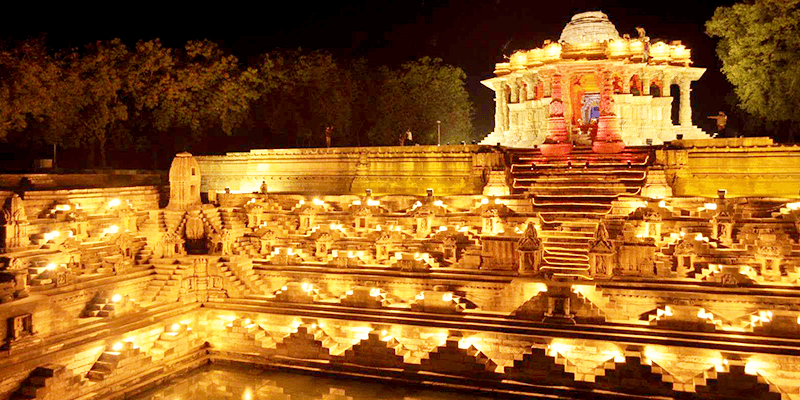
- Surya Kund : rectangular stepped basin adorned with small votive chapels on each level — one of Gujarat's most elaborate kunds.
- Sabha Mandap : hall with 52 finely carved pillars, one for each week of the year according to tradition.
- Guda Mandap (main sanctuary) : shikhara designed so that sunlight would directly illuminate the Surya statue at equinoxes and solstices.
History and context
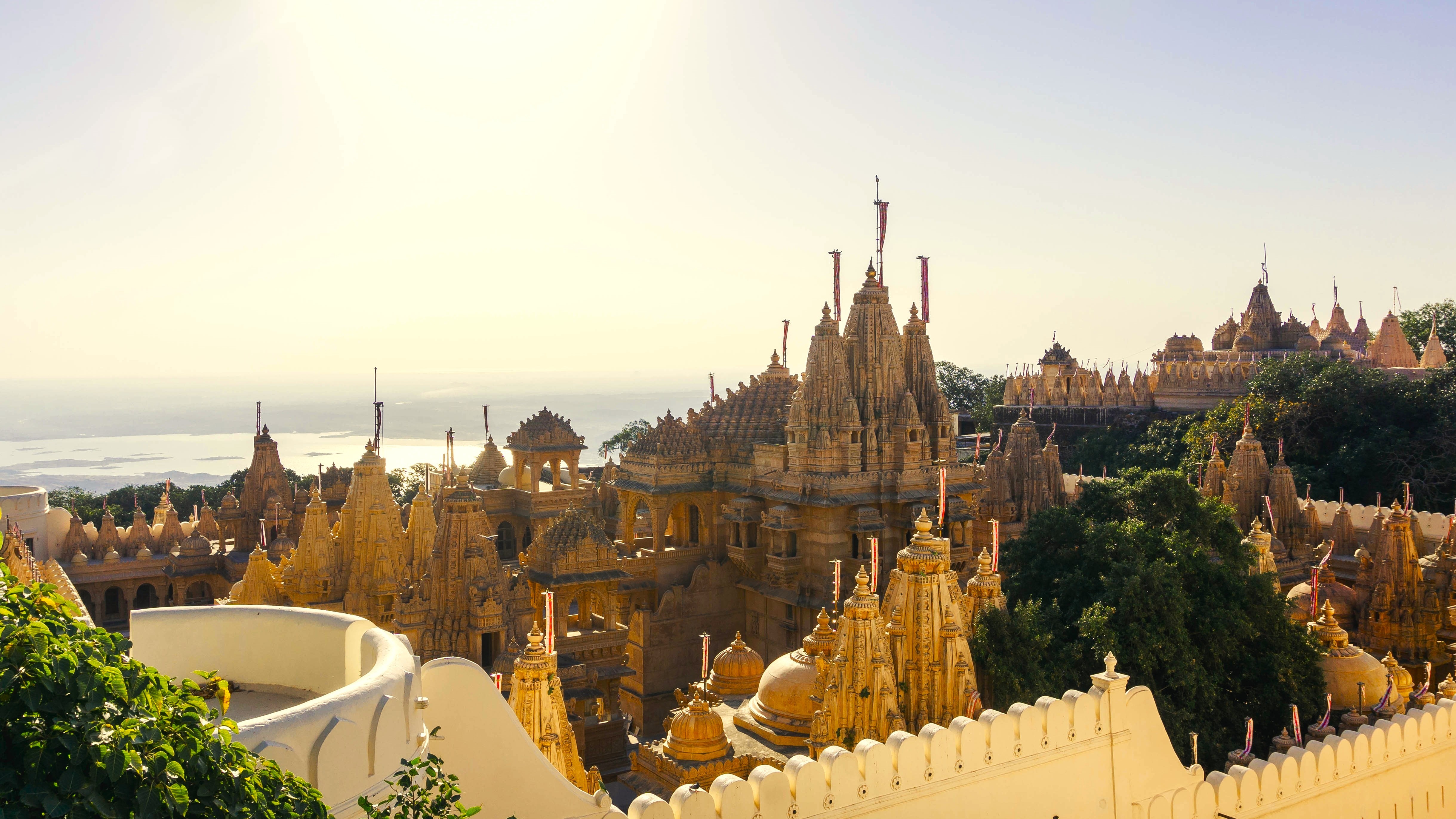
The temple was built around 1026 under the reign of Bhima I Solanki, shortly after victory over Mahmoud of Ghazni. The Solanki (or Chaulukya) dynasty left Gujarat a coherent architectural legacy, of which Modhera and the temples of Ranakpur are among the most celebrated examples. The site was damaged during subsequent invasions; the Surya statue has vanished, but the golden sandstone structure remains standing.
Highlights of your visit
The Surya Kund at dawn
Early morning, the raking light reveals the perfect symmetry of the basin and the reflections of the miniature chapels in the water. This is the site's most photographed moment, before group arrivals.
The carving of Sabha Mandap
Each pillar in the hall features narrative friezes — scenes from the Ramayana and Mahabharata, figures of dancers and deities. The iconographic density rivals the temples of Khajuraho, executed in the distinctive Solanki school style.
The sanctuary's solar alignment
At the spring and autumn equinoxes, the rising sun penetrates directly into the sanctuary and illuminates the location of the former statue. This deliberate astronomical alignment testifies to the skill of medieval architects.
The Uttarardh Mahotsav festival
Each January, the Gujarat government organises a classical dance festival within the temple grounds. Evening performances, with the monument illuminated in the background, offer a rare spectacle.
Photography tips
The golden morning light (an hour after sunrise) is ideal for the Surya Kund: cast shadows accentuate the geometry of the steps. In late afternoon, the western façade of the sanctuary takes on warm tones. Avoid midday: the pale sandstone overexposes easily. Photography is permitted across the entire site; no particular restrictions are noted for non-professional equipment.
Location and access
Modhera is located in Mehsana district, approximately 100 km north of Ahmedabad. The nearest town with accommodation is Mehsana (25 km away). From Ahmedabad, National Highway 947 is the most direct route; regular buses serve Mehsana, from where local taxis reach Modhera. No railway line serves the village directly. The site is partly accessible to people with reduced mobility for the surroundings, but the steps of the kund and the interior of the temple remain difficult to access by wheelchair.
In the surrounding area
- Patan — former Solanki capital, approximately 30 km away, renowned for the Rani ki Vav (stepped well inscribed on the UNESCO World Heritage list).
- Ahmedabad — Gujarat's principal city, the logical starting point for organising your Modhera visit.
- Siddhpur — historic town with Indo-Saracenic architecture, on the route between Mehsana and Patan.
Photos
Want to discover this destination?
Our local advisors design your tailor-made trip.