Pachmarhi
Pachmarhi
Madhya Pradesh's only hill station, Pachmarhi blends Satpura forests, waterfalls, prehistoric caves, and Shaivite pilgrimage at 1,067 meters altitude.
Pachmarhi is Madhya Pradesh's sole hill station, nestled in the Satpura range at approximately 1,067 meters above sea level. Surrounded by dense forests, gorges, waterfalls, and caves adorned with rock paintings, this former British cantonment offers a striking contrast to the scorching plains of central India. It also serves as the gateway to Satpura National Park, one of India's rare reserves where walking safaris are permitted.
Quick Facts
- Altitude: approximately 1,067 m
- Best time to visit: October to March (pleasant coolness, lush vegetation after the monsoon)
- Access: nearest railway station at Pipariya (approximately 47 km away); accessible by car or bus from Bhopal (~210 km) or Nagpur
- Recommended duration: 2 to 3 days to cover major sites
- Permits: certain areas of Satpura National Park require a forest permit, obtainable from the local office
- Attire: light but covered clothing for temples; sturdy hiking boots essential for gorges and waterfalls
What to See
Pachmarhi concentrates several landscape types within a compact area. The Bee Falls gorge (Rajat Prapat) plunges into a natural pool accessible by foot. The Dhoopgarh plateau, the highest point of the Satpura range, offers panoramic views of endless forest. The Pandava Caves, carved into sandstone, are linked to the legend of the Mahabharata. The rock paintings at Mahadeo Hills date back to prehistoric times.
History and Context
Captain James Forsyth discovered the plateau in 1857 and reported it to the British administration, which quickly developed it as a rest station for troops. Colonial architecture — bungalows, church, club — remains visible throughout the cantonment. Long before the British, the site was sacred to Shaivite worship: the Chauragarh temple, perched at 1,326 m, remains a major pilgrimage destination during Shivaratri.
Highlights of Your Visit
Dhoopgarh at Sunrise
The highest point of the Satpura range (approximately 1,352 m) is reached by car, then on foot. At dawn, a sea of clouds envelops the forested valleys. Arrive before sunrise to avoid weekend crowds.
Bee Falls and Rajat Prapat
Bee Falls is a waterfall accessible via a short hike from the main road. Rajat Prapat, taller and more remote, requires a jeep ride followed by a descent into the gorge on foot. Both sites are accessible from October to June.
Pandava Caves
Five Buddhist and Hindu caves carved into red sandstone, likely dating to the 4th-5th century. Local legend attributes them to the Pandavas of the Mahabharata. Entrance is free and the caves are well-preserved.
Chauragarh Temple
The pilgrimage requires climbing approximately 1,300 steps carved into the rock. At the summit, a Shiva lingam and thousands of metal tridents left by devotees create a unique atmosphere. The climb takes one to two hours depending on your pace.
Safari in Satpura National Park
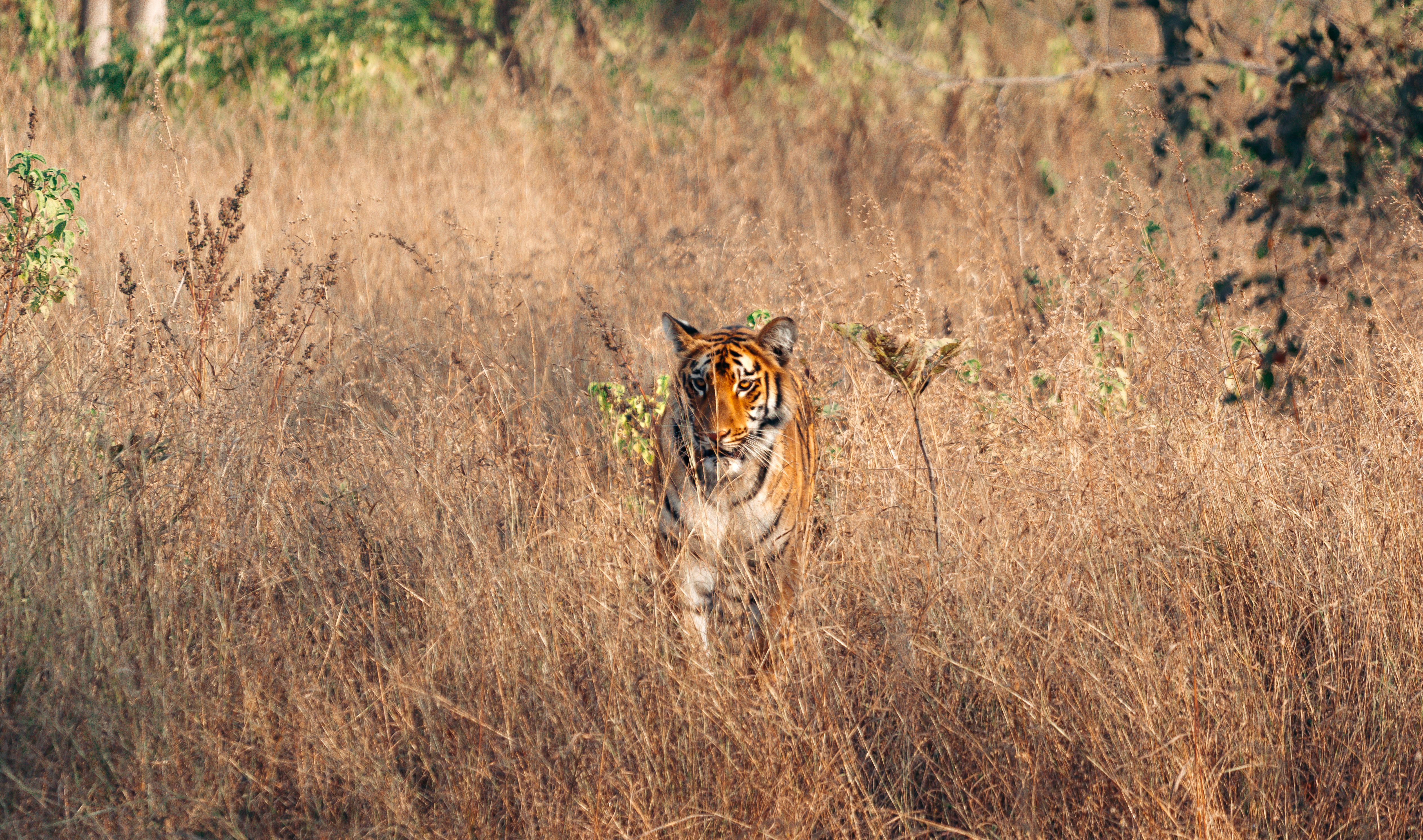
The park is home to tigers, leopards, gaurs, and sloth bears. Walking, horseback, and canoe safaris distinguish it from most Indian reserves. Bookings are made through park headquarters at Madhai or Pachmarhi.
Etiquette and Visiting Rules
- Remove your shoes before entering temples (Chauragarh, Mahadeo).
- Dress modestly in places of worship.
- Do not pick plants or flowers in protected forest areas.
- Campfires are prohibited in the national park.
Photography Tips
Golden morning light is ideal at Dhoopgarh and at the waterfalls. During the monsoon (July-September), vegetation is lush but forest trails can be impassable. Inside the Pandava Caves, natural light is dim: a tripod or high ISO setting proves useful. Photography is generally permitted at natural sites; check restrictions at temple entrances.
Location and Access
Pachmarhi lies in Hoshangabad district (Narmadapuram), in the heart of Madhya Pradesh. Pipariya railway station is the nearest rail gateway, connected to Bhopal and Nagpur. Buses and shared taxis link Pipariya to Pachmarhi. By car, the route from Bhopal winds through forest and hill country. Accessibility for visitors with mobility challenges is limited due to rugged terrain; the cantonment and certain gardens remain accessible.
Nearby
- Satpura National Park — walking and canoe safaris in one of central India's best-preserved forests.
- Bhopal — capital of Madhya Pradesh, approximately 210 km away, with its lakes, mosques, and museums.
- Sanchi — Buddhist stupas designated a UNESCO World Heritage Site, accessible from Bhopal in a day trip.
- Bhimbetka — rock shelters with prehistoric paintings, between Bhopal and Pachmarhi.
Frequently asked questions
October through March offers cool, pleasant weather. After the monsoon (September-October), vegetation is at its greenest. Avoid July-August if you want to access gorges and forest trails, which are often impassable.
Yes, a forest permit is required to enter protected zones of the park. It is obtained from the forest department office at Pachmarhi or Madhai. Organized safaris typically include this permit.
It involves approximately 1,300 steps and takes one to two hours of effort. The path is well-marked but steep. Proper hiking shoes and plenty of water are essential.
Yes. A classic itinerary connects Bhopal, Bhimbetka, Sanchi, and Pachmarhi over a week. The road from Bhopal to Pachmarhi passes near Bhimbetka, allowing for a stop.
At the Pandava Caves and natural sites, photography is generally free. In active temples like Chauragarh, check signs at the entrance; certain interior areas may be restricted.
The most common route passes through Pipariya (railway station), then a mountain road of approximately 47 km. State buses and private taxis serve this route. By car from Bhopal, expect about 4 to 5 hours depending on traffic.
Photos
Want to discover this destination?
Our local advisors design your tailor-made trip.