Jaipur
Jaipur
Capital of Rajasthan and a highlight of the Golden Triangle, Jaipur the Pink City unveils palaces, forts and bazaars. Complete guide to prepare your trip.
Nicknamed "the Pink City," Jaipur sits at the heart of the Aravalli mountain ranges. It is the capital of Rajasthan and one of the most fascinating destinations on the Indian subcontinent. Since India's independence, Jaipur has managed to preserve its heritage while modernizing. The city is brimming with architectural treasures, bustling markets and sumptuous palaces. Between royal history and artisanal traditions, Jaipur is absolutely worth a visit during your journey through India.
History
Jaipur takes its name from its founder, Maharaja Jai Singh II (1693–1744), a great warrior and astronomer. He ascended to the throne at age 11 following his father's death and received an exceptional education in sciences, philosophy, arts and military affairs. At 15, he impressed the Mughal emperor Aurangzeb with his intelligence and received the honorific title of "Sawai." Meaning "one and a quarter," this word emphasized that he surpassed the value of an ordinary man. His descendants inherited this prestigious title.
From the Rajput Kachwaha clan, Jai Singh II ruled a territory that extended far beyond present-day Jaipur, including regions such as Mewar (Udaipur) and Marwar (Jodhpur). After a period of tensions with the Mughal Empire, he allied with other Rajput states to consolidate his power.
Faced with the limitations of Amber, his former capital, he founded Jaipur by applying the scientific principles of "Shilpa Shastra," an ancient architectural treatise. The city, designed by Bengali architect Vidyadhar Bhattacharya, remains one of the best-planned cities in India.
After his death in 1744, his heirs fought over the throne, weakening the kingdom against invasions by neighboring Rajputs and the Marathas. Later, Jaipur maintained good relations with the British and remained loyal to the Raj during the 1857 uprising. However, British influence grew, limiting the kingdom's independence.
In 1876, Maharaja Ram Singh had Jaipur repainted pink, a color symbolizing hospitality, to welcome the Prince of Wales (future Edward VII), giving the city its nickname of "Pink City." He also commissioned the artificial Ramgarh Lake to meet the growing water needs of the population.
In the 20th century, under Maharaja Man Singh II, Jaipur underwent major development with the construction of public buildings such as schools, hospitals and the secretariat. After India's independence in 1947, the city merged with Jodhpur, Jaisalmer and Bikaner to form Rajasthan. Man Singh II was appointed Rajpramukh (governor) of the new province, but this title was abolished in 1956 when the city became the capital of Rajasthan.
What to See and Do in Jaipur?
Visiting Jaipur means wandering through an open-air museum. From the elegance of palaces to the bustling lanes of its bazaars, every place tells a story and enriches your stay.
1. City Palace
In the heart of Jaipur's old town, City Palace immerses you in maharaja opulence. This vast complex harmoniously blends Rajput architecture with Mughal and European influences. As you explore, you'll pass through inner courtyards, carefully maintained gardens and lavishly decorated pavilions. The museums display royal costumes, finely crafted weapons and precious historical documents. Take time to admire the Pritam Niwas Gate, famous for its hand-painted motifs, each symbolizing a season.
2. Hawa Mahal
Nicknamed the "Palace of Winds," Hawa Mahal immediately catches the eye with its pink facade adorned with 953 small windows. Built in 1799, it allowed women of the court to observe street life while remaining out of view. Climb to the top and be seduced by the views of Jaipur's bustling lanes and rooftops. The interplay of light at dawn or sunset is particularly magical.
3. Jal Mahal
Perched in the middle of Man Sagar Lake, Jal Mahal appears to float on water. Although this palace is not open to the public, you can appreciate its full beauty from the shore, especially early in the morning when the atmosphere is peaceful and the surrounding hills are reflected in the water.
4. Amber Fort
Amber Fort, located about ten kilometers from the center, dominates the valley with its imposing ramparts and majestic courtyards. The former residence of maharajas before Jaipur's construction, it reveals a blend of Hindu and Mughal styles. You'll discover rooms decorated with mosaics, such as the Sheesh Mahal, covered with thousands of tiny mirrors. Don't hesitate to climb to the ramparts to admire the view over Maota Lake and the Aravalli hills.
5. Jaigarh Fort
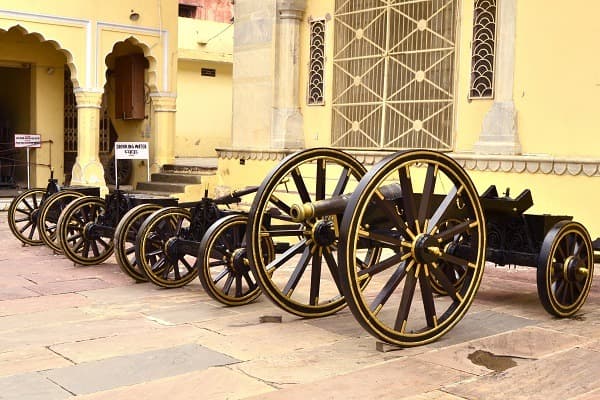
Jaigarh Fort, connected to Amber Fort by an underground passage, served as a garrison and arsenal. You'll see the Jaivana, considered the world's largest cannon on wheels. The ramparts offer an exceptional panorama over Amber and its surroundings.
6. Nahargarh Fort
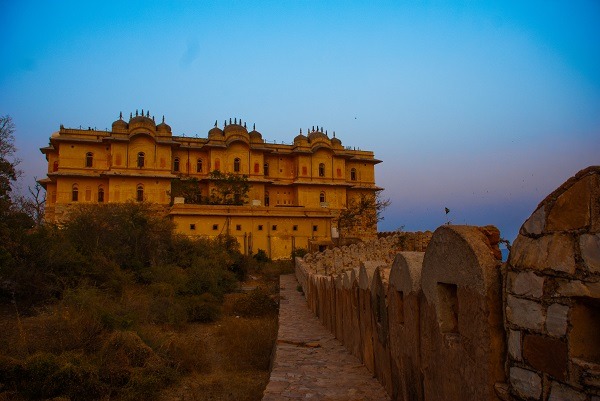
Nahargarh Fort perches on a ridge overlooking Jaipur. It was a summer retreat for the royal family. Its location makes it an ideal spot for watching the sunset over the Pink City. Inside, you'll find decorated rooms and delicate frescoes, testimony to discreet refinement.
7. Birla Mandir
Built in white marble, Birla Mandir is a modern temple dedicated to Vishnu and Lakshmi. Its finely carved facades and luminous interior make it a place of calm and contemplation. It is also a remarkable landmark at the foot of Moti Dungri hill.
8. Jantar Mantar
Jantar Mantar is an astronomical observatory built by Jai Singh II. It is listed as a UNESCO World Heritage Site. You'll see impressive stone instruments, some measuring several meters, capable of calculating time with great precision. It's a fascinating place that blends science and history.
9. Elephant Sanctuaries
On the city's outskirts, certain sanctuaries offer the opportunity to meet elephants in a respectful setting. You can feed them, bathe them and learn more about their way of life.
10. Johari Bazaar
It's impossible to leave Jaipur without strolling through Johari Bazaar, renowned for its precious and semi-precious gemstone jewelry. The colorful shops also overflow with fabrics, saris and handicrafts. Be prepared to negotiate—it's a tradition here as much as an art.
11. Ram Niwas Gardens and Albert Hall Museum
A true green lung in the heart of the city, Ram Niwas Gardens deserves a visit. They're perfect for a shaded break. At the center, Albert Hall Museum, with its Indo-Saracenic architecture, houses collections ranging from ancient sculptures to Rajasthani miniatures.
12. Rajasthani Cuisine
Finally, when visiting Jaipur, don't miss discovering local specialties such as dal baati churma, an emblematic dish made with lentils and small balls of dough baked in an oven, served with a sweet dessert. Also try crispy kachoris, rose or saffron-flavored lassis, and ghewar, festive pastries. The flavors are generous, spiced, and reflect Rajasthan's hospitality.
What's the Best Time to Visit Jaipur?
The best period to visit this region of Rajasthan extends from October to March. Winter (November–February) offers mild temperatures and dry weather, conducive to exploring the city. Avoid summer (May–June) with its extreme heat and monsoon season (July–September) with its rains.
Located about 280 km from Delhi, Jaipur is easily accessible and constitutes an essential stop during a stay in India. Various transport alternatives are available to reach this city. By air, flights depart daily from New Delhi, Aurangabad, Udaipur and Bombay, and three times weekly from Varanasi and Kolkata. Recently expanded, the railway line connects Jaipur, New Delhi and Ahmedabad. Bus is also a viable option.
In Jaipur, the rickshaw remains the first choice in terms of transport. Ideal for relatively short journeys, this tricycle vehicle has the advantage of being able to weave through traffic and thus avoid congestion. The ride costs around 100 rupees, with the possibility of renting for a day from 500 rupees. More rustic but practical and eco-friendly, hand-pulled carts are reserved for very short trips. More common, several bus lines connect different parts of the city.
As a modern solution, renting a car with a driver allows you to enjoy extended outings around the city and surrounding areas at an affordable rate. Agency managers are at your service at all times to provide you with more information.
How Many Days Do You Need to Visit Jaipur?
To make the most of Jaipur, ideally plan two to three days. This timeframe will allow you to discover the main sites, from majestic forts to City Palace, passing through colorful bazaars and emblematic temples. You'll also have the chance to taste local cuisine and explore the surroundings, such as Amber or the Aravalli hills.
Where to Stay in Jaipur?
Choosing the right neighborhood to stay in Jaipur depends on the type of experience you're seeking. If you want to be in the thick of things and close to major monuments like City Palace or Hawa Mahal, the old town is ideal, though noisy. For more peace while remaining well-situated, opt for Bani Park, a residential neighborhood popular with travelers. Finally, if you're looking for charm and a greener atmosphere, choose the Civil Lines area, known for its quiet avenues and spacious accommodations.
Attractions in Jaipur
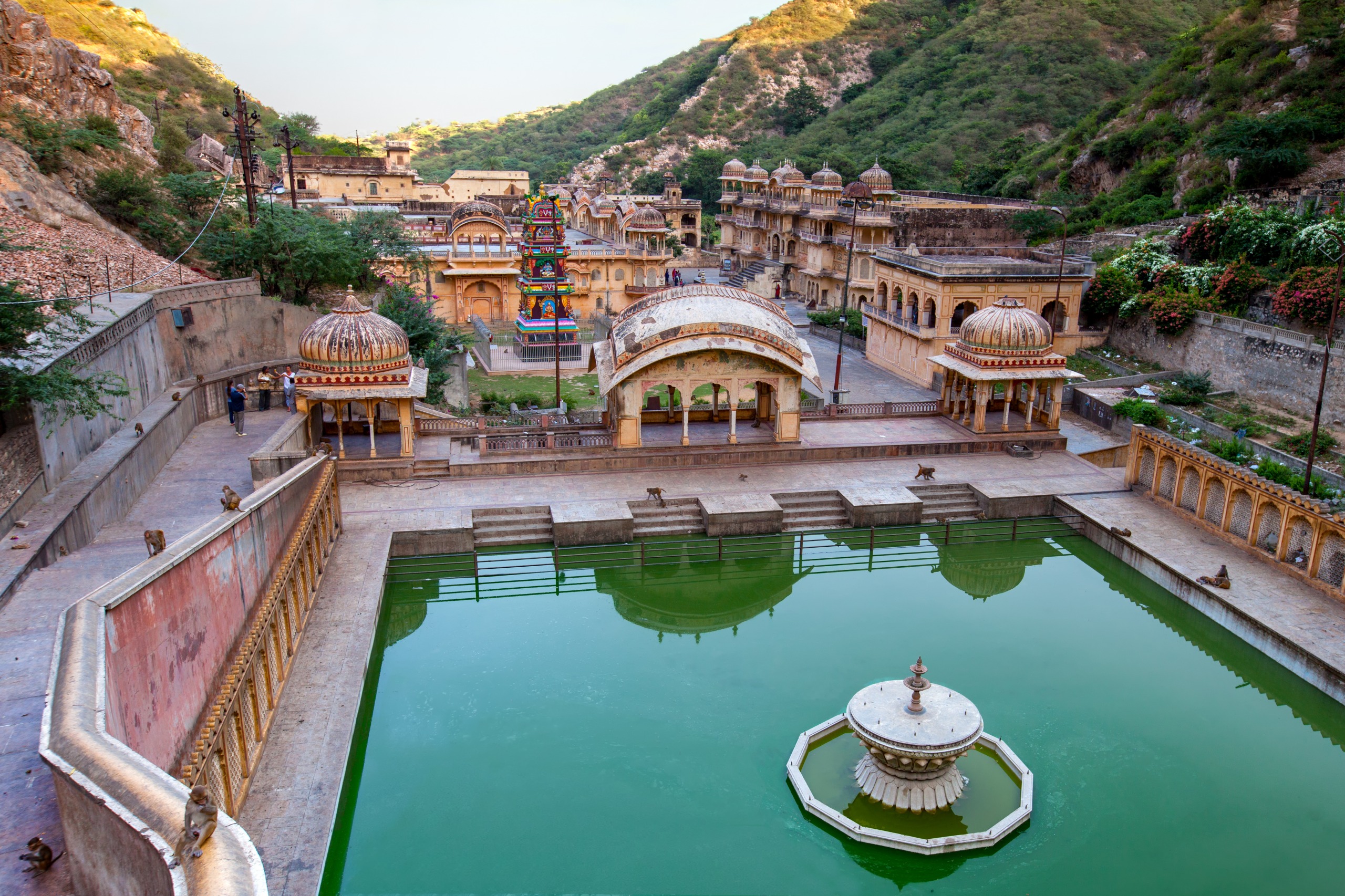
Monkey Temple (Galta Ji)
Le Galta Ji, complexe de temples hindous niché dans une gorge à 10 km de Jaipur, mêle architecture en grès rose, bassins sacrés et colonie de singes.
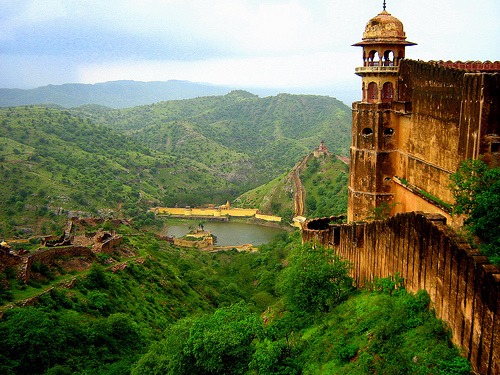
Fort Jaigarh
Forteresse militaire dominant le Fort Amber, le Jaigarh abrite le Jaivana, plus grand canon sur roues au monde, ainsi que palais, arsenal et fonderie historique.
Nahargarh Fort
Perché sur les Aravalli, le fort Nahargarh domine Jaipur depuis 1734. Histoire rajpoute, palais peints et panorama sur la ville rose.
Accommodation in Jaipur
See all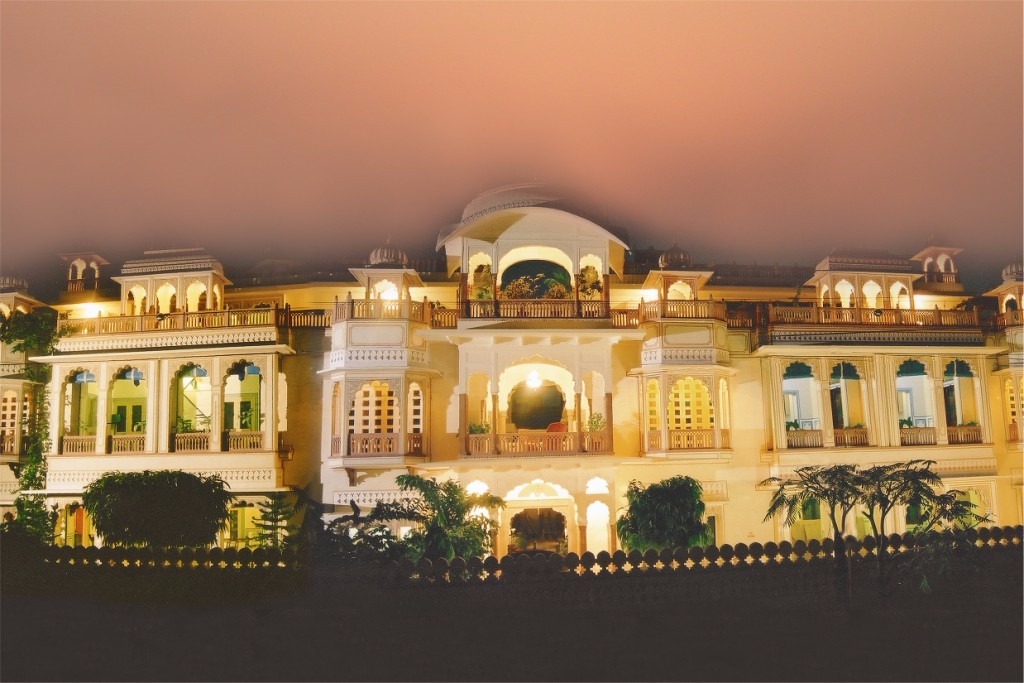
Shahpura house
Demeure patrimoniale rajput-moghole à Jaipur, ancienne propriété de la famille Shahpura, avec fresques, marbre, pierres semi-précieuses, piscine et spa.
Fort Chandragupt
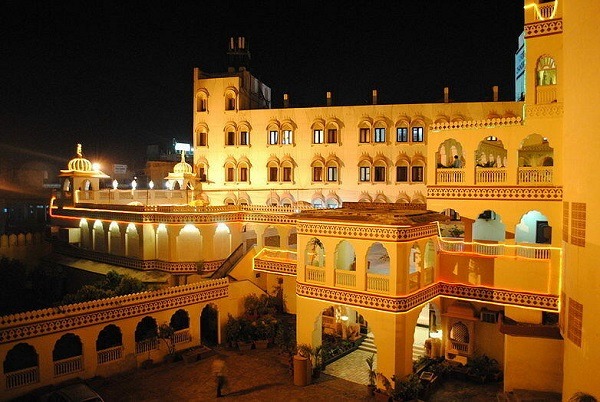
Hôtel du patrimoine de 92 chambres au cœur de Jaipur, avec restaurant panoramique tourné vers le Fort de Nahargarh et décor de peintures royales.
Alsisar Haveli
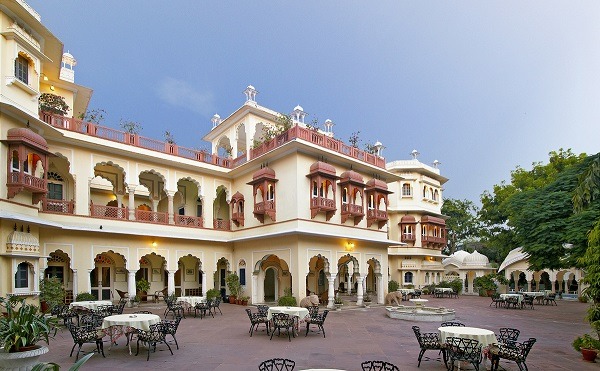
Ancien haveli rajasthani transformé en hôtel patrimonial au centre de Jaipur, 45 chambres autour de cours à arcades, mobilier d'époque et restaurant maison.
Want to discover this destination?
Our local advisors design your tailor-made trip.