Gajner
Gajner
Just 32 km from Bikaner, Gajner captivates with its migratory bird-lined lake, the maharajas' red sandstone hunting palace, and a wildlife reserve bordering the Thar Desert.
Gajner is a small village in Rajasthan, situated roughly thirty kilometers west of Bikaner, on the edge of the Thar Desert. It is known for its artificial lake and the former hunting palace of the maharajas of Bikaner, now repurposed as a heritage hotel. The site appeals to nature enthusiasts and those drawn to Rajasthani-colonial architecture, offering respite from the frenzy of larger cities.
Practical Information at a Glance
- Access: approximately 32 km from Bikaner via National Highway NH62; reachable by taxi or rental car from Bikaner.
- Recommended duration: half-day to a full day.
- Best time to visit: October to March, when migratory birds are present on the lake.
What to See
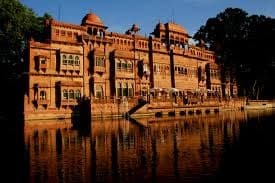
Gajner Lake, fed by an irrigation canal, attracts thousands of migratory birds in winter: ducks, bar-headed geese, cranes, and cormorants. Rising from its shore stands the Gajner Palace, built in local red sandstone, a blend of Rajasthani architecture and British colonial influences. The surrounding forest shelters nilgai antelope, deer, and chinkara (Indian gazelles).
History and Context
The palace was erected in the early twentieth century by Maharaja Ganga Singh of Bikaner as a hunting lodge. It hosted the Viceroy of India and other British dignitaries for waterfowl hunting expeditions. Following independence, the estate was transformed into a heritage hotel managed by the royal family of Bikaner.
Highlights of Your Visit
The Lake and Its Birds
Between November and February, the lake becomes a living canvas of migratory birds from Central Asia. A boat ride allows close observation of the colonies. Amateur ornithologists will find this a remarkable vantage point requiring no specialized equipment.
Gajner Palace
The red sandstone façade, ornate jharokhas (corbelled balconies), and manicured gardens exemplify the princely retreat aesthetic of Rajasthan. Even without staying at the hotel, the exterior and lakeside grounds are accessible to passing visitors.
The Wildlife Reserve
The khejri and acacia forest surrounding the lake forms a sanctuary where nilgai, chinkara, and desert hares roam freely. A jeep safari or guided walk offers opportunities to observe several species.
Photography Tips
Golden hour light at sunrise over the lake and palace provides the finest conditions. Winter mornings bring spectacular avian formations. A telephoto lens is invaluable for wildlife. Avoid midday; the light is harsh and birds less active.
Location and Access
Gajner lies approximately 32 km west of Bikaner on the road toward Jaisalmer. Most visitors arrange an excursion from Bikaner by taxi. No regular direct bus service is reliably documented; taxi remains the most dependable option. The site is not accessible for persons with reduced mobility due to unimproved pathways around the lake.
Nearby Attractions
- Bikaner — fortified city of Rajasthan featuring the Junagarh Fort and ornate havelis, 32 km away.
- Junagarh Fort — sixteenth-century fortress in the heart of Bikaner, one of Rajasthan's best-preserved forts.
- Karni Mata Temple (Deshnok) — temple renowned for its thousands of sacred rats, approximately 30 km south of Bikaner.
Frequently asked questions
October to March: temperatures are pleasant and migratory birds populate the lake. Summer (April-June) is intensely hot and avian wildlife nearly absent.
The lake surroundings and palace exterior are generally accessible to passing visitors. The hotel interior is reserved for guests; contact the establishment directly regarding possible visits or dining options.
Taxi from Bikaner is the most practical solution for covering the 32 km distance. Plan for round-trip fare with waiting time if making a day excursion.
Yes. A day trip from Bikaner can include Gajner in the morning and Karni Mata Temple in Deshnok in the afternoon, both accessible by taxi from the city.
Stay on marked pathways around the lake to avoid disturbing wildlife. Keep noise to a minimum, especially at dawn when birds are most active. No specific dress code is required.
Photos
Want to discover this destination?
Our local advisors design your tailor-made trip.