Belur
Belur
Once the capital of the Hoysala dynasty in Karnataka, Belur is home to the Chennakeshava Temple, a masterpiece of Vesara architecture inscribed on UNESCO's World Heritage list in 2023.
Located in the Hassan district of Karnataka State in India, Belur is the former city of the Hoysala, a dynasty that ruled this part of the country from the 11th to the 14th century. After converting to Jainism, the sovereigns designated the city as an alternative capital. Its rich history gives Belur considerable appeal in the world of tourism. The city boasts several tourist attractions, chief among them the impressive Chennakeshava Temple.
History of Belur
Belur was once known as Velapura. In the 11th century, following various wars between the sultanates of northern India for control of Dwarasumuda, the city became the first capital of the Hoysala dynasty.
The Hoysalas ruled Belur from the 11th to the 14th century. According to legend, the name of this dynasty comes from two words: Hoy and sala. Hoy means "to strike" and sala refers to "an ancient heroic chief of the tribe".
Charmed by the city, the sovereigns renamed it "Vaikuntha Bhoomi", meaning "the abode of Vishnu". Others called it "Dakshina Varanasi" or "the sacred city of the Hindu south".
What to See and Do in Belur?
Belur possesses great cultural and historical wealth, as evidenced by its numerous Hoysala monuments, inscribed on UNESCO's World Heritage list in 2023. Among the most notable are:
Chennakeshava Temple
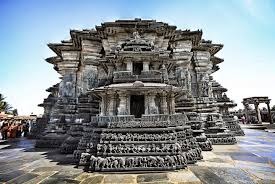
The Chennakeshava Temple is Belur's main attraction. Erected in 1117, this edifice stands as one of the finest constructions of the Hoysala dynasty. It represents one of the twenty incarnations of Lord Vishnu. Its construction took 103 years.
The Chennakeshava Temple perfectly exemplifies Vesara architectural style. It houses a gopura dating from the 14th century and a fine collection of artwork associated with Krishna and other forms of Vishnu. The sculptures depicting scenes from the Upanishads, Mahabharata and Ramayana, the statue of Darpana Sundari and the figures representing Shantala Devi are all worth seeing.
Sundareshvara Temple
Considered Belur's oldest temple, the Shankareshvara Temple, also known as Shankaralingeshwara, predates the construction of the celebrated Chennakeshava complex. Dedicated to Shiva, this sanctuary is located approximately 400 metres north-west of the main gopura of the Chennakeshava Temple. It stands out for its phamsana-style shikara, its square plan, a well-preserved sukhanasi and relatively understated sculptures. The remains of its mandapa are still visible nearby.
Pathaleshwara Hoysala Temple
This small temple dedicated to Shiva stands about 600 metres east of the gopura of the Chennakeshava Temple. It captivates with the fineness of its carved decorations, despite its modest size.
Other Interesting Monuments in the Hassan District
Hoysaleswaran Temple - Halebid
During your visit to Belur, don't miss the Hoysaleswaran Temple, located in Halebid, 16 km from Belur. It is also part of UNESCO's World Heritage. Here you'll find an impressive ensemble of Hindu and Jain temples, renowned for their 12th-century architectural and sculptural masterpieces.
Bucesvara Temple – Koravangala
Located near Hassan, this twin temple reflects the evolution of pre-Hoysala styles. The edifice stands out for its sculptures inspired by the three major traditions of Hinduism: Shaivism, Vaishnavism and Shaktism.
Nageshvara and Chennakeshava Temples – Mosale
This complex, also located near Hassan, brings together two temples dedicated respectively to Shiva and Vishnu. The ensemble represents a fine architectural synthesis between Shaivite and Vaishnavite currents.
Veera Narayana Temple – Belavadi
Approximately 25 km from Belur, this vast complex houses three sanctuaries and presents a rich collection of sculptures in excellent condition. Noteworthy features include a Vesara-style superstructure and works representing all the major spiritual schools of Hinduism.
Practical Information
When to Visit Belur?
The period from October to March offers optimal conditions for exploring Belur. Temperatures pleasantly range between 20°C and 28°C, creating an ideal climate for admiring the city's architectural wonders.
November and December are appreciated for their particular mildness. The morning light brings the temple sculptures to life, revealing every detail of their profusion with remarkable clarity.
Avoid the rainy season from June to September, when humidity can make visits less comfortable.
For air travel, you can land at Bangalore Airport. Once you arrive in Bangalore, take a bus or rent a car to cover the 233 km separating this city from Belur, passing through Nelamangala, Kunigal, Chennarayapatna and Hassan. If you choose to travel by rail, the nearest station is at Hassan, 37 km from Belur. Regular buses are also available from nearby towns.
Want to discover this destination?
Our local advisors design your tailor-made trip.