Agra
Agra
From the Taj Mahal to the red sandstone fort, Agra concentrates three centuries of Mughal splendor. Complete guide: UNESCO sites, insider tips and transport.
If India is a land of contrasts, legends, and colors, Agra is one of its most precious gems. Dominated by the majestic silhouette of the Taj Mahal, Agra is far more than a simple tourist stop—it immerses you in the opulent world of the Mughal emperors, between enchanting palaces, white marble mausoleums, Persian gardens, and lively streets. Whether you're a history enthusiast, architecture lover, or simply curious, Agra promises a complete immersion into a world of art, grandeur, and timeless emotion.
Where is Agra Located in India?
Agra is situated in northern India, in the heart of Uttar Pradesh. It lies approximately 200 km southeast of Delhi, on the banks of the Yamuna River. This mythical city captivates travelers from around the world with the richness of its world heritage, its imperial past, and its buildings of unparalleled beauty.
History
Agra corresponds to Agrabana, the paradise city mentioned in the sacred book Mahabharata. It is also believed to be Ptolemy's Agara. According to an inscription from 1318 discovered in Delhi, the city was previously called Agrotka.
It was Sultan Sikandar Lodi who founded the present-day city of Agra between 1501 and 1504. The city subsequently became the capital of the Delhi Sultanate. After defeating the ruler of Delhi, Mughal emperor Babur took possession of the city in 1526. Agra regained its capital status only in 1556, at the initiative of the famous patron Akbar. The golden age under his reign, followed by Jahangir and Shah Jahan, witnessed the flourishing of Mughal art, urban planning, and palatial architecture.
Until the mid-17th century, the city developed continuously. In 1631, Emperor Shah Jahan ordered the construction of the Taj Mahal, before making Delhi the new capital of the empire.
Following the decline of the Mughal empire, control of Agra passed to the Jats in 1761, then to the Rajputs in 1764. The Maratha Sindhia seized the city in 1784 before the British invasion in 1803.
In 1857, the Sepoy Rebellion against the British East India Company marked the first Indian war of independence. The fort of Agra bears witness to this bloody battle.
Attractions
Today, Agra presents itself as a tourist city whose reputation remains deeply linked to the Taj Mahal. Historic monuments and distinctive architecture transport you through time as you discover the city's rich past.
The Taj Mahal
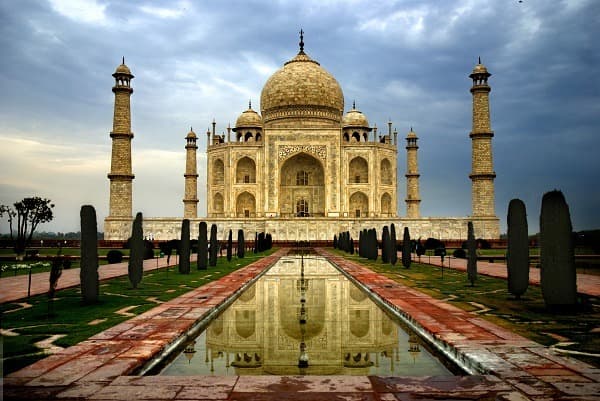
At the heart of Agra, the Taj Mahal ranks among the must-see sites to discover during a stay in India. With its extravagant architecture and romantic history, this white marble Mughal mausoleum inevitably stands as the premier tourist attraction in India.
Rabindranath Tagore, the first Indian recipient of the Nobel Prize in Literature in 1913, described the Taj Mahal as "a tear on the cheek of time."
Agra Fort
On the west bank of the Yamuna River, Agra Fort stands with its imposing red sandstone façade. Built during Akbar's reign, this palace, 20 meters in height, is protected by walls stretching 2.4 km long. Beyond the Amar Singh Gate, you find yourself in a sumptuous garden laid out during Jehangir's era.
Itimad-ud-Daulah
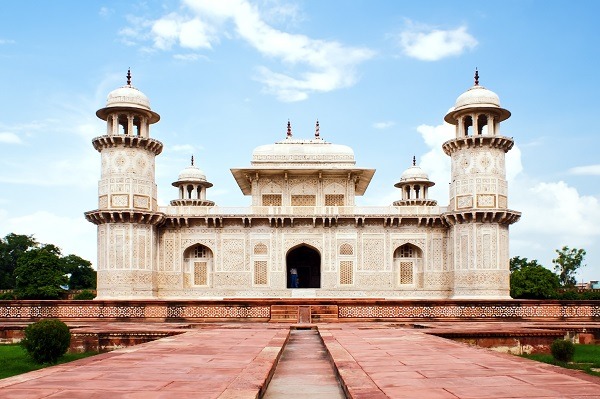
On the opposite side of the water, the mausoleum of Itimad-ud-Daulah represents the first Mughal structure built entirely of marble and featuring the decorative art technique known as pietra dura. The site honors Mirza Ghiyas Beg, a prominent figure during Emperor Jahangir's reign and father of the renowned Nur Jahan, wife and true right hand of Akbar's son.
The Sikandra Garden
Northwest of Agra, discover the Sikandra Garden housing the marble tomb of sovereign Akbar. The mausoleum stands out for its decorative motifs representing the various religions to which the emperor adhered: Hinduism, Buddhism, Islam, Jainism, and Catholicism.
Fatehpur Sikri
Just a few kilometers away, don't miss the majestic Fatehpur Sikri, the former capital of the Mughal empire, also designated as a UNESCO World Heritage site. Here you can experience the full architectural grandeur of Akbar's era.
Bharatpur and Its Surroundings
Agra also serves as the ideal starting point for visiting the Bharatpur bird sanctuary, nicknamed the "paradise of birds." Not far away, you can also explore the spiritual land of the Hindu god Krishna at Mathura and Vrindavan.
Local Crafts and Shopping
Beyond its historic sites, Agra abounds with shops offering an array of artisanal products, including famous Taj Mahal replicas, leather handbags, wallets, and more. You'll also find a variety of decorative items, from carved stones to embroidered carpets and copper objects. Among the best places to shop at competitive prices are Kinari Bazaar, Sadar Bazaar, the Taj Mahal Complex, and Raja Mandi.
When to Visit?
To fully enjoy the charms of Agra, plan your visit between October and March, during the winter season. Temperatures are moderate, ranging from 22°C to 32°C. The rainy season, marked by the monsoon, begins around July and ends in September. In April, May, and June, the region experiences significant rainfall and temperatures that can exceed 37°C. Climate can therefore strongly influence your travel experience.
Situated 204 km from Delhi, on the banks of the Yamuna River, Agra is served by numerous transport options. The city has an airport, though its international connections remain limited. The best approach is to arrive at New Delhi by your own means, then take a domestic flight to Agra. By rail, the city has the distinction of being served by India's fastest train from Delhi. The 200 km journey takes just 2 hours, compared to 5 hours by car.
There are various transport options to choose from for getting around Agra:
By Rickshaw
In Agra, the most typical and practical means of transportation remains the rickshaw. It allows you to navigate easily through the city's lively streets while remaining very affordable.
By Taxi
Taxis are also a comfortable option for getting around the city. Easy to find on the street or near stations, they do require fare negotiation before departure.
By Rental Car with Driver
For those planning multiple trips throughout the day, renting a car with driver can prove worthwhile. This option is ideal for exploring the city at ease, whether for a half-day or full-day excursion.
By Auto-Rickshaw
More economical than a taxi, the auto-rickshaw is a charming and adventurous alternative. Fares, whether metered or daily, are generally negotiable.
On Foot
Walking through the city center is a wonderful way to experience Agra's vibrant atmosphere. However, visitors should be cautious: signage can be confusing, and walking in intense heat can quickly become taxing.
What to Do in Agra?
- Discover the Taj Mahal
- Visit Agra Fort
- Stroll through the Sikandra Garden
- Explore by rickshaw or bicycle
- Shop in the city's markets, boutiques, and shopping centers, etc.
Attractions in Agra
Mausolée d'Itimâd
À Agra, le mausolée d'Itimâd-ud-Daulâ, achevé en 1628, est le premier édifice moghol en marbre blanc incrusté. Une « boîte à bijoux » qui annonce le Taj Mahal.
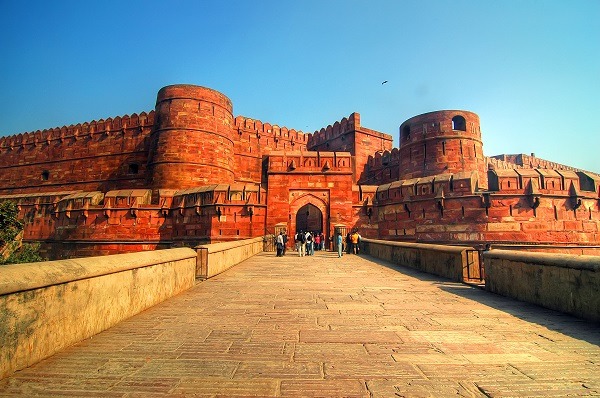
Fort Rouge d'Agra
Citadelle moghole de 38 hectares classée à l'UNESCO, le Fort Rouge d'Agra fut le centre du pouvoir impérial pendant près de 200 ans, à 2,5 km du Taj Mahal.
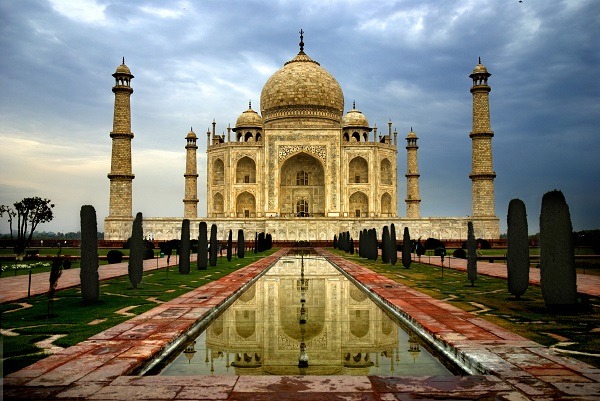
Taj Mahal
Mausolée de marbre blanc érigé par Shah Jahan à Agra entre 1631 et 1648. Guide complet : histoire, architecture, jardins, accès et infos pratiques.
Accommodation in Agra
See all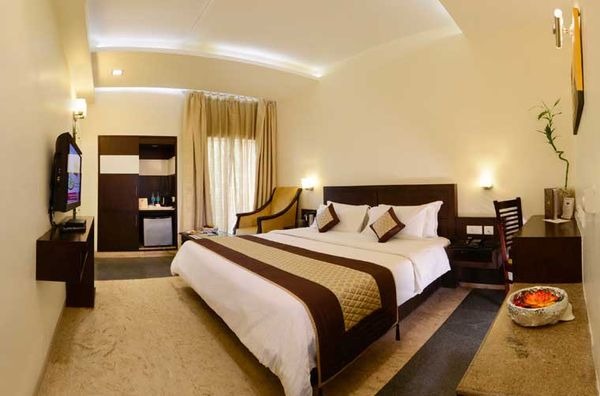
Hotel Taj Resort
À deux pas de la porte est du Taj Mahal, Hotel Taj Resort propose 34 chambres et deux restaurants, dont une terrasse orientée vers le mausolée.
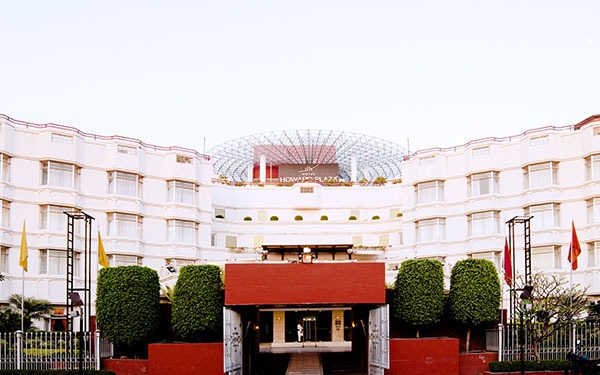
Howard Plaza
Hôtel confortable de la chaîne The Fern situé à 700 mètres du Taj Mahal, le Howard Plaza est un point de chute fonctionnel pour visiter Agra.
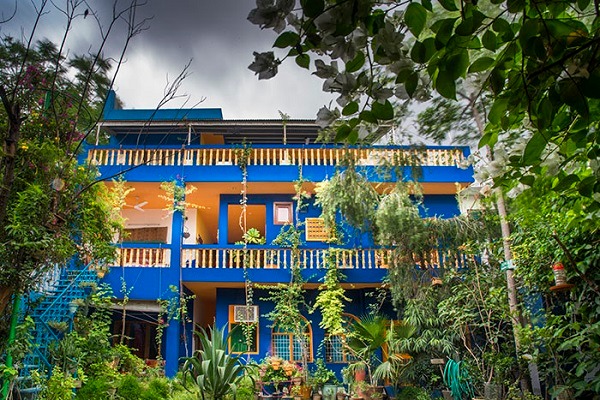
The Coral Tree Homestay
Homestay familial de quatre chambres sur la route VIP du Taj Mahal, à Agra. Vérandas privées, cuisine maison et promenades naturalistes ou historiques guidées.
Want to discover this destination?
Our local advisors design your tailor-made trip.