Ranganathithu Bird Sanctuary lies 19 km from Mysore, spread across six small islands formed by the Kaveri River. Covering 40 hectares, this protected site is home to nearly 170 bird species and ranks among the most visited ornithological destinations in Karnataka. Known as the "Pakshi Kashi of Karnataka" (the Benares of birds), it is primarily explored by boat, departing from Srirangapatna.
Why Visit Ranganathithu
The sanctuary concentrates remarkable ornithological diversity within a compact area. You'll observe resident species year-round alongside migrants from Siberia, Australia, and North America. Visits are conducted by flat-bottomed boat along the islets, allowing close approaches to bird colonies without disturbing wildlife. This is an educational stop suited equally to families and seasoned birdwatchers, and a natural complement to time spent in Mysore or Srirangapatna.
History of the Sanctuary
The area was once named "Sri Ranganatha Swamy," a reference to an incarnation of Vishnu, linked to the grand neighbouring temple in Srirangapatna. The islands themselves emerged in the 16th century following construction of a dam across the Kaveri, which altered the river's course.
It was Indian ornithologist Salim Ali, a pioneering figure in South Asian ornithology, who identified the site's ecological importance. At his request, the Maharaja of Mysore declared it a bird sanctuary in 1940. Its protected status has remained unchallenged since.
What to See
The Birdlife
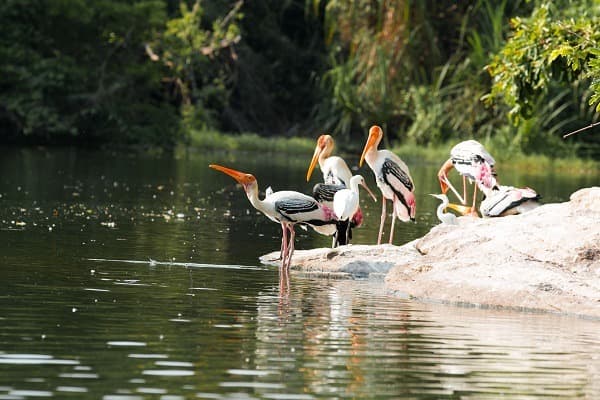
Nearly 170 species have been recorded at Ranganathithu. Among the most visible birds from the boats:
- White ibis, cormorants, egrets and herons
- Terns and striped-throated swallows
- Painted storks and Asian openbills
- Spotted-billed pelican, one of the site's emblematic species
During breeding season, certain islands become literally covered in nests, offering dense scenes where adults and juveniles mingle.
Other Wildlife
The sanctuary is home to diverse non-avian fauna. You may encounter mongooses, macaques, palm civets, otters, monitor lizards, and along the banks, mugger crocodiles. At dusk, colonies of flying foxes (large fruit bats) become active in riverside trees.
Vegetation
The riparian woodland combines deciduous forests, bamboo, figs, jamuns, karanjis, eucalyptus and acacias. This diversity partly explains the ornithological richness: each vegetation layer supports a distinct array of species.
When to Visit
The best period for observing maximum species extends from November to June, when wintering migrants are present and nesting is in full swing on the islands. The months from June to November maintain strong avian activity, though monsoon rains and elevated water levels may limit boat outings.
For photographers, the early morning hours offer the softest light and most intense activity.
Practical Information
- Duration: plan for 1.5 to 2.5 hours on site, including the boat ride.
- Hours: open daily during daylight hours. Verify exact hours before your visit, as they vary by season.
- Fees: entrance charges are modest, with higher rates for foreign visitors than local ones. Boat rides are charged separately. Budget extra for vehicle parking if arriving by car.
- Useful equipment: binoculars, telephoto lens, hat, water, insect repellent.
- Good to know: boat outings operate in small groups; during peak season, mid-day queues can be long.
How to Get There
Ranganathithu is located 19 km from Mysore and approximately 3 km from central Srirangapatna. Several options are available:
- Private taxi from Mysore: the simplest option, expect about 30 minutes of driving.
- Bus: regular public and private buses connect Mysore to Srirangapatna; from Srirangapatna, a rickshaw takes you to the sanctuary entrance.
- Train: Srirangapatna railway station sits on the Bangalore–Mysore line, then rickshaw to the site.
Nearby Attractions
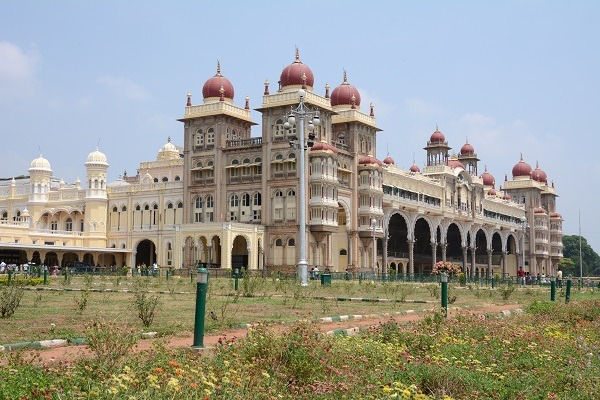
Ranganathithu combines wonderfully with a day exploring Srirangapatna and Mysore: Sri Ranganathaswamy Temple, Daria Daulat Bagh (Tipu Sultan's summer palace), Gumbaz, and Mysore Palace. To extend your southern India itinerary, you can also head toward Kerala's coast to visit Fort Anjengo, or divert to Goa for the Basilica of Bom Jesus in Goa. Further north, the Beas River and State Museum in Bhopal offer other facets of India.
Frequently Asked Questions
Frequently asked questions
Approximately 170 species have been recorded at the site, including migrants from Siberia, Australia, and North America. The number of species visible during a visit depends on the season.
From November to June, when wintering migratory birds are present and nesting is active on the islands. Early morning hours offer the best viewing conditions.
No, but it is highly recommended: it is from the boat that you can closely approach nesting colonies on the islets. The outing is brief, conducted in small groups, and charged separately from the entrance fee.
The sanctuary is 19 km from Mysore, roughly 30 minutes by taxi. Alternatively, take a bus to Srirangapatna, then a rickshaw for the remaining distance.
Yes. The visit is short, accessible, and children greatly enjoy the boat ride. Bring water, a hat, and insect repellent.
Plan Your Trip
Ranganathithu Sanctuary fits naturally into an itinerary across Karnataka, between Mysore, Srirangapatna, and the Western Ghats. To build a custom itinerary including this ornithological stop, consult our India travel packages.