Monkey Temple (Galta Ji)
Monkey Temple (Galta Ji)
Galta Ji, a Hindu temple complex nestled in a gorge 10 km from Jaipur, blends pink sandstone architecture, sacred pools and a thriving monkey colony.
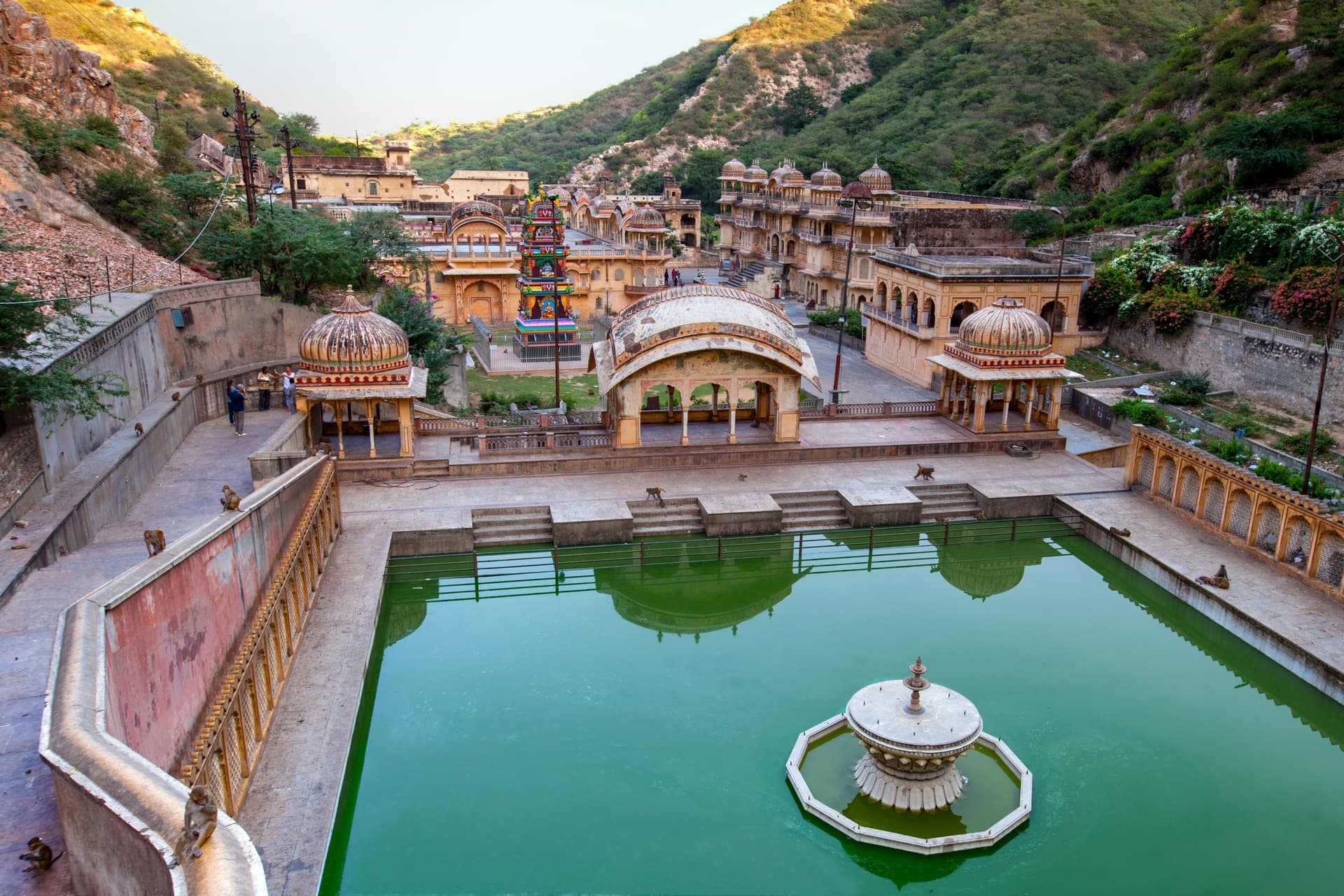
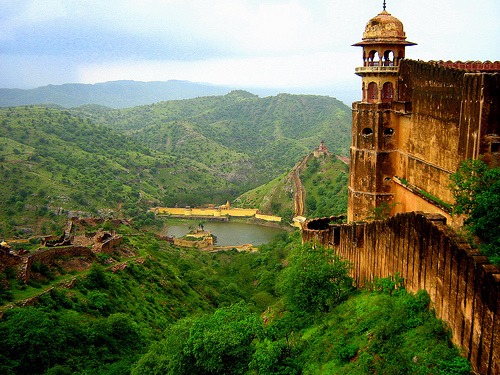
Galta Ji, nicknamed the Monkey Temple for the monkey colony that inhabits it, is a Hindu temple complex located approximately 10 km from Jaipur, within a natural fissure of the hill range encircling the city. An active pilgrimage site dedicated to Hanuman, it combines pink sandstone architecture, sacred springs and 18th-century pavilions.
Why visit the Monkey Temple
Galta Ji stands out for its dual identity: a living sanctuary frequented by pilgrims coming to bathe in the kunds and a natural site nestled within a rocky gorge. The contrast between the Rajasthani pink sandstone architecture and the mineral landscape of the hills makes it an intriguing complement to visiting Jaipur's forts and palaces, while offering genuine insight into Hindu ritual practices.
The troops of monkeys—rhesus macaques and langurs—that occupy the terraces and descend toward the pools in late afternoon have popularized the site's nickname among travelers.
History and legend
The complex was built by Diwan Rao Kriparam, a courtier at Jaipur's court, in the 18th century, then placed under the guardianship of Sawai Jai Singh II, the city's founder. Galta Ji is considered the Acharya Peetham, literally the "Throne of the Supreme," which grants it a special rank among Rajasthan's spiritual centers.
According to tradition, the site takes its name from the sage Saint Galav, who is said to have performed his tapasya (ascetic practice) here for a hundred years. In recognition of his penance, the deities are believed to have caused abundant water to spring forth at this location, originating the sources that still feed the temple's pools today.
What to see on site
The seven sacred kunds
Water from the natural springs accumulates in seven reservoirs called kunds. The most venerated, the Galta Kund, never dries up, even during Rajasthan's driest summers. Devotees perform ritual baths here, particularly intense during the Makar Sankranti festival (mid-January), considered an especially auspicious time for purification.
Pink sandstone architecture
The entire complex is built in pink sandstone, the region's emblematic material. You'll find sanctuaries, columned pavilions, characteristic rounded roofs and painted frescoes on the interior walls of certain buildings. The site spans multiple levels, connected by staircases that follow the gorge's natural contours.
Monkeys at sunset
In late afternoon, monkey troops flock to the pools to drink and bathe. This moment, coinciding with golden light on the hills and clear views toward Jaipur, constitutes the site's most photographed instant. Keep your belongings secure: macaques are adept at stealing food and shiny objects.
When to visit
The most pleasant period extends from October to March, when Rajasthan's temperatures remain comfortable for walking in full sun. Avoid the central hours of the day from April to June, as the site offers little shade.
For ritual atmosphere, aim for Makar Sankranti (around January 14th): the pools fill with pilgrims performing the sacred bath. For photography and monkey encounters, choose late afternoon, approximately one to two hours before sunset.
Practical information
- Access: the temple is generally open from dawn to dusk. Entry to the sanctuary is free; a small fee may be requested for camera or video use.
- Dress code: shoulders and legs covered, shoes easy to remove in worship areas.
- Visit duration: allow 1.5 to 2.5 hours depending on your interest in rituals and photography.
- What to bring: water bottle, hat, closed-toe shoes (stairs and pool areas can be slippery or unclean).
- Monkeys: don't feed them directly, keep bags and glasses secured.
How to get there
Galta Ji is easily reached from central Jaipur, about ten kilometers to the east.
- By air: Sanganer (Jaipur) Airport is approximately 10 km from the temple. A prepaid taxi allows direct access to the site.
- By train: the nearest station, in the Gandhinagar Jaipur area, is about 1 km from the temple. A tuk-tuk or short taxi ride completes the journey.
- By tuk-tuk or taxi from Jaipur: the simplest solution. Allow 20 to 30 minutes from the city center depending on traffic.
- On foot: a trail connects Galta Ji from the Sun Temple (Surya Mandir) overlooking the hills, for equipped hikers.
What to see in the region
Galta Ji fits into a broader itinerary around Rajasthan's capital and its historical sites:
- Jaipur — the pink city and its palaces (City Palace, Hawa Mahal, Jantar Mantar).
- Ajit Singh Memorial — another Rajasthani heritage site.
- Bandhavgarh National Park — to extend your journey with a nature and tiger safari experience.
Frequently asked questions
Frequently asked questions
Plan your trip
Galta Ji naturally fits into an itinerary around Jaipur, a major stop on travels through India and Rajasthan. Our advisors can build a custom itinerary including the golden triangle (Delhi, Agra, Jaipur) and the lesser-known sites of Rajasthan.
Interested in this visit?
We can include it in your personalised itinerary.