Victoria Memorial
Victoria Memorial
An iconic Kolkata landmark in white marble, the Victoria Memorial houses a museum tracing the colonial history of Bengal. Gardens, galleries, and a light-and-sound show make it a major stop in the city.
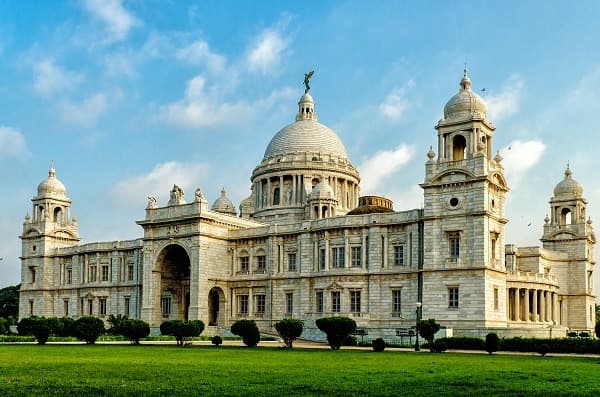
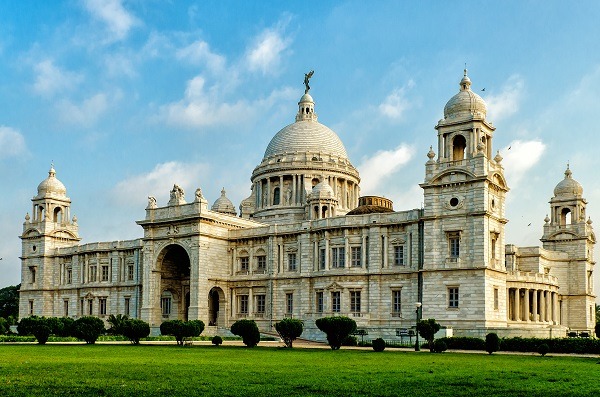
Rising in white Makrana marble at the heart of Kolkata, the Victoria Memorial is a monument dedicated to Queen Victoria, inaugurated in 1921. Today it houses a museum chronicling the colonial history of Bengal and British India. Its gardens, galleries, and neo-classical silhouette make it one of the city's most recognizable architectural landmarks.
Practical Info at a Glance
- Admission: Paid (differentiated rates for Indian residents and foreign visitors)—check current fees with the Archaeological Survey of India.
- Weekly closure: Mondays.
- Recommended duration: 1.5 to 2 hours for the museum and gardens.
- Access: Metro stations Maidan or Rabindra Sarani; taxis and rickshaws available.
- Dress code: No specific restrictions.
- Accessibility: Partial wheelchair access to gardens; inquire on-site about interior galleries.
What You'll See
The main building, in white marble, blends Victorian architecture, Italian Renaissance, and Mughal elements. Atop the central dome stands a bronze statue of the Angel of Victory. Inside, twenty-five galleries display paintings, sculptures, weapons, maps, and archives related to the British colonial period and Bengal's history.
The gardens surrounding the memorial span several hectares. Statues of historical figures—including Queen Victoria herself—line the pathways. In the evening, a light-and-sound show recounts the history of the monument and the city.
History and Context
Following Queen Victoria's death in 1901, Lord Curzon, Viceroy of India, proposed building a memorial in Calcutta, then capital of British India. Architect William Emerson designed the edifice. Construction began in 1906 and was completed in 1921, when it was inaugurated by the Prince of Wales. Funding came largely from Indian princes and British provinces.
After Indian independence in 1947, the government transformed the memorial into a public museum, managed by the Archaeological Survey of India.
Highlights of Your Visit
The Royal Gallery
It houses portraits of Queen Victoria at various ages, personal objects, and official documents. This is the most visited gallery, setting the tone for the entire collection.
The National Gallery of Leaders
Dedicated to figures of the Indian independence movement, it provides a historical counterpoint to the colonial narrative elsewhere in the museum.
The Gardens at Sunset
The golden light of late afternoon brings out the marble's brilliance. The gardens fill with local families and Kolkata residents, creating a vibrant, authentic atmosphere.
The Light-and-Sound Show
Held in the evening (check schedules and dates on-site), it projects Kolkata's history onto the memorial's façade. Accessible from the gardens.
Photography Tips
The main façade faces north. Morning light is soft and favorable for photographing the building without backlighting. The memorial's reflection in the central pond is the most sought-after angle. At night, artificial lighting creates striking nighttime shots. Photography is permitted in the gardens; check for restrictions inside the galleries.
Location and Access
The Victoria Memorial stands in the Maidan district, south of central Kolkata, directly adjacent to the expansive Maidan Park. The Maidan metro station is closest. From Maidan Park, the memorial is reachable on foot in minutes. Fort William is also in this area, though access is restricted.
Accredited guides offer guided tours at the site entrance. Wheelchair access to the gardens is available; the building's historic architecture presents constraints for interior accessibility.
Nearby Attractions
- Maidan Park — vast green space at Kolkata's heart, ideal for a stroll before or after your visit.
- St. Paul's Cathedral — 19th-century Anglican cathedral, a short walk northeast of the memorial.
- Kolkata Academy of Fine Arts — museum devoted to modern and contemporary Indian art, nearby.
- Birla Planetarium — one of Asia's largest planetariums, steps from the memorial.
Frequently asked questions
Yes, the museum and gardens are closed on Mondays. On other days, the site is open to the public.
No, there is no imposed dress code. The Victoria Memorial is a civil museum, not a place of worship.
Photography is permitted in the gardens. Inside, restrictions may apply depending on the gallery; check informational signs on-site.
The dry season, October to March, offers pleasant temperatures. Summer (April-June) is hot and humid; monsoon (July-September) can leave gardens muddy.
Allow 1.5 to 2 hours to explore the main galleries and gardens. If you plan to attend the evening light-and-sound show, set aside a full half-day.
Yes. St. Paul's Cathedral, Birla Planetarium, and Maidan Park are all within walking distance of the memorial, allowing you to group multiple visits into one half-day.
Photos
Nearby
Interested in this visit?
We can include it in your personalised itinerary.