Lingaraja Temple
Lingaraja Temple
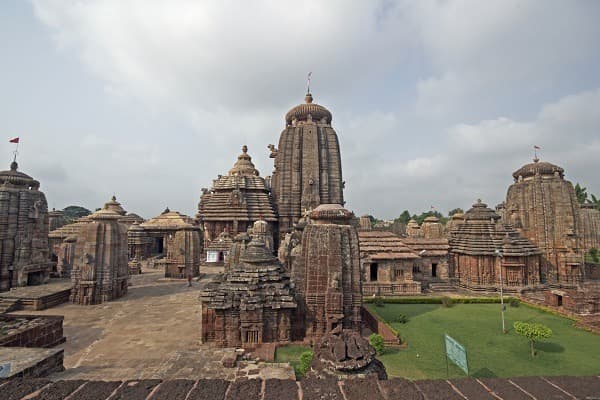
Built in the 11th century in Bhubaneswar, Lingaraja Temple is a major Shaivite shrine of Kalinga style, still active around Bindu Sagar lake.
Lingaraja Temple, dedicated to Shiva, dominates the religious landscape of Bhubaneswar, capital of the Indian state of Odisha. This thousand-year-old edifice built around Bindu Sagar lake remains an active Hindu place of worship where ritual perpetuates according to strict rules.
Why visit Lingaraja Temple
- One of the oldest and largest temples in Bhubaneswar, with a main structure erected in the 11th century.
- A major example of Kalinga-Orissa architectural style, built in red sandstone and laterite.
- A complex of approximately 23,000 m² comprising 150 secondary sanctuaries.
- An active place of worship, site of several annual festivals including Shivaratri.
Good to know: the main sanctuary is traditionally reserved for Hindus. Non-Hindu visitors can observe the complex from a viewing platform arranged nearby, a legacy of the British colonial period.
Temple history
The word Lingaraja literally means "king of the Lingam," the lingam being the emblematic form of the god Shiva. According to historians, a place of worship already existed on the site in the 6th century, in a different form, as attested by Sanskrit texts from the 6th and 7th centuries preserved in the complex.
The current structure was built in the 11th century by King Jajati Keshari of the Soma Vansh dynasty. Its construction is associated with the relocation of the kingdom's capital from Jajpur to Bhubaneswar, an event that accompanied the rise of the latter's religious and political power.
What to see on site
The complex layout
The temple extends over approximately 23,000 m² around the sacred Bindu Sagar lake. Like all Shaivite sanctuaries, its main entrance faces east; two secondary entrances open to the north and south. Fortified walls adorned with sculptures of animals and human figures delimit the enclosure.
The four main sections
- Garbh Griha: the sanctuary housing the main lingam.
- Yajna Shala: the hall dedicated to fire rituals.
- Bhoga Mandap: the hall of food offerings.
- Natya Shala: the hall of ritual dance.
Secondary sanctuaries
The complex contains 150 smaller sanctuaries dedicated to various deities of the Hindu pantheon. The sculptural program, dense and narrative, mingles mythological scenes, animal motifs and erotic figures characteristic of medieval Odisha art.
When to visit
November through February, cooler and drier, remains the most comfortable time to visit Bhubaneswar. The monsoon (June-September) should be avoided due to heat and humidity.
Festivals to know
- Shivaratri: celebrated in the month of Phalgun (February-March), it commemorates Shiva's victory over a demon. Devotees and visitors gather to pray through the night.
- Candan Yatra: a festival during which the deities are anointed with sandalwood paste to protect them from the summer heat.
- Ratha Yatra: the chariot festival, during which statues are taken out in procession.
These days draw very large crowds. Throughout the rest of the year, attendance remains steady but more manageable.
Practical information
- Sanctuary access: reserved for Hindus. Other visitors can observe the complex from the external viewing platform.
- Hours: open daily, generally in the morning and evening, with a midday break. Verify hours on-site before visiting.
- Admission: free entry. A contribution may be requested for certain rituals.
- Dress code: modest clothing recommended (shoulders and legs covered). Shoes are left at the entrance.
- Photography: generally not permitted inside the main complex.
- Duration of visit: plan 1 to 1.5 hours to tour the site and its surroundings.
How to get there
By air
Biju Patnaik Airport in Bhubaneswar is connected to major Indian cities: New Delhi, Mumbai, Kolkata, Hyderabad and Bangalore. The temple is located about ten kilometers from the terminal.
By train
Bhubaneswar railway station is served by daily express trains to all major cities in the country. From the station, a rickshaw, taxi or local bus will get you to the temple in about twenty minutes.
By car
Bhubaneswar lies on National Highway No. 5, which connects Kolkata to Chennai. Public buses and private companies serve this route regularly.
What else to see in India
If you extend your Indian itinerary, several sites complement your discovery of the country's religious and cultural heritage:
- Alchi Monastery, a jewel of Buddhist art in Ladakh.
- Bhopal State Museum, for its collections of ancient Indian art.
- Bandhavgarh National Park, in Madhya Pradesh.
- Anjengo Fort, a colonial vestige in Kerala.
Frequently asked questions
Frequently asked questions
No. Access to the main sanctuary is traditionally reserved for Hindus. Other visitors can observe the complex from an external viewing platform arranged during the British period.
Site entry is free. A contribution may be requested for certain rituals or offerings.
A structure already existed in the 6th century, but the current structure was built in the 11th century by King Jajati Keshari of the Soma Vansh dynasty.
November to February, for milder temperatures. The Shivaratri festival (February-March) attracts very large crowds of pilgrims.
Plan 1 to 1.5 hours to explore the complex, observe the sculptures and tour the nearby Bindu Sagar lake.
Include Bhubaneswar in your journey
Bhubaneswar and its temple heritage deserve a dedicated stop in an East India itinerary. To build a custom itinerary including Odisha, explore our India travel packages.
Interested in this visit?
We can include it in your personalised itinerary.