Ajanta Caves
Ajanta Caves
A UNESCO site in Maharashtra, the Ajanta Caves house 29 Buddhist sanctuaries carved into rock and adorned with some of India's oldest frescoes.
Nestled within the Indhyagiri mountains, the Ajanta Caves, long hidden from view, are gradually revealing themselves to history and architecture enthusiasts. These rock-cut caverns showcase the life of Buddha within magnificently appointed sanctuaries, sheltering a series of authentic paintings and sculptures.
History
An ancient Indian legend speaks of the exploits of a civilization of remarkable beauty. This people is said to have been the origin of a remarkable city: Ajanta, built between the 2nd century BCE and the 7th century CE.
Ajanta stands apart from all other Indian cities. It was excavated at the heart of granite caves located near Aurangabad, in the state of Maharashtra. Legend has it that the city carries a curse within it…
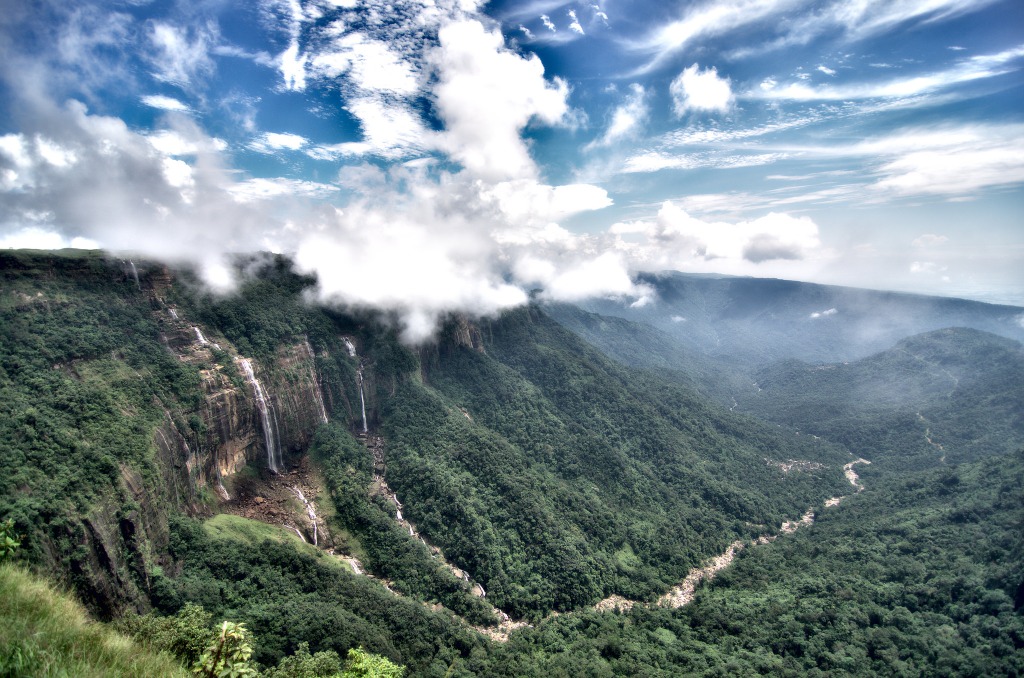
The Ajanta Caves were discovered by British troops in 1819 during a hunting expedition. Carved into the southern part of the ravine, they stretch above a meander of the Waghora river visible below. Their construction was carried out from ceiling to floor, a common technique in India. Countless tons of rock were undoubtedly moved during the project, leaving no trace in the surrounding area. The work accomplished and especially the volume excavated already reflect the architectural prowess of ancient Indian craftsmen.
Archaeological excavations have demonstrated that Ajanta was both a monastic and university center. Among other findings, according to research by the Chinese monk Xuanzang, the illustrious Indian Buddhist philosopher Dignaga is said to have resided in these caves.
Because of its history and authenticity, the Ajanta Caves were inscribed as a UNESCO World Heritage Site in 1983.
Today
A place of choice for architecture enthusiasts, the Ajanta Caves complex blends art and technique. The numerous sanctuaries dedicated to Buddhism visible at the heart of the site testify to the spirit of tolerance that animated Indian civilizations in ancient times.
The Ajanta Caves contain no fewer than 29 Buddhist monasteries and temples and are divided into two categories. On one hand, the viharas served as refuges for monks during the rainy season. On the other hand, the caityas functioned as meeting halls and prayer cells. The viharas are generally accessed by a large portico. These entrance structures are usually covered by a roof supported by stone columns. Unfortunately, most of the porticos have not survived the passage of time. The viharas open onto a hall approximately 10 meters by 7 meters. On either side of the hall, you will see excavated cells whose number varies depending on the size of the complex. At the back, a Buddha statue faces the entrance. The caityas, meanwhile, were carved much deeper into the rock. The largest extend some 30 meters by 14, including the cloister. Each cell houses numerous paintings and sculptures among the finest masterpieces of Indian art.
The frescoes of the Ajanta Caves depict scenes from the life of Buddha while illustrating the daily life of ancient Indian devotees. Nestled within the dependencies of the rock-cut temples, they rank among the oldest testimonies of the pictorial tradition in the Subcontinent. Some date back to the 1st century. Most of the paintings were executed in tempera, blending warm colors and ochre tones for skin. The oldest frescoes appear in frieze form. The series of graceful and lively figures, parading with subtle interplay of attitudes, will certainly captivate you. Among these pictorial jewels, do not miss the Shaddanta Jataka or "the story of the six-tusked elephant," created in the mid-2nd century.
The best time to visit the Ajanta Caves is undoubtedly the morning, when the site seems steeped in infinite tranquility. By 11 a.m., tourists begin to arrive, inevitably disturbing the calm of the place. Fortunately, guides and temple guardians ensure respect for this priceless heritage by directing visitors throughout their tour. Always with the aim of preserving this patrimony, administrators have carefully arranged special lighting in the Ajanta Caves so as not to damage the pigments. Nevertheless, you can use a flashlight to observe details of certain frescoes. However, flash photography is strictly prohibited. So be patient with exposure time if you wish to take photographs.
Climate
Ajanta is located in an area with a desert climate, BWh type according to the Köppen-Geiger classification. Over the year, average temperatures and rainfall are estimated at 25.8°C and 726.2 mm respectively.
The Ajanta Caves are easily accessible from the city of Aurangabad, which is well connected to all major cities in India by road and rail.
Hours and Admission
Visiting the Ajanta Caves costs $10 with an additional fee for hiring a guide. You should also add a few rupees for lighting in certain chambers.
The caves are open from 9 a.m. to 5:30 p.m.
What to Do at the Ajanta Caves
- Disconnect from daily life and rejuvenate at the heart of this spiritually-infused site
- Visit the monasteries and temples
- Discover ancient Indian frescoes
- Hike around the canyon
- Take stunning travel photos overlooking the Waghora river
Want to discover this destination?
Our local advisors design your tailor-made trip.