Agra Red Fort
Agra Red Fort
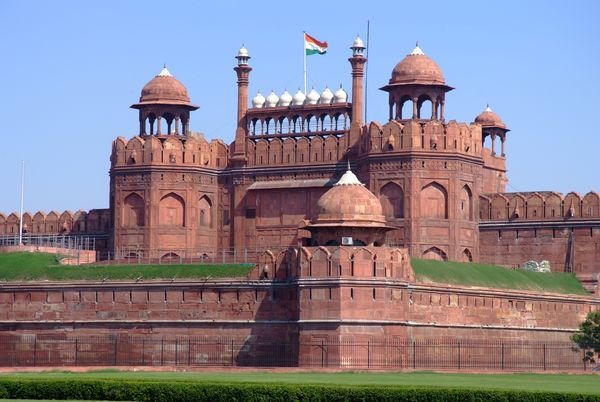
A 38-hectare Mughal citadel listed by UNESCO, Agra Red Fort was the centre of imperial power for nearly 200 years, 2.5 km from the Taj Mahal.
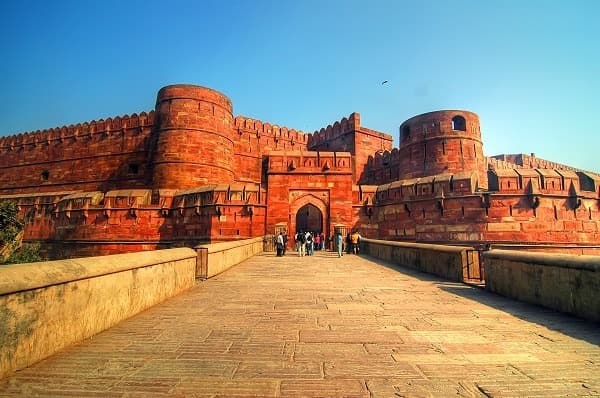
Agra Red Fort rises with its walls of red sandstone on the western bank of the Yamuna, approximately 2.5 km from the Taj Mahal. This 38-hectare Mughal citadel was, for nearly two centuries, the centre of imperial power in North India. Listed as a UNESCO World Heritage Site since 1983, it preserves an exceptional ensemble of palaces, audience halls and mosques built by successive sovereigns of the dynasty.
Why visit Agra Red Fort
Red Fort, together with the Taj Mahal, forms one of two essential landmarks for a visit to Agra. Where the marble mausoleum embodies the aesthetic pinnacle of Mughal architecture, the fort recounts its political and military foundation: here Akbar, Jahangir, Shah Jahan and Aurangzeb governed the empire, plotted, celebrated and, at times, were imprisoned.
Beyond its historical significance, the site captivates through its architectural coherence (red sandstone under Akbar, white marble under Shah Jahan), its vantage points over the Taj Mahal from the riverbank, and the scale of its 2.5-kilometre perimeter walls, some sections of which reach over 20 metres in height.
History of the fort
The construction of the present fort dates back to the mid-16th century, during the reign of Mughal emperor Akbar, who chose Agra as his capital. The name "Lal Qila" comes from Hindustani and directly refers to the red sandstone walls that encircle the site. The fort then served as the principal residence of Mughal emperors and would remain so, in modified forms, for nearly 200 years, until 1857.
Each sovereign left his mark. Jahangir added palaces. Shah Jahan, better known for the Taj Mahal, had parts of Akbar's buildings demolished to erect white marble structures in a more refined style. Aurangzeb, his son, held his father prisoner after deposing him: Shah Jahan died in the Musamman Burj, an octagonal tower with a marble balcony overlooking his wife's mausoleum.
The 18th century was marked by conflicts. The fort was attacked and besieged by the Maratha Empire in the early century, changed hands several times, escaped the Marathas after Ahmad Shah Abdali's victory in 1761, before being retaken by Mahadji Shinde in 1785. In 1857, it was the scene of combat during the Indian Rebellion, an uprising that ended the British East India Company and marked the beginning of direct Crown administration.
What to see inside
The enclosure contains a series of buildings representative of Mughal architecture, the principal of which are accessible to visitors.
- Jahangir's Palace (Jahangiri Mahal): the fort's largest residence, built in red sandstone, blending Hindu and Islamic influences.
- The Khas Mahal: white marble pavilion built under Shah Jahan, open to the river and bordered by gardens.
- The Diwan-i-Am: hall of public audiences, where the emperor received petitions and requests.
- The Diwan-i-Khas: hall of private audiences, reserved for dignitaries and ambassadors.
- The Musamman Burj: marble balcony tower facing the Taj Mahal, where Shah Jahan was held in confinement.
- Two mosques, including the Moti Masjid ("Pearl Mosque"), today closed to the public but visible from outside.
- The Amar Singh and Delhi gates, dating from Akbar's era, in red sandstone, flanked by twin towers.
The interior of the fort is, apart from these buildings, largely empty, except for a row of residential quarters overlooking the Yamuna. Part of the enclosure remains occupied by the Indian Army and is not accessible.
Practical information
The fort is open daily, from sunrise to sunset. Tourist entry is via the Amar Singh Gate, located on the southern side of the site. Security checks are strict: body searches, baggage X-rays, and restrictions on permitted items.
- Rates: differentiated tickets for Indian nationals, nationals of SAARC/BIMSTEC countries and foreign visitors. Expect a moderate rate for foreign visitors, plus a modest surcharge for video cameras. Children under 15 enter free.
- Duration of visit: allow 1.5 to 2.5 hours to explore the principal palaces at a leisurely pace.
- Access: the fort is located approximately 2.5 km from the Taj Mahal, accessible by rickshaw, taxi or on foot from most city centre hotels.
- Sound and light show: a nocturnal projection recounts, in several languages, the history of the Mughal dynasty. Check timings and language on the day.
When to visit
Uttar Pradesh experiences a continental climate. Summers (April to June) are scorching, with temperatures regularly exceeding 40°C, making daytime visits strenuous. The monsoon (July to September) brings humidity and showers. The most comfortable period extends from November to March, with mild days and generally clear skies. Winter mornings can be misty: beginning your visit mid-morning avoids fog without enduring afternoon heat.
Nearby
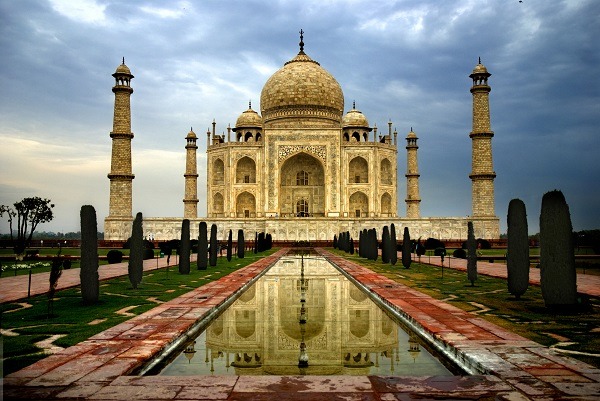
The fort combines naturally with other sites in Agra and the region. The Taj Mahal is visible from the eastern ramparts and is ideally visited the same day or the following day. The tomb of Itimad-ud-Daulah, nicknamed the "Baby Taj", and Mehtab Bagh gardens, on the opposite bank of the Yamuna, complement a Mughal day. Further afield, Fatehpur Sikri, Akbar's former capital, is located approximately 40 km away.
To expand your itinerary across the subcontinent, you can explore other forts and sites in our guide: Anjengo Fort in Kerala, the State Museum in Bhopal in Madhya Pradesh, or the Alchi monastery in Ladakh.
Frequently asked questions
Frequently asked questions
No. There are two distinct "Lal Qila": that of Agra, built under Akbar in the 16th century, and that of Delhi, constructed by Shah Jahan in the 17th century. It is at the Red Fort of Delhi that the Indian Prime Minister raises the flag each 15th August.
Allow between 1.5 and 2.5 hours to explore the principal palaces and enjoy views of the Taj Mahal. A guided tour, arranged on-site or booked in advance, helps you better understand the chronology of the buildings.
Yes. Several points along the eastern ramparts, particularly the Musamman Burj where Shah Jahan died, offer clear views of the Taj Mahal, approximately 2.5 km downstream along the Yamuna.
November to March, when temperatures are moderate. The months of April to June are very hot and the monsoon, from July to September, can disrupt your visit.
No. Part of the enclosure remains occupied by the Indian Army. Visitors have access to the palaces and audience halls situated around the imperial quarters, which nonetheless represents a substantial route.
Plan your trip
Agra Red Fort is typically visited as part of a wider circuit including the Taj Mahal, Fatehpur Sikri and cities of Rajasthan. To build a coherent itinerary around Mughal sites and beyond, consult our suggestions for journeys in India.
Nearby
Interested in this visit?
We can include it in your personalised itinerary.