Chota Imambara (Hussainabad Imambara)
Chota Imambara (Hussainabad Imambara)
Chota Imambara, or Hussainabad Imambara, is a 19th-century Shia mausoleum in Lucknow, renowned for its Belgian glass chandeliers and architecture blending Mughal and European influences.
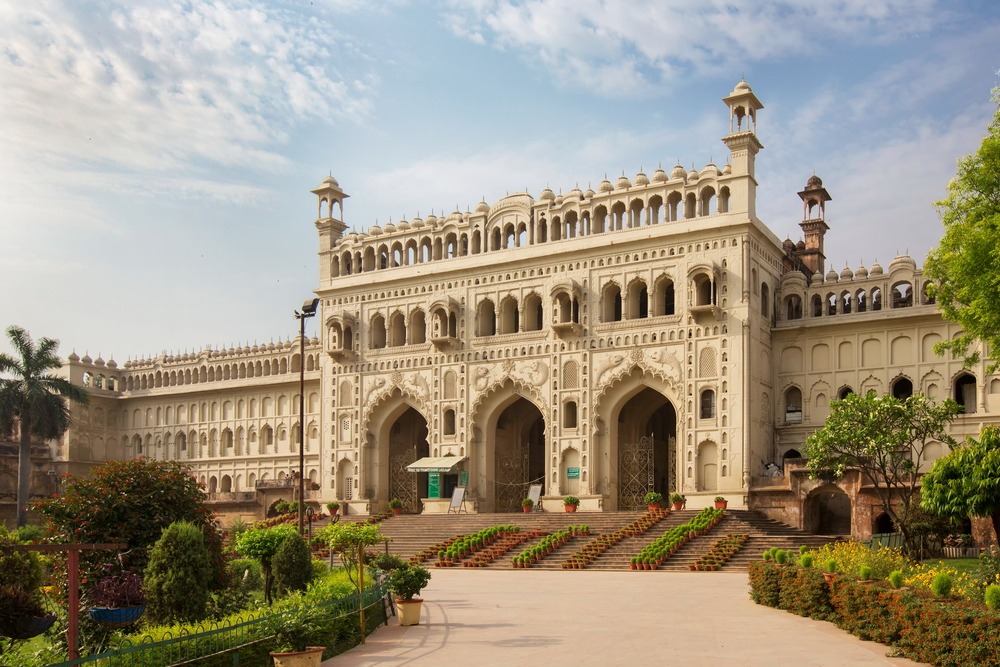
Chota Imambara, officially known as Hussainabad Imambara, stands at the heart of Lucknow in the historic Hussainabad quarter. Built in the 19th century by Nawab Muhammad Ali Shah, this Shia mausoleum combines Mughal architecture with European influences in a rare ornamental ensemble. Its thousands of chandeliers, lanterns, and miniature replicas of Iranian sanctuaries earned it the nickname "Palace of Lights."
Quick Facts
- Admission: Paid entry (differentiated rates for Indian residents and foreign visitors)
- Dress code: Modest clothing required; head covering recommended inside
- Footwear: Must be removed before entering the main chamber
- Suggested duration: 45 minutes to 1 hour
- Closure: Closed during certain Shia religious ceremonies (Muharram)
What to See
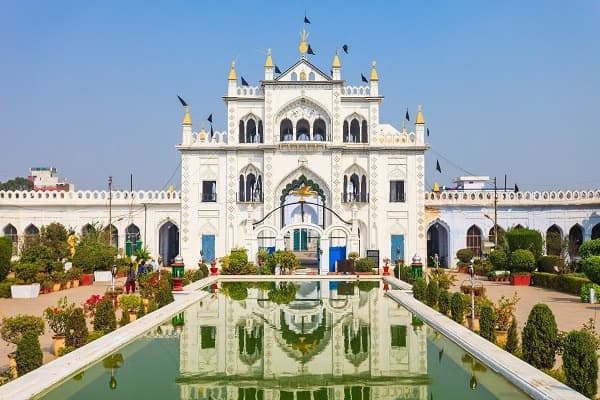
The central chamber houses the tombs of Muhammad Ali Shah and his mother, framed by Belgian glass chandeliers and gilded lanterns. The walls are covered with Quranic calligraphy and cut mirrors. In the courtyard, a rectangular pool reflects the main façade. A replica of the mausoleum of Imam Ali in Najaf (Iraq) occupies one corner of the complex.
History and Context
Muhammad Ali Shah commissioned this monument between 1837 and 1847, initially as a gathering place for Ashura commemorations. He also prepared his own tomb here. The complex exemplifies the golden age of Awadh's Nawabi culture, a refined blend of Persian, Mughal, and British colonial influences. Following the British annexation of Awadh in 1856, the site lost its royal patronage but retained its religious function.
Highlights of Your Visit
The Chandelier Hall
Hundreds of chandeliers, imported from Europe and Belgium, illuminate the main chamber. During ceremonies, they are all lit simultaneously—a visual spectacle unmatched in Lucknow.
The Najaf Replica
Within the complex's grounds, a scaled-down reproduction of the sanctuary of Imam Ali in Najaf serves as a place of devotion for Shia pilgrims unable to travel to Iraq.
The Pool and Façade
The central pool creates a mirror effect against the white and gilded façade. In late afternoon, the low light accentuates the relief of the arches and minarets.
Etiquette and Visiting Rules
- Remove your footwear before entering the chamber with the tombs.
- Wear clothing covering shoulders and knees; scarves are sometimes available at the entrance.
- Speak in hushed tones inside; this is an active place of worship.
- Avoid pointing your feet toward the tombs.
- During Muharram, access may be restricted or modified.
Photography Tips
Morning light (before 10 a.m.) is ideal for photographing the façade without backlighting. The central pool offers a sharp reflection on windless days. Inside, photography is generally permitted without flash; check posted restrictions at the entrance. The chandeliers photograph best with slight underexposure to preserve the brilliance of the gilding.
Location and Access
Chota Imambara is located in the Hussainabad quarter, a few hundred meters from the Bara Imambara. Both sites can be easily visited in succession. Rickshaws and taxis are available from the city center and Lucknow Charbagh railway station. The site is accessible on foot from Bara Imambara.
Nearby Attractions
- Bara Imambara — The neighboring grand Nawabi complex, featuring the famous Bhulbhulaiya maze, just a few minutes' walk away.
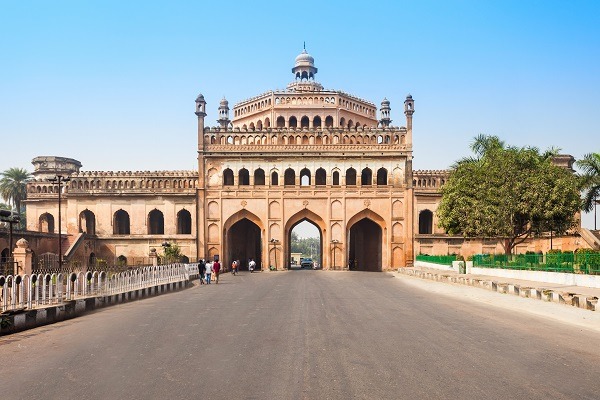
- Rumi Darwaza — An imposing 18th-century Mughal gate, an architectural symbol of Lucknow, in immediate proximity.
- Picture Gallery of Hussainabad — A gallery housing portraits of the Nawabs of Awadh, in the same quarter.
- Hussainabad Clock Tower — One of the tallest colonial-era towers in India, visible from the complex.
Frequently asked questions
The dry season, October to March, offers pleasant temperatures for exploring Lucknow. Avoid the intense heat of May–June. During Muharram, access may be modified but the atmosphere is particularly intense for those interested in Shia traditions.
Yes, both sites are a few minutes' walk apart in the Hussainabad quarter. A combined ticket is often offered at the Bara Imambara entrance—inquire on-site.
Yes. Shoulders and knees must be covered. Footwear is removed before entering the tomb chamber. Bring comfortable socks—the floor can be cool.
Generally yes, without flash. Restrictions may apply in certain areas or during religious ceremonies. Check signage at the entrance and follow the attendants' instructions.
Plan for 45 minutes to 1 hour for Chota Imambara alone. Combined with Bara Imambara and Rumi Darwaza, allow half a day.
Access to the main courtyard is relatively flat, but some interior areas have steps. Accessibility for people with disabilities remains partial; contact the site before your visit for details.
Photos
Interested in this visit?
We can include it in your personalised itinerary.