Rumi Darwaza
Rumi Darwaza
Built around 1784 under Nawab Asaf-ud-Daula, Rumi Darwaza is Lucknow's iconic gateway. Standing 18 metres high and adorned with intricate stucco work, it marks the entrance to the historic Husainabad quarter.
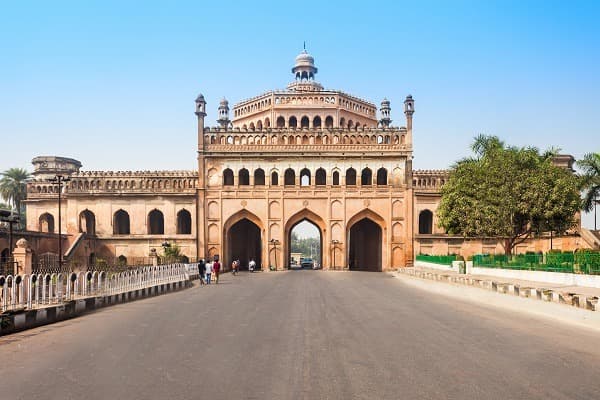
Rumi Darwaza rises at the entrance to Lucknow's old city in Uttar Pradesh, India. This monumental gateway, built in the 18th century under Nawab Asaf-ud-Daula's reign, stands as the architectural emblem of the city. At approximately 18 metres high, it exemplifies the Nawabi style — a blend of Mughal and European influences — and marks the historic entrance to the Husainabad quarter.
Essentials at a glance
- Access : Husainabad quarter, near the Bara Imambara — reachable by rickshaw, auto-rickshaw or taxi from the city centre.
- Entry : the gateway itself is freely visible from the street; entry to the adjacent Bara Imambara complex is ticketed.
- Suggested duration : 15 to 30 minutes for the gateway alone; combine with Bara Imambara for a half-day visit.
- Dress code : modest attire is recommended in this historic, religiously significant quarter.
What to see
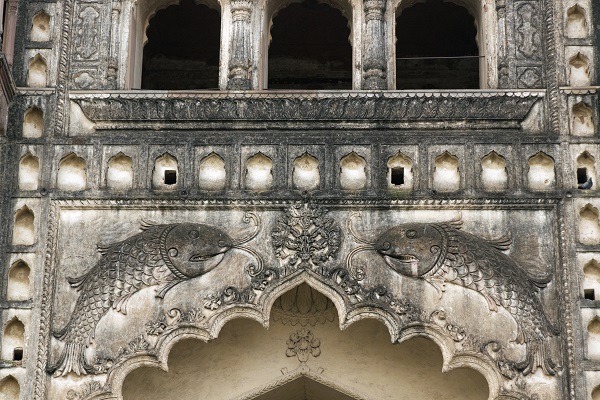
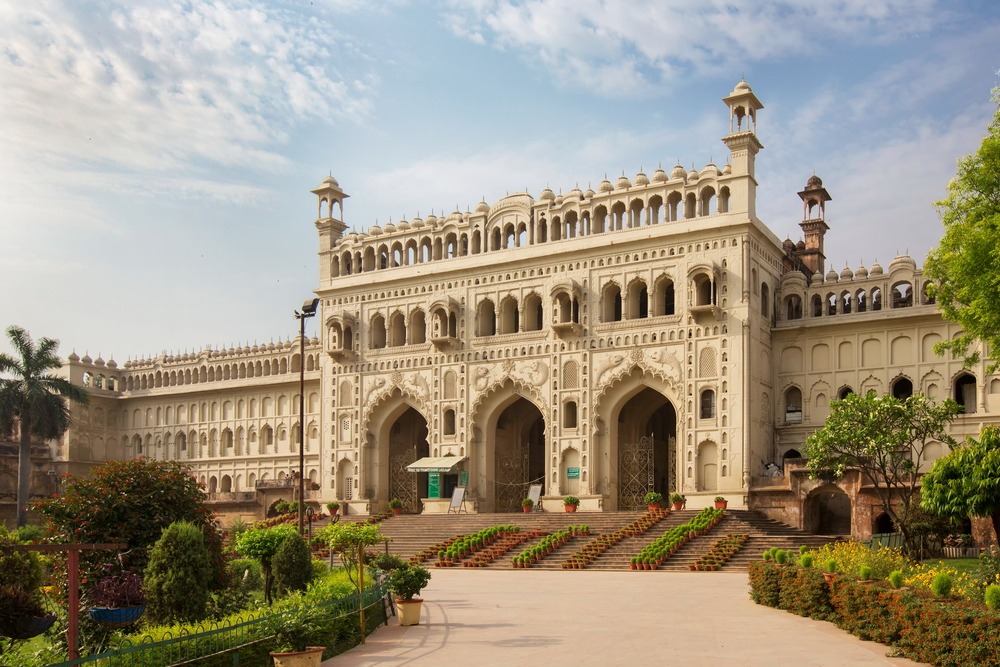
Rumi Darwaza is a gateway featuring three superimposed arches, crowned with an octagonal kiosk and dome. Its façade is adorned with finely carved floral motifs in stucco. The entire structure, built in brick and covered with plaster, contains no metal in its construction — an engineering feat for its era. Evening illumination highlights its sculptural relief.
History and context
The gateway was constructed around 1784 under Asaf-ud-Daula, the fourth Nawab of Awadh, as part of an ambitious public works programme designed to combat famine. Its name "Rumi" refers to Constantinople (the Rome of the East), as its silhouette recalls the gate of the Ottoman city. It symbolises Lucknow's golden age as a cultural capital of Northern India.
Highlights of your visit
Stucco architecture
Draw close to observe the arabesques and floral motifs carved into the plaster. Each level of the gateway displays its own decorative scheme, from the restrained base to the pierced kiosk at the crown.
Perspective from the street
Position yourself about fifty metres away along the road's axis to appreciate the gateway within its lively urban setting. Rickshaws and street vendors in the foreground offer a vivid snapshot of Lucknow's everyday rhythm.
Evening visit
At dusk, artificial lighting reveals the gateway's volumes with particular clarity. The quarter's energy extends well into the evening, making a stroll after sunset thoroughly enjoyable.
Photography tips
Morning light (before 9 a.m.) is ideal: the sun illuminates the main façade without backlighting. A wide-angle lens captures the entire structure from street level. Late afternoon delivers golden light that accentuates the stucco relief. At night, a tripod is useful for long exposures with urban ambient lighting.
Location and access
Rumi Darwaza is located in Lucknow's Husainabad quarter, west of the city centre. It stands directly adjacent to the Bara Imambara and just a short walk from the Chota Imambara. Lucknow Charbagh railway station is approximately 3 km away; auto-rickshaws and taxis operate there continuously. Wheelchair access to the gateway base is possible from the street, though the upper kiosk is not accessible.
Nearby
- Bara Imambara — a monumental 18th-century complex featuring its celebrated labyrinth, steps away from the gateway.
- Chota Imambara — an ornate mausoleum adorned with chandeliers and calligraphy, nicknamed the "palace of lights".
- Husainabad Clock Tower — a late 19th-century Victorian tower, visible from Rumi Darwaza.
- Lucknow Residency — ruins of the 1857 siege, a major historical site a few kilometres away.
Frequently asked questions
The gateway is freely visible from the public street. The ticketed entry applies to the neighbouring Bara Imambara complex, not the gateway itself.
October through March offers pleasant, cool weather. Summer months (April–June) are very hot; the monsoon (July–September) can make travel difficult.
Absolutely — the two sites are adjacent. Plan a half-day to visit the gateway, Bara Imambara and its labyrinth, then Chota Imambara on foot.
Photography from the street is unrestricted. Inside the Bara Imambara complex, restrictions may apply in certain areas; check with staff on site.
From Charbagh station, an auto-rickshaw or taxi will take you to Husainabad in about twenty minutes, depending on traffic. Tell the driver "Rumi Darwaza" or "Bara Imambara".
No strict requirements apply to the gateway itself. When visiting the adjacent imambaras, attire covering shoulders and knees is respectful and sometimes required at entry.
Photos
Interested in this visit?
We can include it in your personalised itinerary.