Chausath Yogini Temple
Chausath Yogini Temple
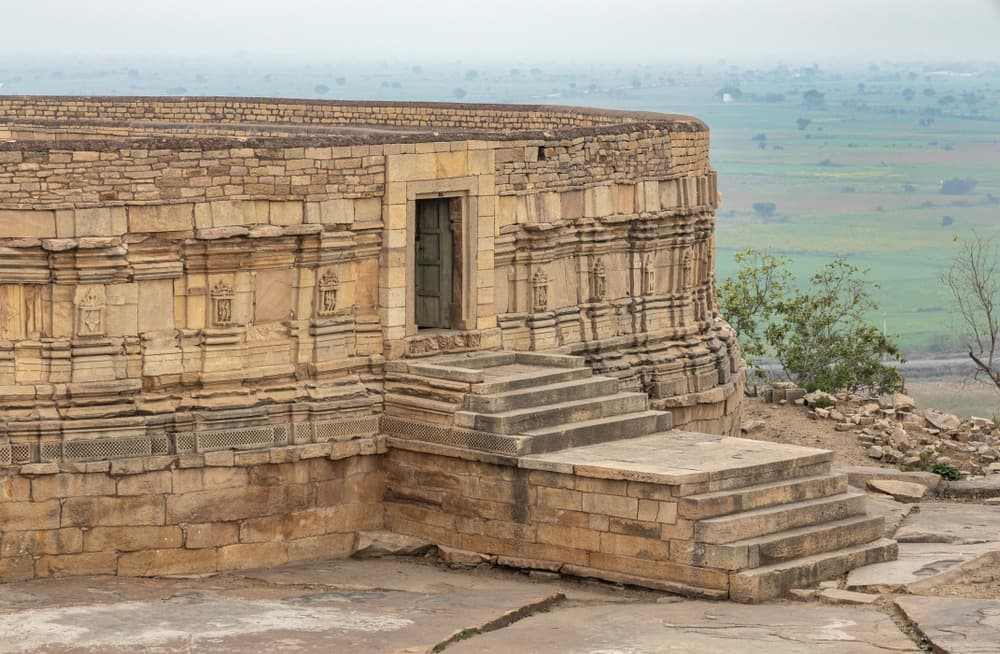
An 11th-century circular structure dedicated to Shiva, the Chausath Yogini temple in Mitawali features 64 Yogini sanctuaries arranged at the summit of a Madhya Pradesh hilltop.
The Chausath Yogini temple, also known as Ekattarso Mahadeva, stands atop a hill in Mitawali, in Morena district, Madhya Pradesh. This 11th-century circular sandstone structure ranks among the rare surviving Yogini temples in India and remains dedicated to the worship of Shiva.
Why visit the Chausath Yogini temple
Three qualities make this temple compelling for a traveler curious about Indian sacred architecture:
- Its circular layout, uncommon in Madhya Pradesh, where square and rectangular sanctuaries predominate.
- Its scholarly heritage: the site formerly served as a center for teaching astrology and mathematics based on solar transit.
- Its elevated position, above the Morena plains, commanding an open panorama across the surrounding countryside.
The building is also cited in certain architectural discussions for an unconfirmed resemblance to the Indian Parliament building in New Delhi, designed in the 1920s.
History of the temple
According to a register dated 1383, the temple is believed to have been commissioned by King Devapala Kachhapaghata in the 11th century. It functioned then as a center of learning dedicated to astrology and solar mathematics, alongside its religious purpose. This dual vocation, scientific and religious, aligns with the role of several temple-schools in medieval India.
A frequently repeated but never formally documented rumor suggests that the architects of Delhi's Parliament, in the 1920s, drew inspiration from Chausath Yogini's circular plan. The visual analogy is striking, but no official source confirms it.
On November 28, 1951, the Archaeological Survey of India inscribed the temple on its list of protected historical monuments, enabling stabilization of its conservation to the present day.
What to see on site
The temple rests upon a hill approximately 30 meters high. A flight of roughly 100 steps, in good condition, leads to the entrance. The entire structure is built in red and brown sandstone, in a hue that blends into the mineral landscape of the plateau.
The circular enclosure houses:
- 64 small sanctuaries aligned against the inner wall, which give the temple its name ("Chausath" means sixty-four in Hindi).
- A central mandapa, or columned assembly hall.
- A façade articulated by pilasters and numerous ornate pillars.
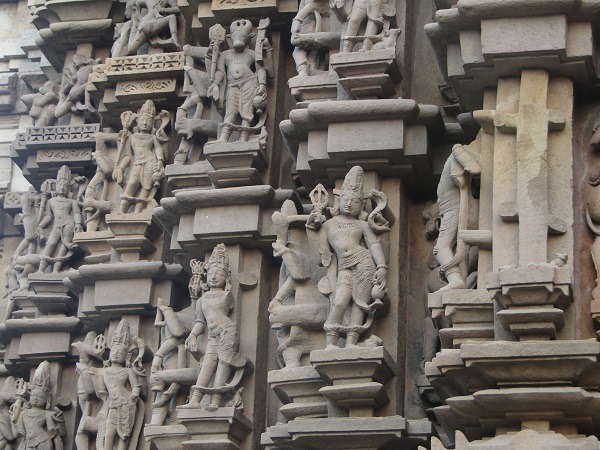
- An outer façade adorned with carved representations of Hindu deities.
Each sanctuary originally housed a Yogini idol, a feminine figure accompanying Shiva in tantric tradition. Most statues have vanished over the centuries; the pieces that survive are now displayed in several Indian museums.
Practical information
The temple is open daily from early morning until dusk. Admission is currently free, though this may change; check locally.
Allow 1 to 1.5 hours for a visit, including the climb. Bring water, closed-toe shoes for the ascent, and a hat: the site is exposed with little shade at the summit.
When to visit
Madhya Pradesh's climate demands careful timing. The most comfortable period stretches from October through March, with bearable temperatures and clear skies. From April to June, temperatures regularly exceed 40°C, making the climb strenuous. The monsoon, from July through September, can complicate road access to Morena.
How to get there
- By air: Gwalior airport, roughly 40 km from Morena, is connected to several major Indian cities (New Delhi, Mumbai, Chennai). This is the most convenient entry point.
- By train: Morena has a railway station about 15 kilometers from the temple. From there, taxis or rickshaws provide access to Mitawali.
- By car: buses and taxis maintain regular links between major Madhya Pradesh cities and Morena. The route from Gwalior is most direct.
Nearby sites
Morena district encompasses a coherent cluster of lesser-known yet archaeologically significant sites. If you make the journey to Chausath Yogini, plan to continue with:
- The Bateshwar complex, comprising over 200 Shiva temples undergoing restoration.
- The Padavali site, featuring a fortified temple covered in sculpture.
- The city of Gwalior, dominated by its fort, a classic departure point for exploring the region.
To extend your discovery of the state's museum heritage, the State Museum in Bhopal houses an important collection of sculptures from comparable sites. Travelers interested in India's historical legacy may also explore the Ajit Singh Memorial.
Frequently asked questions
Frequently asked questions
"Chausath" means sixty-four in Hindi, and "Yogini" designates the feminine tantric deities associated with Shiva worship. The name refers to the 64 sanctuaries arranged in a circle within the temple, each originally housing a Yogini idol.
This is a frequently repeated rumor: the circular form and pillar arrangement of the Sansad Bhavan evoke those of the temple. However, no official document confirms a direct link between the two buildings. The resemblance remains an appealing hypothesis without formal proof.
No. Access consists of roughly 100 steps carved into the hillside, without railings or elevators. The site is not wheelchair-accessible nor suitable for those with difficulty climbing stairs.
Allow 1 to 1.5 hours on site, including the climb. Combining Chausath Yogini with Bateshwar and Padavali, plan a full day's excursion from Gwalior.
Photography is generally tolerated both outside and within. Remain discreet during any worship services and avoid flash on ancient sculptures.
Include this site in your India journey
The Chausath Yogini temple works well as a cultural stop between Agra and Khajuraho, as part of an itinerary centered on northern Indian temple architecture. To build a custom itinerary incorporating Morena, Gwalior, and lesser-known Madhya Pradesh sites, consult our India journeys.
Interested in this visit?
We can include it in your personalised itinerary.