Amar Sagar Lake
Amar Sagar Lake
Located 7 km west of Jaisalmer, Amar Sagar Lake brings together a 17th-century Rajput palace, several temples and a small ethnographic museum of Rajasthan.
Located 7 km west of Jaisalmer, Amar Sagar Lake forms a cultivated oasis at the heart of the Thar Desert. Along its shores unfold a 17th-century Rajput palace, several Hindu and Jain temples, and a small ethnographic museum that make it a worthwhile complement to the city's golden fort.
Why visit Amar Sagar Lake
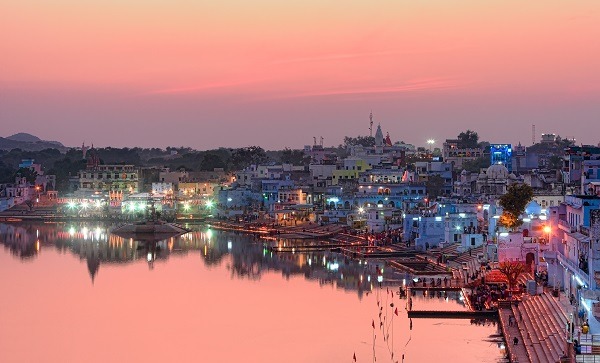
The site presents three combined attractions. First, historical heritage, with the palace of Amar Singh and its complex of havelis, ponds and chattris. Next, religious interest, thanks to the concentration of small Hindu and Jain temples around the water. Finally, ethnographic interest, as the lake remains a living place: wells still used in the dry season, dishes drying in the courtyards of neighboring homes, boat rides frequented by locals in the evening.
Visitor numbers remain moderate compared to Jaisalmer Fort, allowing for a more peaceful visit, particularly at sunrise when light illuminates the entire complex with the citadel in the background.
History of the lake and palace
Amar Sagar Lake is among the ancient water sources developed around Jaisalmer. It long served as the city's main reservoir, in a region where water supply determined urban life. This practical function explains the presence of a well still in use by village residents during drought periods.
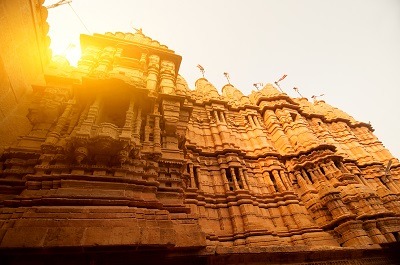
The palace of Amar Singh, which dominates the shore, was erected in the 17th century by Maharawal Akhai Singh as a tribute to his predecessors. Built in Rajput style, it testifies to the architectural refinement of Jaisalmer's court during that era.
A local legend surrounds the Tila ki Pol gate, which marks the access to the lake. It is said to have been built by a wealthy courtesan named Tila. Jealous of the edifice, the palace princesses demanded its destruction. Tila then transformed the upper part of the gate into a temple dedicated to Krishna, thereby sanctifying the building. The interior remains closed to the public for conservation reasons.
What to see
The Amar Singh Palace complex
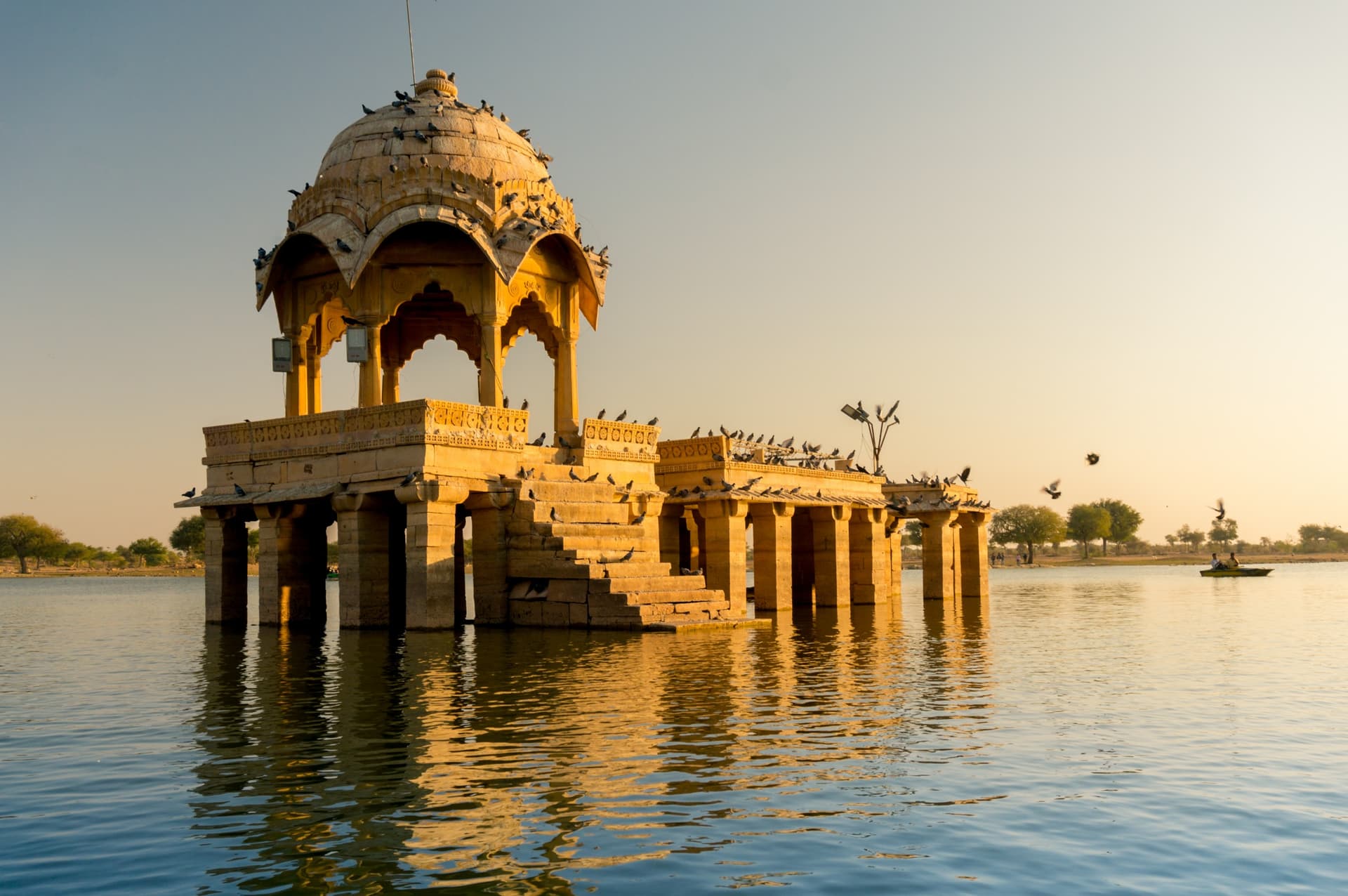
The palace appears as a haveli spread over five floors, with large pavilions flanked by stairways descending toward the lake. The interior preserves numerous murals. The complex includes several ponds, wells and chattris (cenotaph pavilions typical of Rajasthan). As Amar Singh was a disciple of Shiva, a temple dedicated to this deity was integrated into the whole.
Temples and sanctuaries
- Jain temple of Adinatha, located north of the lake and dedicated to the first tirthankara.
- Hindu temples and pavilions lined along the shore near the road, accessible on foot along the water.
- Tila ki Pol gate, to be observed from the outside.
The Folklore Museum
To the right of Tila's gate, this small private museum was founded by an individual, then taken over by his son. The collection gathers everyday objects, costumes and instruments from rural Rajasthan. The museum exit opens onto the courtyard of a private home where dishes dry in the sun — a common scene in households near the lake.
Boat ride on the lake
Boats and pedal boats are available for rent, mostly frequented by couples in the late afternoon. The crossing allows you to see the palace from another angle.
When to visit
The best period to visit Amar Sagar corresponds to Rajasthan's dry and cool season, from November to February, when daytime temperatures remain bearable. From April to June, Thar's heat frequently exceeds 40°C and limits visits. The monsoon (July-September) is more moderate in Jaisalmer than elsewhere in India, but the lake level is more visible in winter.
Within the day, sunrise offers the softest light on the complex and the citadel in the background. Sunset is the prime time for boat rides.
Practical information
- Duration of visit: allow 1-2 hours for a tour of the lake, palace and museum.
- Hours: daytime opening, boat rentals in the evening. Hours vary, verify on-site.
- Fees: modest entry to the complex, supplement for the museum and boat ride (moderate rate for approximately 30 minutes).
- What to bring: water, hat, closed-toe shoes for sandy ground; clothing covering shoulders and legs for temples.
How to get there
Jaisalmer is connected to other Rajasthan cities by bus (public and private operators) and by train from Jaipur, Delhi and several major Indian cities. The Palace on Wheels, a luxury tourist train, also serves the city on its Rajasthan circuit.
From Jaisalmer's city center or the foot of the fort, the lake is about 15-20 minutes by vehicle. The most common options are:
- Auto-rickshaw shared or private from the fort, the most economical solution.
- Taxi by the trip or half-day to combine Amar Sagar with other nearby sites.
Nearby
Amar Sagar fits easily into a half-day excursion around Jaisalmer, combined with:
- Jaisalmer Fort and the old fortified city.
- The royal cenotaphs of Bada Bagh, a few kilometers to the north.
- Gadisar Lake, east of the city.
- The Jain temples of Lodhruva, another historic stop in the Thar Desert.
To extend your discovery of India, also see Bandhavgarh National Park in Madhya Pradesh or Ajit Singh Memorial.
Frequently asked questions
Frequently asked questions
The lake is located approximately 7 km west of Jaisalmer, in the state of Rajasthan, in northwestern India.
A complete visit to the lake, Amar Singh Palace, temples and Folklore Museum takes 1 to 2 hours. Allow more time if you wish to take a boat ride.
No, the interior of the gate, which houses a temple dedicated to Krishna according to the legend of the courtesan Tila, is closed to the public for conservation reasons. The gate remains visible from the outside.
From November to February, when temperatures in the Thar Desert are most temperate. Avoid April-June, a period of very high heat.
Auto-rickshaw is the simplest and most economical option. Taxi is worthwhile if you combine Amar Sagar with other nearby sites (Bada Bagh, Lodhruva).
Include Amar Sagar in your trip
Amar Sagar Lake fits naturally into a stay in Jaisalmer and into a broader Rajasthan circuit. To plan your custom itinerary, consult our trips to India.
Interested in this visit?
We can include it in your personalised itinerary.