Allahabad
Allahabad
At the confluence of the Ganges, Yamuna and the mythical Saraswati, Allahabad (Prayagraj) blends ancient spirituality, Mughal heritage and the memory of independent India.
At the crossroads of sacred rivers and thousand-year-old legends, Allahabad invites you on a journey beyond time. Nestled in northern India, this mythical city weaves together spirituality, imperial history and cultural richness. Far from conventional tourist circuits, it reveals its treasures to travellers seeking authenticity. Whether you are a history enthusiast, devoted pilgrim or simply curious about the soul of India, Allahabad promises a vibrant immersion into one of the greatest cradles of subcontinental civilisation.
Where is Allahabad Located?
Situated in northern India, Allahabad lies in the state of Uttar Pradesh, at the heart of the vast Indo-Gangetic alluvial plain. The city occupies a strategic position at the confluence of the Ganges and Yamuna rivers, two of the subcontinent's most sacred waterways, as well as the mythical underground Saraswati river. Allahabad is also approximately 120 km west of Varanasi and nearly 200 km southeast of Lucknow. Thanks to its position at the intersection of these major rivers and within a fertile region, the city has long been a major historical, spiritual and cultural centre in Northern India.
History
After Brahma performed the Prakrishta Yagna during the creation of the world, Allahabad is said to have been designated king of all pilgrimage centres. Since then, the city has had a turbulent history. Ancient texts mention Allahabad as the refuge of the Aryans who named it Prayag. According to the Padma Purana, the city would occupy the centre of the pilgrimage universe, just as the Sun stands at the heart of the solar system. According to the Brahma Purana, one can obtain merit equivalent to that granted during an Ashwamedha Yagna by bathing at the confluence of the Yamuna and Ganges rivers during the month of Magha.
Some 5,000 years ago, three great sages resided in Allahabad. These were Bharadwaj, Panna and Durvasa. Rama, the mythical king of ancient India, is said to have met the sage Bharadwaj on the road to Chitrakoot, while Pururava was followed by the Maurya and Vatsa dynasties. Before the arrival of Muslims and Mughals, Allahabad enjoyed a period of prosperity under various Buddhist and Hindu rulers. The renown of Prayag spread to the remotest corners of the Earth, even inspiring Xuanzang (Huan Tsang) to visit it.
After the destruction of Hastinapur, seat of the Kuru authorities, King Nichakshu decided to move his capital to Kaushambi, not far from Prayag, which allowed the latter to gain increasingly in importance.
Over the years, Allahabad became the centre of Hinduism and Vedic culture, while Kaushambi was later converted into a Buddhist city a few centuries later. Around the first century AD, following the division of the Kuru family, Prayag housed the seat of power of the Kushana empire. Culture and lifestyle in Allahabad then changed with the arrival of Muslims and Mughals.
In 1193, the city was annexed by Muhammad Ghori. In 1526, it became part of the Mughal empire before being recaptured and renamed Ilahabas by Akbar in 1575. The reformer built a great fort still visible today. Allahabad later fell under the control of the Marathas who built numerous temples there until the arrival of the British. The English East India Company seized it around the early 19th century.
In 1857, Allahabad was the birthplace of India's first war of independence before becoming a centre of the non-violent resistance movement led by Gandhi. The city also became a key point of colonial administration in the "United Provinces", one of the most important territorial divisions of the British era.
Why Was Prayagraj Renamed Allahabad?
The name Allahabad was given to the city of Prayagraj by Mughal emperor Akbar in the 16th century. Originally, the city was called Prayag, a name derived from the Sanskrit word meaning "place of sacrifice", in reference to its sacred position at the Sangam, the confluence of the Ganges, Yamuna and Saraswati rivers, highly revered in Hinduism.
In 1583, Akbar, seeking to strengthen Mughal control over this strategically and spiritually important region, had a fortress built near the sangam site. He renamed the city "Ilahabad" (or "Ilaha-bad"), which can be translated as "City of God" or "Garden of Allah", merging the Arabic word "Ilah" (God) with the Persian suffix "-bad" (city). The name transformed over time into Allahabad.
This change reflected both a political will to mark Muslim sovereignty and a strategy of cultural integration. However, the original name, Prayag, remained alive in religious tradition and in everyday language, particularly among Hindus.
In 2018, the Uttar Pradesh government officially restored the historical name Prayagraj, emphasising its millennial religious significance and erasing part of the Mughal heritage from the place name.
Why is Prayagraj Called Triveni Sangam?
Prayagraj is nicknamed Triveni Sangam because of its exceptional geographical position. It sits at the junction of three rivers: the Ganges and Yamuna, which are visible, as well as the Saraswati, a mythical river believed to flow underground. This confluence point is considered one of the most sacred places in Hinduism. According to tradition, bathing here allows one to be freed from sins and progress on the spiritual path. It is also here that the famous Kumbh Mela takes place, a massive pilgrimage that attracts millions of devotees every 12 years. The name Triveni Sangam, which literally means "meeting of three rivers", symbolises both spiritual purity and the union between the visible and invisible worlds.
Today
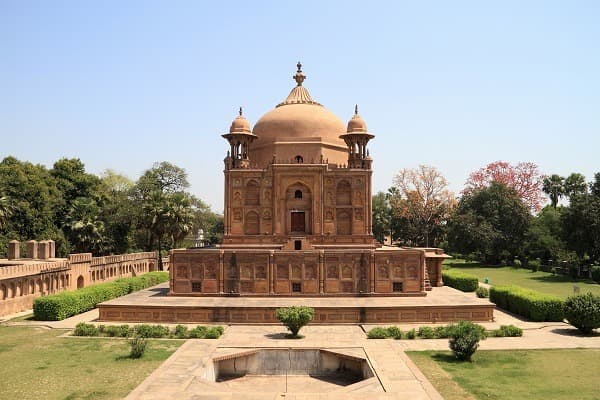
Allahabad, a timeless city situated in the Indian state of Uttar Pradesh, presents itself today as an exceptional tourist destination attracting only the most adventurous travellers. From the Khusru Tomb, whose construction dates back to the medieval period, to the Cathedral of the Saints built during the British Raj, passing through the Alopi Devi Mandir temple, among the oldest Hindu sanctuaries, numerous monuments from different eras echo the glorious past of this ancient city.
Among the historical sites not to be missed is also the Allahabad Fort, whose founding credit belongs to the patron emperor Akbar. Besides its architectural and historical heritage, Allahabad is known for the Kumbh Mela, a religious gathering of Hindu pilgrims existing since antiquity, but also attracting a number of tourists seeking spirituality or discovery. The city is also home to a prestigious university created during the British period and nicknamed the "Oxford of the Orient".
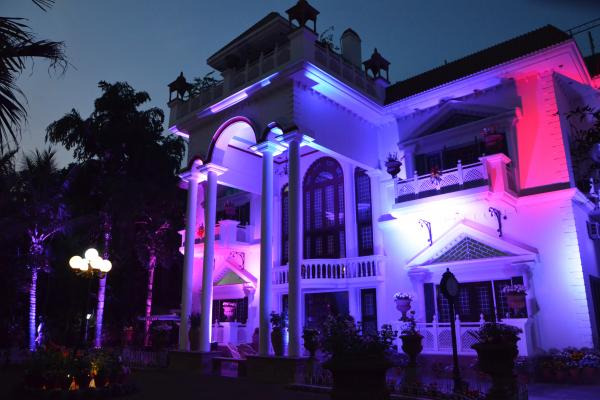
Regarding accommodation, Allahabad has a quality range of hotels to welcome both tourists and pilgrims. Services cater to all budgets, from friendly guesthouses to 5-star hotels. Lodgings are scattered near the train station or bus station, as well as in the old quarters of the city.
Climate
Allahabad experiences hot, dry summers, with temperatures rising to 40°C. The monsoon season there is rather pleasant. Conversely, cold can quickly become more intense, reaching 4°C, during the winter period. This climate variation is strongly influenced by flows coming from both the Bay of Bengal and the Arabian Sea, which modulate the Indian monsoon from east to west.
Because of its religious, commercial and intellectual importance, Allahabad is easily accessible from all points in Uttar Pradesh. The city sits at the intersection of numerous railway lines departing from major cities across India.
By air, Allahabad is served by Bamrauli Airport located approximately 10 km from the city centre. By road, access is via national highways 27 and 2. Bus services, taxis and rental cars with drivers are available to tourists for their journey.
Various modes of transport await you in Allahabad for your outings. Among them you'll find rickshaws perfectly suited for mid-distance journeys. As for buses, the routes cover the entire city, although taxis remain the best solution for enjoying a personalised itinerary. Car rental services are also available for your excursions to the surrounding regions.
What to Do?
- Visit Allahabad University, considered the Oxford of the Orient
- Tour historical monuments including the Khusru Tomb and Allahabad Fort
- Participate in the Kumbh Mela
- Wander through the city's picturesque streets
- Learn about Indian traditions and culture in the city's sanctuaries such as the Alopi Devi Mandir temple
Accommodation in Allahabad
Want to discover this destination?
Our local advisors design your tailor-made trip.