At Amritsar's Golden Temple, the Sikh community offers shelter and meals
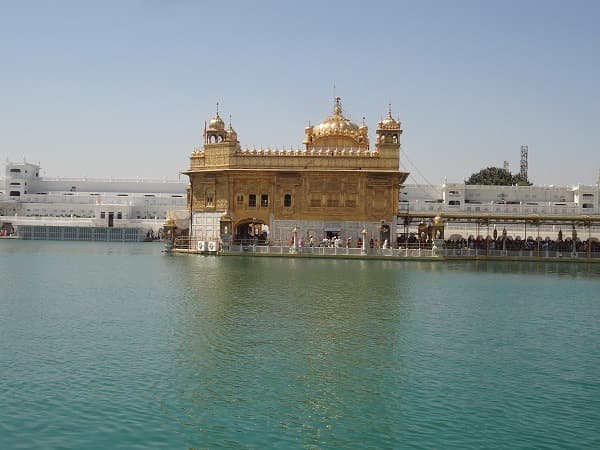
The "Sri Harmandar Sahib" in Amritsar, Punjab, is far more than a place of worship. Like all Sikh temples, it features a dining hall and dormitory where visitors from all walks of life find refuge.
The "Sri Harmandar Sahib" in Amritsar, Punjab, is far more than a place of worship. Like all Sikh temples, it features a dining hall and dormitory where visitors from all walks of life find refuge. It's an opportunity to immerse oneself in the world of turbaned men, on the eve of celebrations marking the birth anniversary of Guru Nanak, the founding father of Sikhism. A firsthand account.
There are places you leave with genuine reluctance. Amritsar's Golden Temple is one of them. After watching this sacred site of the Sikhs shimmer and blaze in daylight, it's hard to settle for a dingy bar or a depressing guesthouse...
Fortunately, every temple offers free meals and dormitory beds, open without regard to origin, religion, or—most importantly—caste. The Sikh community embodies equality and sharing. That's reason enough for backpackers to spend the night within the Golden Temple complex.
First stop: dinner in the dining hall. M. Singh, a regular here, gives tourists the lowdown. Standing by the sacred pool, he explains that "of course there's a canteen here" and that "they serve up to 80,000 meals a day." His listeners, bemused, begin mental calculations to verify such an undertaking is possible, but M. Singh reveals the secret: a "chapati machine" capable of producing "10,000 breads per hour."
The Sikh canteen is rather like Taylorism applied to thali service. In an atmosphere reminiscent of a railway station, beneath the iron framework of a brick building, you witness the choreography of a well-oiled machine. A volunteer hands you a plate, you grab it on the move, quickly swept toward the dining room by hungry pilgrims.
Seated on the floor in order of arrival, everyone dines cross-legged, hunched over their meal in a desperate attempt to eat neatly when the stiffness of one's spine is hardly conducive to grace. A young volunteer ladles lentils onto plates. Then comes dessert: halwa, a sweet confection of sugar and semolina. Karen, a British woman in her twenties, looks terrified. "I can't manage any more," she tells the dining hall supervisor. Firm but smiling, he won't hear it: "You must finish, it's obligatory."
Once the meal is done, everyone returns their spoon, cup, and watches their plate travel along a human chain toward the sink. After one last glance at the Golden Temple, it's time to head to the Guru Ram Das Sarai, which offers hundreds of beds spread across 400 rooms, available for a simple donation.
It's nearly midnight and the courtyard is still busy. In one corner to the left sits the foreign dormitory. Well looked after by two tall Sikhs in blue turbans and black beards, foreign visitors are housed in what appears at first glance to be a vintage clinic. Same wooden beds lined up in rows, same old-fashioned disinfectant smell, and the same ceiling fans slowly rotating against gray-green walls.
The cosmopolitan community of travelers exchanges tips. "Is there snow in Dharamsala?" an American asks a Chilean, who's chatting in English with a Canadian. The lights go out around one in the morning, and a fitful sleep begins, punctuated throughout the night by children's cries and religious chanting.
At dawn, the two dormitory attendants do a headcount: "Are you leaving today?" they ask the guests. Outside, backpacks shouldered, a couple of travelers already await their turn.