Chambal Valley
Chambal Valley
Just 70 km southeast of Agra, Chambal Valley brings together rare wildlife, mythic ravines and forgotten temples. A wild and preserved corner of India to explore in 2 or 3 days.
Far from the beaten path and the frenzy of India's great cities, Chambal Valley reveals an unsuspected facet of India—wild, authentic and deeply rooted in history. Located just 70 km southeast of Agra, this little-known region stretches across Madhya Pradesh, Uttar Pradesh and Rajasthan, following the mysterious Chambal River. Long associated with tales of bandits and rebellion, it now embodies a fascinating renaissance. Its preserved landscapes, rare wildlife, forgotten ruins and rural atmosphere make it a genuine natural and cultural sanctuary. Chambal is a destination that invites you to discover another side of India, far from clichés and full of contrasts.
Legends and a Shadowy Reputation
In the sinuous meanders of the Chambal River, legend and history intertwine to weave a tale as mysterious as it is captivating. According to tradition, it was here, along these silent banks, that Draupadi was humiliated during the fateful wager between the Pandavas and Kauravas. In her anger, she is said to have cursed the river for its silence, condemning its waters to awaken an eternal thirst for vengeance in anyone who drank from them.
This mythic curse seemed to echo in reality: for decades, the deep ravines of Chambal, carved by erosion, harbored the famous Baghis—rebels turned outlaws, driven by ideals of justice. Once perceived as vigilantes, they gradually transformed into feared bandits as organized crime and blood feuds took hold. Yet it was this very isolation that allowed nature to flourish, far from industrialization. Between myth and memory, Chambal Valley bears the imprint of a troubled past and raw beauty, preserved from the modern world.
Exceptional Biodiversity
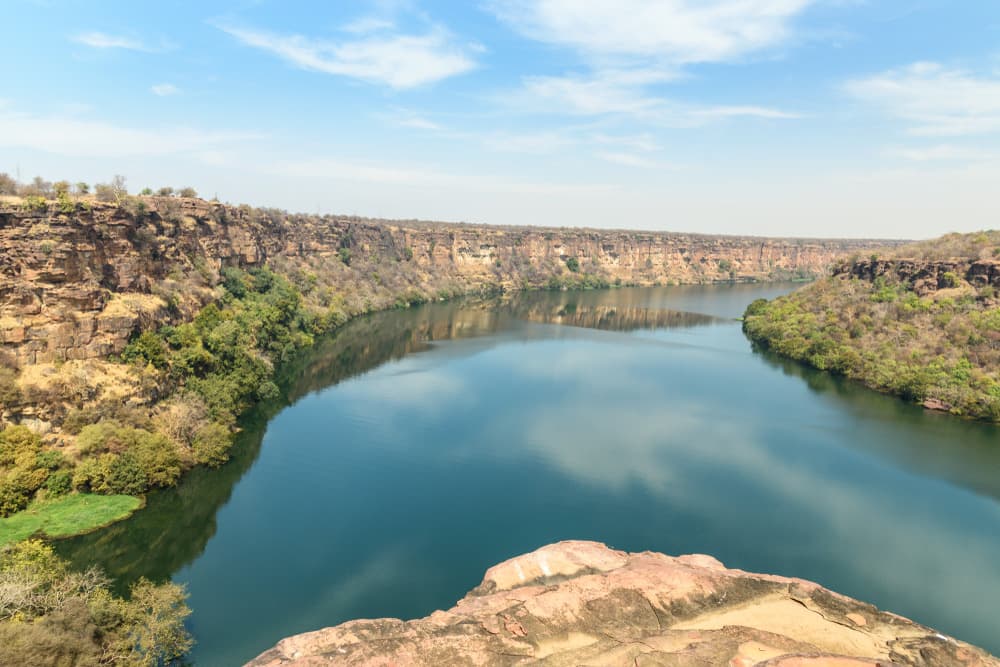
Once perceived as wild terrain, Chambal Valley actually conceals an ecological treasure of remarkable richness. Established in 1979, the Chambal National Sanctuary stretches 400 km along the river of the same name, bordered by sinuous ravines that protect rare and precious biodiversity.
The Chambal River, renowned as one of India's cleanest, harbors a unique ecosystem. It serves as a refuge for emblematic species such as the Ganges gharial, a crocodile with an elongated snout, and the Ganges dolphin, both gravely threatened. You may also encounter:
- The marsh crocodile
- The smooth-coated otter
- 8 rare species of turtles
- The striped hyena
- The golden jackal
- The wild cat
- The Indian wolf
Moreover, with over 330 bird species recorded, the sanctuary is a must-visit stopover for birds migrating from Europe, Mongolia and China during winter. Among the stars of the skies, you'll find:
- The Indian skimmer
- The Indian Skimmer
- Flamingos
- Fish eagles
- Teals
- The large-billed plover
Birdwatching enthusiasts and photographers will find an ideal setting here.
Heritage and Discoveries
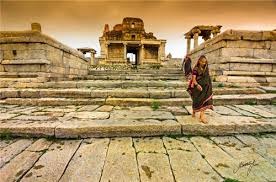
Chambal is more than tales of bandits and legends. Behind its image as rebellious land lies genuine historical treasure, still largely preserved from mass tourism. The surrounding area abounds in forgotten remnants: medieval fortresses overlooking ravines, temples in ruins hidden within vegetation, and ancient cities like Morena and Bateshwar. The latter is an exceptional archaeological site where over 200 stone temples, dating from the 8th to 11th centuries, emerge like a mirage from the past. The Bateshwar sanctuary, notably with its 108 temples dedicated to Shiva, fascinates both through its mysticism and the striking whiteness of its facades.
For those seeking breathtaking vistas, a camel safari to Ater Fort promises immersion between Rajput architecture and Islamic influences, with breathtaking views of ravines sculpted by time. A few kilometers away, Holipura reveals havelis blending Mughal charm and colonial heritage, while Rapri preserves the imprint of the 14th century through an ancient mosque and tombs set within silent landscapes.
Chambal Today
Today peaceful, Chambal Valley has gradually exchanged its tumultuous past for a future oriented toward conservation and ecotourism. While the ravines retain the raw charm of their rebellious heritage, it is no longer as bandit hideouts, but as silent witnesses to a bygone era, nourished by legends, uprisings and epic tales.
Moreover, if the Chambal River has remained pure, it is partly due to its status as "cursed" in certain Hindu traditions. Considered unholy, it was long avoided by local populations. This reputation paradoxically allowed its natural environment to be preserved and made it one of the last sanctuaries for several threatened species.
Furthermore, the region is undergoing genuine transformation: peaceful cruises along the river allow silent encounters with gharials, dolphins and rare birds, while eco-responsible lodges now welcome travelers seeking authenticity. Tourism here aims to be respectful, in harmony with nature and local communities.
Yet despite this new momentum, the valley is not without threat: overfishing, habitat loss and pollution pose real dangers. A small riverside museum works to raise visitor awareness, firmly reminding of the importance of leaving no trace, not fishing and reporting any illegal activity. Thus, Chambal writes a new chapter in its history: that of a land proud of its scars, yet turned toward a sustainable future.
Getting to Chambal is simpler than it might seem, despite its end-of-the-world atmosphere. For travelers arriving from abroad or major Indian cities, the nearest international airport is in Delhi, approximately 270 km away. From this city, several options are available to you:
By train, you can reach Agra station (70 km from Chambal) or Etawah (45 km), both connected to the capital and other major cities in the country.
For greater freedom, traveling by road is equally pleasant: from Delhi, Agra or even Jaipur, Chambal is easily accessible by car or private taxi.
The landscapes gradually shift, from modern highways to roads bordered by ravines, leading you toward a corner of India still little known, wild and fascinating.
Want to discover this destination?
Our local advisors design your tailor-made trip.