Planning Your Trip to Sikkim
Sikkim is a little-known state in India, yet it boasts magnificent landscapes. Located in the Himalayan range, it's a rejuvenating region cut off from the world. A peaceful place
Sikkim is a state still little-known in India, yet it abounds with magnificent landscapes. Located in the Himalayan range, it's a rejuvenating region cut off from the world. A peaceful place far from the hustle and bustle and overpopulation of major cities like Delhi or Mumbai, which promises you a warm welcome from the locals.
Considered one of the last utopian places on Earth, come and meet inhabitants delighted to welcome you and share their customs with you. Embrace their attire, cuisine, and culture, and disconnect from the outside world for a few days. For a peaceful stay, discover below how to plan your trip to Sikkim!
Location
Sikkim is a state located in Northeast India, nestled between Tibet, Nepal, and Bhutan. Its capital Gangtok is situated in the south. It's a Himalayan region whose altitude reaches 8,598 metres at the summit of Kangchenjunga. Sikkim is India's second-smallest state after Goa, with an area of 7,096 km². It's also the least populated state in the country with an estimated population of just under 650,000 in 2017. Sikkim experiences three different climates: subtropical in the south, temperate in the centre, and alpine in the north. The population is predominantly Nepali, with a religion initially Buddhist but in recent years seeing a massive influx of Hindu Nepali immigrants, settling notably in southern Sikkim. Today, the main economic activities rest on agriculture as well as tourism.
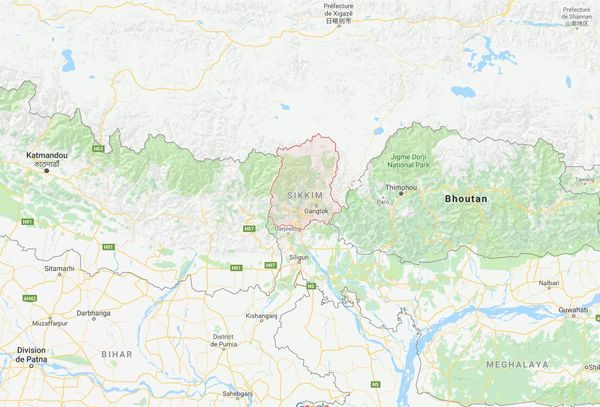
©Google Maps
History
Sikkim was initially a kingdom founded in 1642 by Phuntsog Namgyal. After several wars with Nepal and Bhutan, the country became a British protectorate in 1817. Then with India's independence in 1947, a referendum was held but the Sikkimese people refused to join the Indian Union. The monarchy thus became an Indian protectorate in 1950. However, it experienced considerable riots and tensions, which led the country to seek India's protection, which took the opportunity to organize a new referendum. In 1975, Sikkim was thus annexed to India and became its 22nd state.
When to Visit Sikkim?
It all depends on where you wish to go. Since this region has three different climates depending on altitude, you should expect all types of temperatures. Note that monsoon rains are very heavy from May to September, particularly in the capital Gangtok. In terms of temperatures, the plateaus enjoying a temperate climate experience pleasant temperatures throughout the year, ranging from 15°C to 25°C in summer and 3°C to 17°C in winter. In the north, at high altitude, temperatures remain very cool and often drop below freezing. The best time to fully enjoy Sikkim would therefore be during the driest months, between October and March.
What to Do or Visit in Sikkim?

Buddha Park, Ravangla
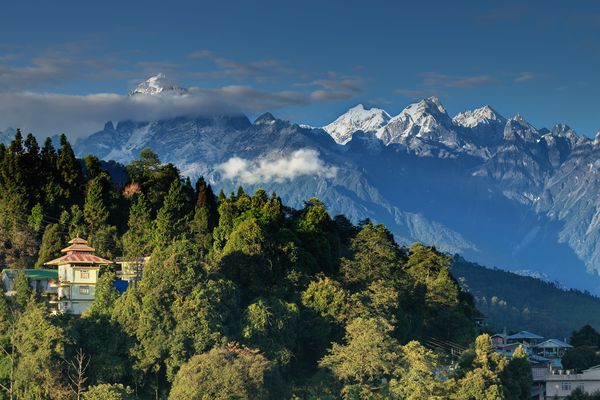
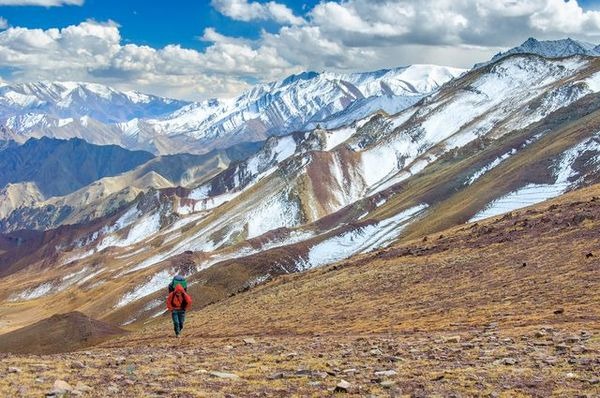
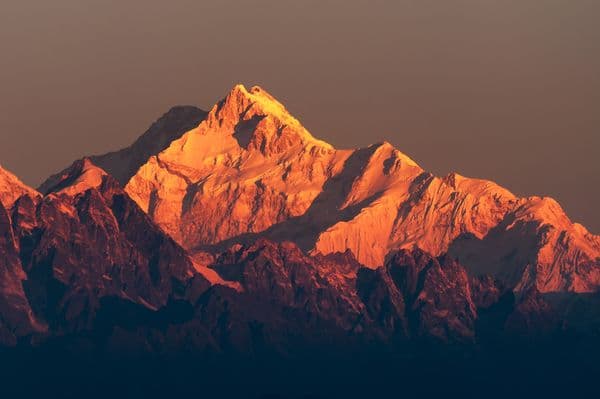
Since Sikkim is a mountainous region, many treks are organized. However, some of them require a permit to undertake. By going through your travel agency Active India, treks will be much simpler to organize as your agency will take care of all necessary authorizations, and you will be accompanied by a guide, sometimes mandatory in this region. You can also discover Sikkim by bike. It's indeed an original and innovative way to visit and enjoy the landscapes at your own pace, and easier than hiking. Cycle from the lush forests of the subtropical climate to the snow-capped mountains of the Himalayas. Numerous Tibetan temples and monasteries await you, each more beautiful than the last, and they make the atmosphere all the more peaceful and relaxing. A discovery of Buddhist customs that gives you a memorable experience. The Buddha Park in Ravangla welcomes visitors and locals to enjoy a peaceful atmosphere, with a magnificent view of the hills in the background. A statue of Buddha standing 40 metres high is located at the centre of the park. The Kangchenjunga peak (8,586m) is the world's third highest. It's located on the Indo-Nepali border. You can observe it from Gangtok, the capital of Sikkim. Visiting Gayzing Market should be added to your list. You'll discover local products you won't find anywhere else, and you can get to know the locals. Finally, discover Khecheopalri Lake. It's a sacred lake for both Hindus and Buddhists. You'll be able to witness rituals on the lake.
Formalities
Certain regions of India such as Sikkim are protected and a standard tourist visa does not grant access to these regions. When submitting your visa application, you can request authorization to visit the Sikkim region for a maximum of 15 days. For a longer stay, you'll need to apply for a RAP (Restricted Area Permit). This permit must be requested directly in India at the FRO (Foreigner's Registration Office in New Delhi), or at certain posts located at the borders. If upon arrival in India, you plan to visit Sikkim but don't have a permit, you can still obtain it on site. Don't forget to bring your passport and identity photographs to apply. This permit is fairly simple and quick to obtain, and moreover, it's free.