In New Delhi, the Dargah of Nizamuddin, a neighborhood outside of time
Nizamuddin West, in the heart of the Indian capital, offers an escape that contrasts with the vast green avenues of New Delhi. Ceaseless streams of pilgrims animate day and night this wh
Nizamuddin West, in the heart of the Indian capital, offers an escape that contrasts with the vast green avenues of New Delhi. Ceaseless streams of pilgrims animate day and night this Muslim neighborhood, which houses one of the most sacred places of Islam in India. A report.
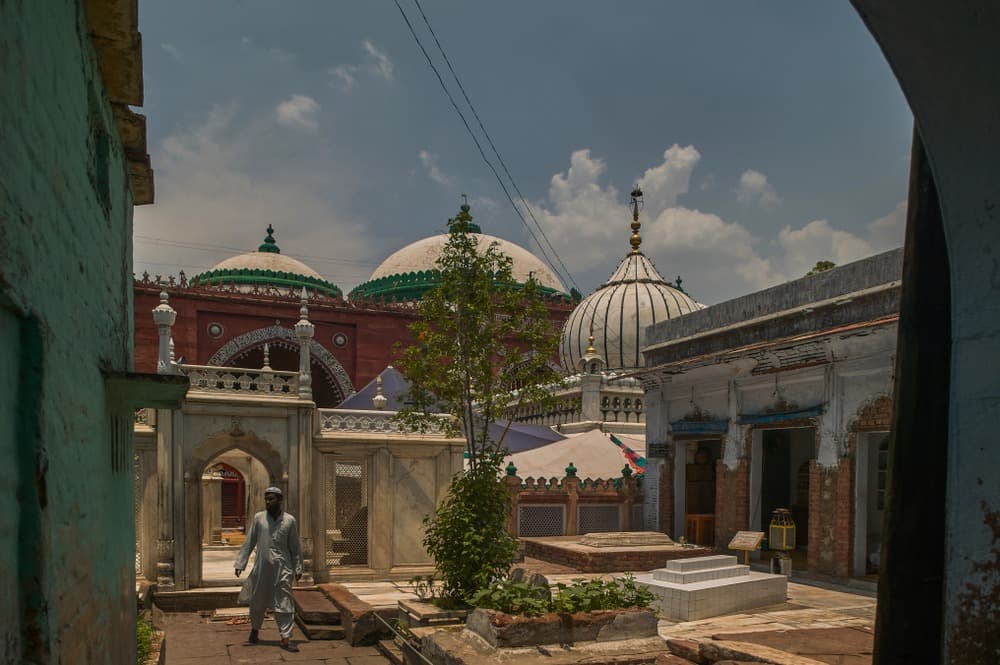
Nizamuddin West, at the heart of New Delhi, just across from the upscale and protected neighborhood of Nizamuddin East. A few bewildered-looking tourists wander amid the throngs of pilgrims that crowd the narrow streets surrounding the famous dargah, the mausoleum of the Sufi saint Hazrat Nizamuddin Auliya.
The mosque that houses this dargah, whose current structure dates from 1562, is a sort of city within a city. Its verandas, passages, and arched doors with sculpted details are undoubtedly worth a visit. Especially on Thursday, when, as night falls, qawwali chants echo through the courtyard, adding an extra touch of the sacred to the atmosphere. But more than that, it is the neighborhood as a whole that offers the opportunity for a genuine journey through time. The Blue Guide describes it as "a survival of a medieval world steeped in poetry and fervor at the turn of a highway exit".
Thousands of devotees wander everywhere, coming here each year to pay their respects at the tomb of the saint and his disciples. The atmosphere is unique, almost mystical. One feels much more in the old city than in an ordinarily so verdant and tranquil New Delhi. Here, at any hour of the day or night, the streets teem with people. Many men wearing beards and kurtas, but also families who have come on pilgrimage for a few days, and who rarely venture beyond the limits of the neighborhood.
Gulzar is Kashmiri. He comes to Delhi each year before the tourist season, hoping to find some Westerners who might accompany him to Srinagar, the summer capital of Indian Kashmir. "I look for tourists in Pahar Ganj (the backpacker neighborhood, note), but every time I come and stay here, in Nizamuddin, in a small pilgrim's room. I love the atmosphere here. People are poor, certainly, but simple and welcoming," he explains. Like all the Muslim neighborhoods of the capital, Nizamuddin West is indeed marked by poverty. Constantly, children, women, and elderly people, sometimes disabled, come to tug at the sleeves of passersby, searching for a few coins.
The throngs have naturally given rise to numerous shops. Many vendors of religious objects, often very kitschy, but also tea stalls and paan shops, as well as numerous basic restaurants that offer lamb, buffalo, and fried chicken skewers. Amin, 48, is a server in one of these canteens. With his eternal lopsided smile, he is happy when tourists visit his establishment. Always the same ritual. "Today, I have my kima (ground lamb, note), my chicken, and my Indian salad," he announces while bringing sliced onion rings. Then, at the end of the meal, when he offers pieces of newspaper: "here are my Indian napkins!"
One day, Amin sits down with us and tells us that he has been working here for six years. "Before I lived in Gujarat with my family. But during the anti-Muslim riots of 2002 (which killed about 2000 people, note), my entire family was killed." He himself had his legs and arms broken, and cannot walk without taking his medication. Muslim solidarity allowed him to rebuild his life here. "Allah is great and forgives everyone, I hold no grudge against anyone," he says. Nizamuddin West, the Dargah neighborhood, so close and yet so far from the upscale Nizamuddin East across the way.