Nagaland
Tourism today is understood as a discovery of the other rather than self-centered leisure. If you share this view, visiting Nagaland – a small Indian state bordering Manipur, Arunachal Pradesh,
Nagaland is one of the seven states of Northeast India. Discover the main attractions of this remarkable destination.
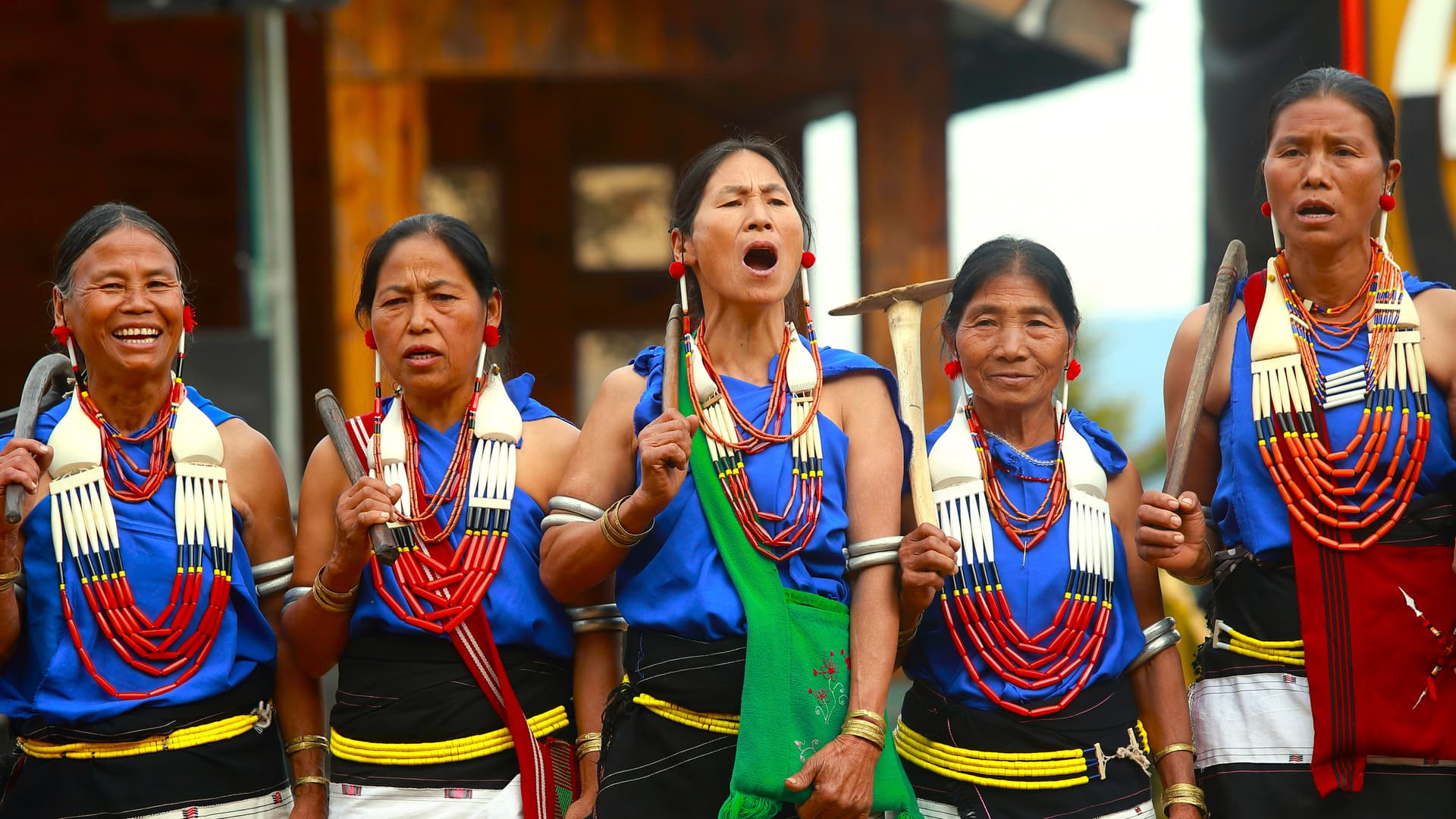
Tourism today is understood as a discovery of the other rather than self-centered leisure. If you share this view, a visit to Nagaland – a small Indian state bordering Manipur, Arunachal Pradesh, and Assam – will offer you an experience as unique as it is unforgettable. On the border with Myanmar, Nagaland is a land of culture and folklore. From hand-woven shawls to bamboo canes, from traditional rice beers to silkworm or smoked pork dishes, not to mention admirable wooden sculptures… the state possesses a culture all its own. To explore these treasures, travelers journey through a landscape of hills, rivers, and mountains dotted with wonderful natural parks such as the Intanki National Park. Don't wait another moment to book your flight to Nagaland and visit this incomparable region.
History
Historical records are silent on the origins of Nagaland's settlement. It is believed that the Nagas began to occupy the mountainous hills of the north from the 13th century onward. They lived by hunting and gathering wild fruits and organized themselves into principalities ruled by a patriarchal system.
Unlike neighboring Assam, which was governed by the Ahom kings, Nagaland received no semblance of civilization before the arrival of British colonization. The Nagas had a reputation as headhunters. Intertribal conflicts were commonplace: to prove their valor, men conducted raids, plundered livestock and goods from neighboring tribes, leaving the camps of the vanquished in complete destitution. In turn, they risked retaliation. Thus, the Nagas lived in a context of permanent turmoil, fearing the Assamese and Manipuri and feared by them.
When India came under the administration of British officers, Nagaland was incorporated into the province of Assam. It then took the name of "Naga Hills District". After a series of violent rebellions that did not end until 1922, the British presence brought about profound social transformations: barter gave way to the rupee, animism to Christianity, rivalries to peaceful coexistence. The practice of headhunting was definitively abandoned in 1969.
From its rich tribal past, the state of Nagaland has drawn treasures of paramount cultural importance such as war dances, folk songs, weaving, and wooden sculpture that attract tourists from far and wide. The Hornbill Festival, celebrated during the first ten days of December, is its finest manifestation.
Today
Following the collapse of British India, the Indian state of Nagaland was officially founded on December 1st, 1963.
The pillar of the economy is based on subsistence agricultural products, which represent up to 70% of the country's added value. Tourists will thus have the pleasure of traversing terraced rice paddies, sugar cane, millet, and tobacco fields.
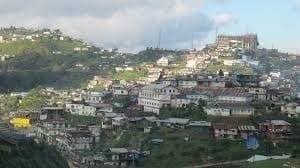
Kohima, the capital city, has retained a colonial appearance with its British buildings converted into hotels.
Places of Interest
It is impossible to be bored in Nagaland, as the destination offers countless opportunities for trekking, hiking, cultural activities, and gastronomic discovery.
Natural Heritage
- Intanki National Park : a trek through this famous park is essential to grasp the wild beauty of Nagaland in all its forms. A rich population of langurs, hoolock gibbons, wild dogs, sloth bears, felines, and ruminants call this place home, which acquired national park status in 1993 and elephant reserve status in 2005. At the heart of Peren district, 60 km west of Kohima, Intanki Park is a favorite refuge for tourists seeking trekking or camping in breathtaking natural scenery.
- Nagaland Zoo : inaugurated in 2008, the zoological park is a leisure space for vacationing families. Its ideal location just 6 km from Dimapur's commercial center is a major advantage, especially if you're seeking green spaces without venturing too far from urban areas. The Royal Bengal Tiger, elephant, deer, and crocodile are the zoo's major attractions. Nearly 500 bird species are also catalogued here, including the Manipur Fulvetta. Easily accessible by auto-rickshaw or bus, the zoological garden is a must-visit during a family trip to Nagaland.
- Naga Hills : nestled within a mountainous belt of the Himalayas, near the border separating India from neighboring Myanmar, Nagaland's hill stations attract lovers of verdant landscapes, farm villages, vertiginous peaks, and cultural encounters with tribal populations.
- Triple Falls : it would be a mistake to think that India's most beautiful waterfalls are concentrated in Meghalaya. Enter the Triple Falls, this trio of cascades in Nagaland that plunge from a height of 280 feet into a charming natural pool. Family picnics, swimming, extreme sports, or hiking leading to the Rangapahar Forest Reserve… Triple Falls is an essential stop to perfect your trekking circuit in Nagaland.
- Shilloi Lake : don't miss the beautiful Shilloi Lake for a relaxing stay in Nagaland. Bordered by the Patkai mountain range at the state's extreme east, this lake, 4 meters deep, is sacred to the inhabitants. Legend tells that the spirit of a baby floats on its waters. Listening to the murmur of the waters, watching for migratory birds like Siberian cranes, enjoying fishing… Shilloi Lake is a popular tourist destination in Nagaland.
- Japfu Peak : perched at 3,048 meters of altitude, this mountain pass audaciously touches the firmament. An ideal observation post to admire the oaks, rhododendrons, pink lilies, and bamboo thickets that cover the Dzukou Valley. Much sought after, Japfu Peak is accessible after four days of hiking through a succession of varied landscapes. Nearby tourist attractions include the Pulibadze Forest Reserve and the Khonoma Nature Reserve. These four sites form an important bird conservation area. Among the avifauna to see, mention should be made of the Blyth's Tragopan with its brown-rust plumage spotted with white, or the Assam Swift.
Museums and Historic Sites
- Nagaland State Museum : overlooking Bayavü Hill, 500 m north of the capital Kohima, the Nagaland State Museum is the essential meeting place for lovers of tribal culture and traditions. The identity of indigenous peoples is reflected in jewelry, dress codes, cabin models, and utensils specific to daily life. You'll be enchanted by bamboo and buffalo horn musical instruments.
- Science Center : opened in 2004, the Science Center is an establishment with educational, scientific, and recreational purpose. The place is a pleasant destination for those wanting to unwind and learn at the same time. Exhibitions are distributed across three galleries: "Our Senses," "Fun Science," and "Kids' Corner." Exiting the museum, visitors can detour to the Naga Shopping Arcade and take home excellent handicraft products as gifts.
- Kohima War Cemetery : a historic symbol of the state, the war cemetery offers a poignant and emotionally rich stroll. It rests the agents of British forces who perished during World War II fighting the 15th Japanese Army. There is a stone memorial bearing the following epitaph: "When you go home, tell them about us and say, for your tomorrows we gave our todays".
Beyond the capital Kohima, Nagaland is rather sparse in museums and cultural monuments. People travel there mainly for its wild and colorful landscapes.
Gastronomic Discovery
Local dishes are a curiosity to fully explore during your stay. Nagaland is known for its delicious meat-based preparations: smoked or spiced pork, grilled chicken, or the essential steamed fish are highlighted on the finest Naga tables. Vegetable dishes serve as accompaniments: an assortment of beans, melons, tomatoes, cabbages, or other varieties that may seem bland, but result in an explosion of flavors. Aikibeye, a dish of mustard leaves mixed with Colocasia roots, is another regional specialty. One constant, however, in this diversity: bamboo shoots that enhance all dishes and give Naga cuisine its distinctive character.
For beverages, try zutho, an artisanal rice beer that flows at all tribal festivals and celebrations.
Best Time to Visit
Nagaland is a unique place on the planet, in that it is subject to both tropical and subalpine climates. The state experiences only two months of summer (March to April) against five long months of winter (October to February). The influence of altitude explains why summer temperatures remain reasonable: between 16°C and 31°C. Total annual rainfall reaches 1,800 to 2,400 mm, with the majority of rainfall occurring from May through September, the monsoon season.
To visit Nagaland in cool, dry weather, plan your departure dates in the early days of winter or the height of summer, knowing that the high season is winter.
Tourists have several transport options to reach Nagaland: airplane, train, or bus lines.
European nationals must take a flight with a stopover in New Delhi, Calcutta, or Guwahati since there are no direct flights to Kohima.
You Will Love…
- touring Kohima, visiting historic sites where memories of colonial occupation resound ;
- enjoying Dimapur and its surroundings ;
- paying tribute to the invaluable tribal heritage presented at the State Museum ;
- climbing Japfu Mountain ;
- attending the famous Hornbill Festival ;
- getting to know the ambassadors of Naga fauna: the Blyth's Tragopan, the Great Pied Hornbill, the slow loris or slender loris, the Himalayan black bear… ;
- tasting local specialties in luxury restaurants: silkworms, smoked pork, etc. ;
- experiencing an emotionally rich stroll through the Nagaland Zoo.