Rumbak
Rumbak
A shepherd village at the heart of Hemis National Park, Rumbak is the ideal starting point for observing snow leopards in winter and accessing Markha Valley in summer.
Rumbak is a small shepherd village nestled in the valley of the same name, at the heart of Hemis National Park in Indian Ladakh. Accessible only on foot or horseback, it serves as the prime departure point for observing snow leopards in their natural habitat. At over 4,000 meters elevation, the village offers an arid high-altitude mountain setting, inhabited by a handful of families who welcome trekkers as homestay guests.
Quick Facts at a Glance
- Access: departure from Zingchen, approximately 15 km from Leh via the Spituk road; the walk to Rumbak takes about 3 to 4 hours.
- Entry: Hemis National Park permit required (paid), obtainable in Leh.
- Accommodation: village homestays only, no hotels.
- Recommended duration: 2 to 4 days to maximize wildlife viewing chances.
- Best season: January–February for snow leopards; July–September for summer trekking.
- Accessibility: not accessible—high-altitude terrain with unimproved trails.
What to See
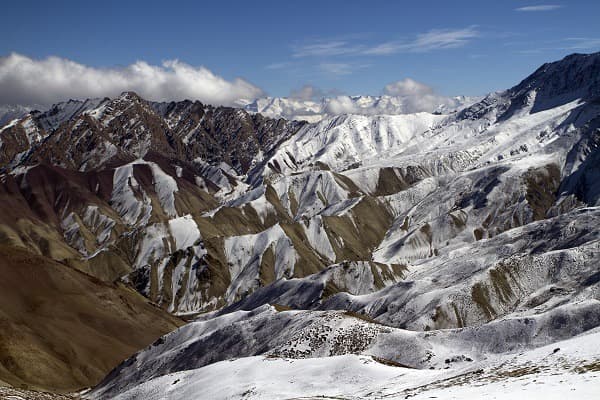
Rumbak Valley is one of the few places on Earth where observing snow leopards (Panthera uncia) is relatively frequent in winter. The surrounding cliffs and scree slopes also shelter bharals (Himalayan blue sheep), Tibetan foxes, and raptors such as golden eagles. The village itself, composed of a few stone and mud-brick houses, exemplifies traditional Ladakhi architecture.
History and Context
Rumbak lies within Hemis National Park, established in 1981 and regarded as one of Asia's largest protected reserves. The park was designated specifically to protect snow leopard populations and their prey. Rumbak residents practice traditional pastoral herding; many now work as guides or homestay proprietors, a transition encouraged to reduce pressure on wildlife.
Highlights of Your Visit
Snow Leopard Spotting
Between December and February, snow leopards descend to lower elevations to hunt bharal. Experienced local guides know the migration routes. Patience is essential: sightings are never guaranteed, but Rumbak remains one of the world's most favorable sites.
Trek to Ganda La Pass
Ganda La Pass (approximately 4,900 m) connects Rumbak Valley to Skiu and the Indus Valley. This summer crossing offers panoramic views of the Zanskar and Ladakh ranges. It integrates into the classic Markha Valley trekking circuit.
Village Life and Homestays
Staying with local families allows you to experience a Ladakhi household's daily rhythms: yak butter cooking, livestock tending, and textile crafts. The experience is simple and authentic, without modern amenities.
Photography Tips
In winter, the raking morning light on snow-covered cliffs is ideal for wildlife photography. A powerful telephoto lens (400 mm minimum) is essential for snow leopard shots. In summer, golden hour reveals the ochre and beige tones of the mineral landscape. No known photography restrictions in the valley, but wildlife respect comes first: do not approach animals.
Location and Access
Rumbak is located in Leh district, Ladakh, Inde. The trek's starting point is the village of Zingchen, accessible by taxi from Leh. From Zingchen, a trail ascends the valley to Rumbak. No motorized road reaches the village. The Hemis National Park permit is obtained from forest authorities in Leh.
Nearby
- Hemis Monastery — Ladakh's largest and wealthiest monastery, located within the same national park.
- Leh — Ladakh's capital and essential logistical hub before any regional trek.
- Markha Valley — classic trekking circuit connected to Rumbak via Ganda La Pass.
- Thiksey Monastery — imposing Buddhist monastic complex an hour's drive from Leh.
Photos
Want to discover this destination?
Our local advisors design your tailor-made trip.