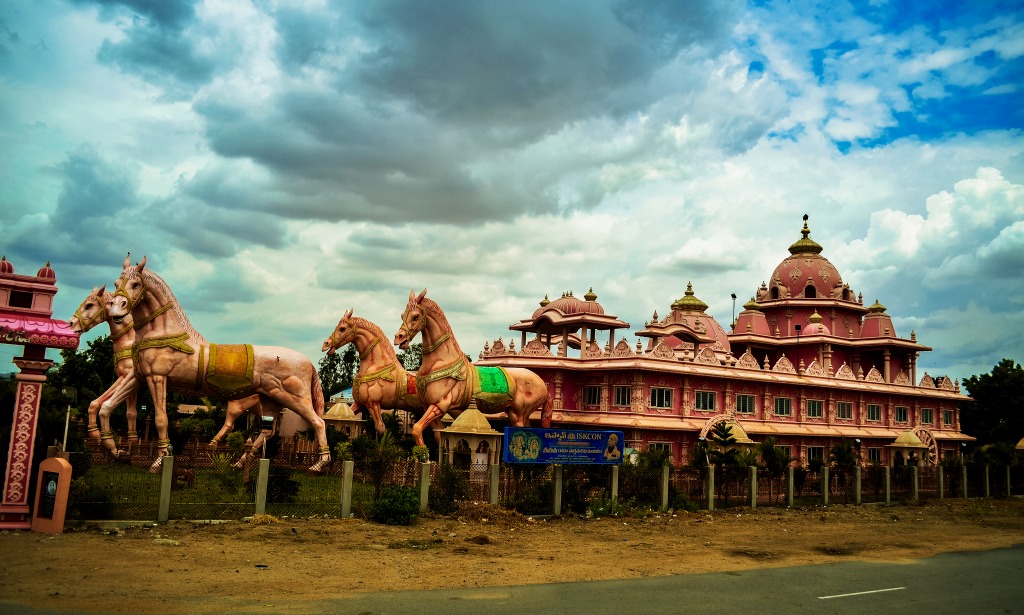
Pondicherry (Puducherry)
A former French colony nestled within Tamil Nadu, Puducherry blends pastel colonial streets, ashrams, Dravidian temples and tranquil beaches along the Coromandel Coast.
A former French colony on the Coromandel Coast, Puducherry — still widely called Pondicherry — juxtaposes a dense Tamil quarter with a French quarter of grid-patterned streets, ochre facades and bougainvillea. The city appeals for its singular atmosphere, its ashrams, its Franco-Tamil cuisine and peaceful beaches. It remains a human-scaled destination, easy to explore on foot or by bicycle.
Practical information at a glance
- Best time to visit: October to March (monsoon season over, heat manageable).
- Access: no international airport — nearest airport is Chennai (approximately 160 km); Puducherry has a railway station with connections to Chennai and Villupuram.
- Recommended duration: 2 to 3 days to cover the French Quarter, ashrams and beaches.
- Alcohol: Puducherry is a Union territory where alcohol taxes are lower than in neighbouring Tamil Nadu — numerous licensed bars and restaurants.
- Dress code: covered clothing recommended for temples and Sri Aurobindo Ashram.
- Currency: Indian rupee (INR); ATMs available throughout the city.
What to see
The city divides into two distinct quarters separated by a canal. The French Quarter (White Town) concentrates paved streets, colonial houses with colourful shutters and trendy cafés. The Tamil Quarter (Black Town) is home to grand Dravidian temples, lively markets and local daily life. The seafront (Promenade Beach) stretches along the Bay of Bengal for several kilometres.
History and context
The French established themselves in Pondicherry in 1674 under the French East India Company. The city changed hands several times — Dutch, British — before returning definitively to France, then being handed over to India in 1954. It became a Union territory in 1962. Colonial heritage is visible in the grid layout of the French Quarter, bilingual street names and the architecture of administrative buildings.
In 1926, Sri Aurobindo founded his ashram here, attracting disciples from around the world. In 1968, Auroville — an international experimental city — was created some twenty kilometres to the north.
Highlights of a visit
The French Quarter
Rue Saint-Louis, Rue Dumas, Rue Romain Rolland: pastel facades, interior gardens and designer shops make this area the photogenic heart of the city. A morning stroll, before the heat sets in, is ideal.
Sri Aurobindo Ashram
Founded by philosopher and yogi Sri Aurobindo, the ashram welcomes visitors and pilgrims around the samadhi (tomb) of Sri Aurobindo and the Mother. The atmosphere is contemplative; the library and craft workshops are open to the public.
Auroville
Some twenty kilometres to the north, this international utopian city is home to the Matrimandir, a golden sphere dedicated to meditation. Access to the interior requires advance reservation; the external vantage point is freely accessible.
Dravidian temples
The Manakula Vinayagar Temple, dedicated to Ganesh, is the most central and most frequented. The Arulmigu Vedapuriswarar Temple in Villianur, a few kilometres away, is one of the region's largest. Sculpted gopurams (gateway towers) dominate the Tamil Quarter.
Promenade Beach and surrounding beaches
The seafront is lively early morning and in the evening. For swimming, Paradise Beach (accessible by boat from Chunnambar) and Serenity Beach (at Kottakuppam) offer calmer conditions than the Promenade.
Franco-Tamil gastronomy
Cafés in the French Quarter serve crêpes, quiches and filtered coffee alongside Tamil thali. Restaurants along Rue Suffren and the waterfront offer fresh seafood. Goubert Market is the best place for spices and local vegetables.
Etiquette and visit guidelines
- Remove your shoes before entering temples and the ashram.
- Covered clothing (shoulders and knees) is required in places of worship.
- At Sri Aurobindo Ashram, silence is required around the samadhi; photography is prohibited.
- In Hindu temples, non-Hindus may be excluded from the inner sanctum (garbhagriha) — inquire at the entrance.
Photography tips
Golden morning light (6 am–8 am) is perfect for the French Quarter facades before scooter traffic picks up. Temple gopurams are best photographed late afternoon, facing west. On the Promenade, sunrise over the Bay of Bengal is clear and backlight-free. Avoid using flash in temples and respect the photography ban in the ashram.
Location and access
Puducherry sits on India's east coast, in the Bay of Bengal, enclavéd within Tamil Nadu. The city is accessible from Chennai by road (approximately 3 hours by bus or car) or by train. Regular buses also connect Mahabalipuram, Chidambaram and Thanjavur.
Within the city, the bicycle remains the most practical means for the French Quarter and waterfront. Auto-rickshaws cover the entire city. Accessibility for people with disabilities is limited on the paved streets of the colonial quarter.
Nearby places to explore:
- Auroville — international city and Matrimandir, some twenty kilometres to the north.
- Mahabalipuram — temples and UNESCO-listed rock reliefs, approximately 95 km to the north.
- Chidambaram — great Nataraja temple, approximately 60 km to the south.
In the surroundings
- Auroville — international community founded in 1968, with the Matrimandir as its spiritual centre.
- Mahabalipuram (Mamallapuram) — 7th-century Pallava site, famous for its rathas and the Descent of the Ganges relief.
- Chidambaram — one of Tamil Nadu's five great Shaivite temples, dedicated to Nataraja.
- Thanjavur (Tanjore) — UNESCO-listed Brihadeeswara Temple and centre of Chola culture, approximately 160 km away.
Frequently asked questions
October to March, after the north-east monsoon. Temperatures are milder and rainfall rare. Avoid November, when the north-east monsoon can be intense on this coast.
Yes: covered clothing (shoulders and knees covered), shoes removed at the entrance, silence observed around the samadhi. Photography is prohibited within the main grounds.
Auroville is located some twenty kilometres to the north. A rented scooter or auto-rickshaw allows you to reach it in 30 to 40 minutes. Plan half a day, or more if you wish to access the Matrimandir interior (reservation required).
Promenade Beach is not well suited for swimming due to rocks and rough seas. Paradise Beach and Serenity Beach, a few kilometres away, are safer for swimming.
By road (approximately 160 km, 3 hours by bus or car) or by train from Chennai Central or Chennai Egmore, with possible connections at Villupuram. Direct express buses depart regularly from Chennai's CMBT.
Bicycles are ideal for the French Quarter and waterfront. Auto-rickshaws cover the entire city. Scooters are available for rent to explore Auroville and surrounding beaches.
Want to discover this destination?
Our local advisors design your tailor-made trip.