Nagarhole National Park
Nagarhole National Park
Teak forests, the Kabini River, and exceptional wildlife: Nagarhole National Park in Karnataka offers some of the best opportunities to observe wild tigers and Asian elephants in their natural habitat.
Nagarhole National Park, officially designated as the Rajiv Gandhi Tiger Reserve, sprawls across nearly 850 sq km in Karnataka, within the bounds of the Western Ghats. Teak and bamboo forests, rivers, and wetlands harbor one of Asia's highest densities of tigers and elephants. It's one of the rare places in India where you can spot leopards, dholes, and gaur in a single safari.
Quick Facts
Admission: paid entry; differential rates for Indian residents and foreign visitors
Recommended season: October to May; the park closes partially during the monsoon (June–September)
Suggested duration: 2 to 3 days to combine morning and evening safaris
Access: main gateway towns Kutta (south) or Hunsur (north); Mysore approximately 90 km away, Bangalore approximately 230 km away
Clothing: neutral colors (khaki, green, beige) strongly advised; avoid white and bright colors
Rules: safaris only in official jeeps or buses accompanied by a forest guide; exiting the vehicle is prohibited
What You'll See
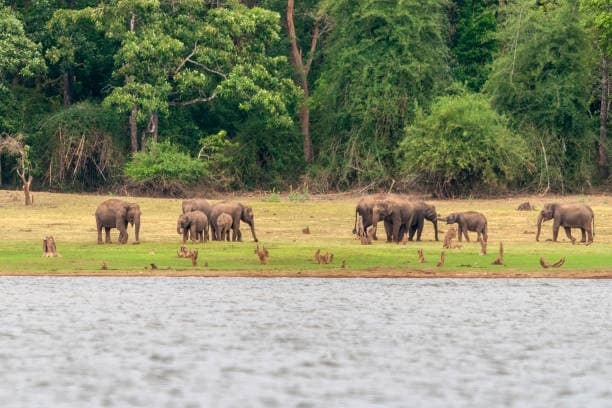
Wildlife is the primary draw. Bengal tigers, Asian elephants, leopards, gaur (Indian bison), dholes (Asian wild dogs), and sambar deer populate the park. The Kabini River, which borders the southern zone, attracts spectacular elephant congregations during the dry season. More than 270 bird species have been recorded, including the red-billed hornbill and brown-headed kingfisher.
History and Context
Nagarhole Forest was once the private hunting ground of the Mysore maharajas. Declared a forest reserve in 1955, it became a national park in 1988, then joined the Project Tiger network in 1999 as the Rajiv Gandhi Tiger Reserve. It forms part of the Nilgiri Biosphere Reserve complex, South Asia's largest protected forest block.
Highlights of Your Visit
Dawn Jeep Safari
The morning safari, typically from 6 to 9 am, offers the finest viewing opportunities. Tigers and leopards are still active, and the light is soft. Tracks run alongside clearings where herbivores gather before the heat sets in.
Kabini Lake Cruise
During the dry season (March–May), the Kabini Reservoir water level drops, drawing elephants to its shores. A boat trip allows close approach to herds without disturbance.
Bird Watching
The wetlands around Kabini are particularly rich in bird life. Egrets, herons, kingfishers, and raptors congregate in large numbers. A local ornithological guide multiplies your chances of proper identification.
Photography Tips
Prioritize morning safaris for golden-hour light and active wildlife. A telephoto lens (minimum 400 mm) is essential—safety distances are enforced. Avoid flash, which is prohibited and disruptive. On the Kabini boat, late-afternoon light casts golden reflections on water and elephants alike.
Location and Access
The park is accessible via two main entrances: Kutta in the south (Coorg side) and Hunsur in the north. Mysore is the most convenient logistical base, roughly 90 km from Kutta. From Bangalore, allow 4 to 5 hours by road. No railway line serves the park directly; the nearest railway station is Mysore. Lodges are available within and on the periphery of the park, some managed by the Karnataka Forest Department.
Nearby Attractions
Bandipur National Park — contiguous with Nagarhole, it forms a major wildlife corridor; same fauna, drier atmosphere.
Mysore — royal city 90 km away, famed for its illuminated palace and spice markets.
Coorg (Kodagu) — region of coffee and cardamom plantations, on the park's southern boundary.
Wayanad — neighboring district in Kerala, forests and Adivasi tribes, accessible from Kutta.
Frequently asked questions
The dry season, October to May, is ideal. From March to May, vegetation thins and wildlife concentrates around water sources, making observations easier. The park is partially closed during the monsoon.
Yes, Nagarhole has one of India's highest tiger densities. Sightings are never guaranteed, but odds are genuinely good, especially on morning safaris during the dry season.
Online reservation through the Karnataka Forest Department portal is highly recommended, especially during peak season (December–April). Slots are limited per zone.
Yes, the two parks are contiguous. Two nights at Nagarhole and two at Bandipur make a classic itinerary, with subtly different landscapes and atmospheres.
Photography is allowed. Flash and drones are prohibited. A telephoto lens is essential for photographing wildlife at the required distance.
Choose neutral tones: khaki, olive green, beige. Avoid white and bright colors, which disturb animals. A lightweight windbreaker is useful in the morning, even in warm season.
Want to discover this destination?
Our local advisors design your tailor-made trip.