Mysore (Mysuru)
Mysore (Mysuru)
A former royal capital of Karnataka, Mysuru captivates visitors with its brilliantly lit Indo-Saracenic palace, active temples, a centuries-old market, and a living tradition of silk and incense. A distinctive destination in South India.
Mysuru — formerly Mysore — is a royal city in Karnataka, approximately 140 km southwest of Bangalore. The former capital of the Wadiyar kingdom, it preserves an exceptional palatial heritage, renowned spice and silk markets, and a vibrant cultural tradition. The city is also the birthplace of Ashtanga yoga and one of South India's best-preserved destinations.
Practical essentials at a glance
Access from Bangalore: train or bus, approximately 3 hours depending on service.
Best time to visit: October to March (dry season, mild temperatures). Dasara (October) is the city's signature festival.
Recommended duration: 2 to 3 days to cover the palace, hills, and markets.
Dress code: covered clothing recommended for temples and the palace.
Local language: Kannada; English is widely understood at tourist sites.
What to see
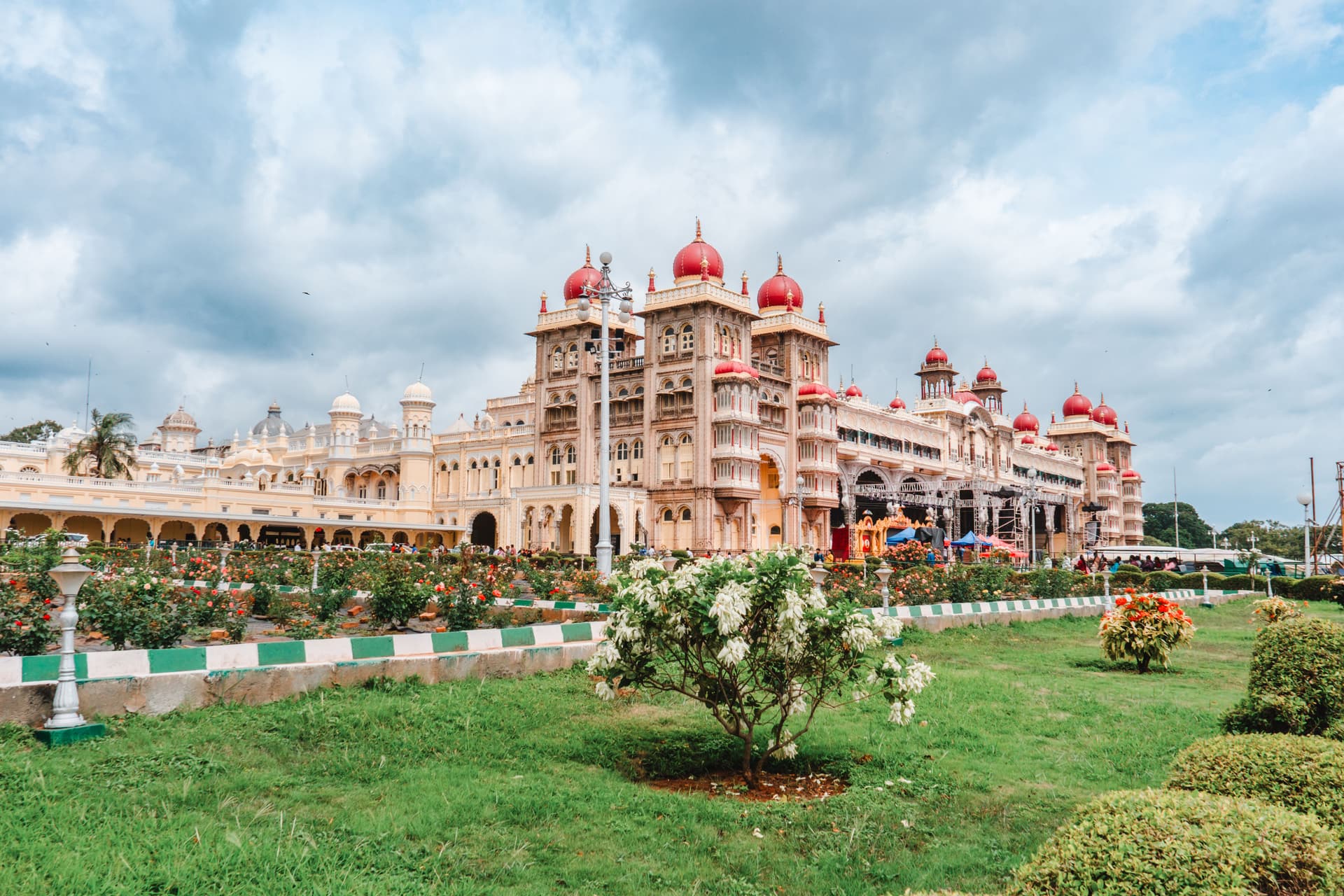
The Mysore Palace (Amba Vilas) dominates the city with its Indo-Saracenic architecture. Its audience halls, stained-glass ceilings, and gilded columns make it one of India's most visited palaces. On Sunday evenings and during festivals, thousands of bulbs illuminate the façade.
Chamundi Hill, to the southeast, houses the Sri Chamundeshwari temple and offers panoramic views over the city. It is accessible on foot via a staircase of over a thousand steps or by car. Halfway up, a monolithic statue of Nandi (the sacred bull) carved into the rock deserves a stop.
The Devaraja Market, active for over a century, overflows with jasmine flowers, spices, fruits, and incense. It is the most vibrant spot in the city to observe local life.
Mysuru is also renowned for its silk (Mysore silk) and incense sticks (agarbatti), two artisanal products found in shops throughout the center.
History and context
The kingdom of Mysore, founded in the 14th century, was governed by the Wadiyar dynasty throughout most of its history. Tipu Sultan, the sultan of Mysore in the late 18th century, resisted British expansion before his defeat in 1799. The Wadiyars subsequently ruled under British protectorate until Indian independence in 1947. The current palace, rebuilt between 1897 and 1912 following a fire, reflects this period of late prosperity.
The city is also associated with T. Krishnamacharya, a yoga master who taught there in the 1930s-1940s, training students who would spread Ashtanga yoga worldwide.
Highlights of a visit
Amba Vilas Palace
The palace interior blends marble columns, mosaics, Wadiyar court paintings, and a solid gold throne displayed during Dasara. The audio-guided tour (available in multiple languages) helps contextualize each room.
Dasara
Each October, Mysuru celebrates Dasara for ten days. The climax is a procession of caparisoned elephants carrying an idol of the goddess Chamundeshwari from the palace to the Bannimantap grounds. It is one of India's most spectacular pageants.
Chamundi Hill
The Sri Chamundeshwari temple, dedicated to the city's tutelary goddess, is an active pilgrimage site. Climbing on foot allows you to encounter devotees and observe local vegetation. The panorama from the summit embraces Mysuru and, on clear days, the plains of Karnataka.
Devaraja Market
Arrive early morning to watch vendors assemble their garlands of flowers. The market is also an excellent place to buy spices, dried coconut, and powdered colors at local prices.
Etiquette and visit guidelines
Remove shoes before entering temples (Chamundi, downtown temples).
Shoulders and knees must be covered to access inner sanctuaries.
Photography is prohibited inside Amba Vilas Palace; it is permitted in the outer gardens.
Respect areas reserved for pilgrims in active temples.
Photography tips
The palace façade is most photogenic in late afternoon, when golden light strikes the domes. On Sunday evenings, the bulb illumination offers an iconic image — bring a tripod. On Chamundi Hill, sunrise provides a clear panorama before heat haze sets in.
Location and access
Mysuru is located in southern Karnataka, approximately 140 km from Bangalore. Mysuru Junction railway station is well-served from Bangalore, Chennai, and other major cities. Express buses regularly connect Bangalore to Mysuru. The city has an airport (Mysuru Airport) with limited domestic flights.
Within the city, auto-rickshaws and taxis are the common modes of transport. Several agencies offer English-speaking guided tours covering the palace, Chamundi, and markets in a single day.
Mysuru is also a convenient base for visiting Srirangapatna (Tipu Sultan's former capital, about twenty kilometers away) and Nagarhole National Park.
Nearby
Srirangapatna — fortified island on the Kaveri river, site of Tipu Sultan's last battle and his mausoleum (Gumbaz).
Nagarhole National Park — tiger and elephant reserve in Karnataka's forests, accessible by safari.
Shivanasamudra Falls — spectacular waterfalls on the Kaveri river, approximately 80 km from Mysuru.
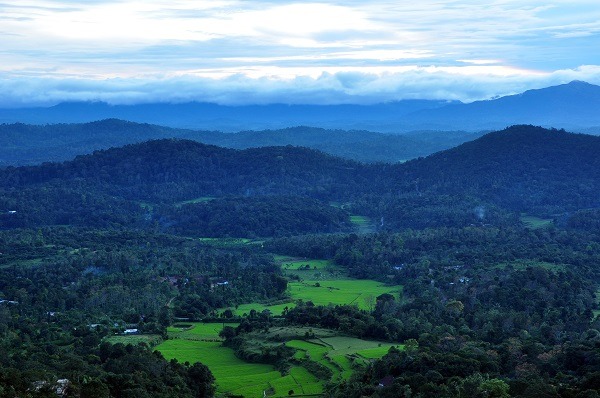
Coorg (Kodagu) — region of coffee and cardamom plantations in the Western Ghats, approximately 120 km away.
Frequently asked questions
October to March offers dry, pleasant weather. October coincides with Dasara, the city's major festival — exceptional atmosphere but accommodations should be booked well in advance.
No. Photography is prohibited in the interior rooms of Amba Vilas Palace. Cameras and mobile phones must be deposited at the entrance or left in a locker.
Two days allow you to cover the palace, Chamundi Hill, and Devaraja Market. A third day is useful for an excursion to Srirangapatna or Nagarhole.
Yes. Covered shoulders and knees are required in temples, particularly at Sri Chamundeshwari. Shoes must be removed before entering any sanctuary.
Yes. Express trains and buses connect the two cities in approximately 3 hours. A day trip is feasible, but a two-night stay is preferable to enjoy the palace illuminated on Sunday evening.
Mysore silk (saris and shawls), artisanal incense sticks, and spices from Devaraja Market are the most typical purchases. The government Cauvery shops offer fixed prices for local crafts.
Want to discover this destination?
Our local advisors design your tailor-made trip.