Murshidabad
Murshidabad
Former capital of the Bengal Nawabs, Murshidabad concentrates neoclassical palaces, 18th-century mosques and silk workshops on the banks of the Bhagirathi, 200 km from Kolkata.
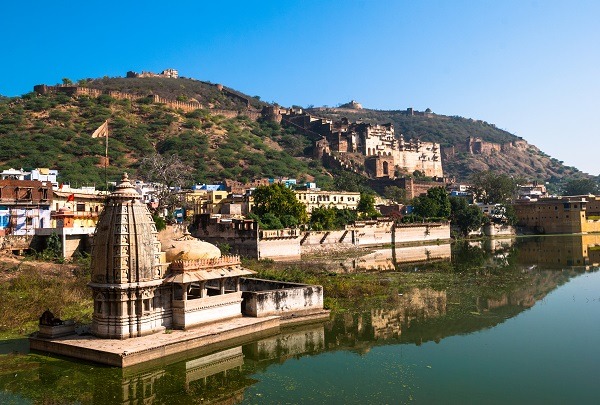
Murshidabad is a city in West Bengal, on the banks of the Bhagirathi, the former capital of Bengal under the Nawabs in the 18th century. It brings together Mughal palaces, mosques, Hindu temples and bazaars of silk artisans — all within a compact perimeter, often overlooked by conventional circuits. It was here that the Battle of Plassey unfolded in 1757, a decisive turning point in British dominance across Inde.
Practical Information at a Glance
- Access: train from Kolkata (Sealdah station) to Berhampore or Azimganj; Murshidabad is approximately 200 km north of Kolkata.
- Local transport: rickshaws, tuk-tuks and rowboats to cross the Bhagirathi.
- Recommended duration: 1 to 2 days to cover the main sites.
- Dress code: covered clothing recommended for mosques and temples.
- Best time to visit: October to March (moderate heat, no rainfall).
What to See
The Hazarduari Palace ("of a thousand doors") dominates the west bank. Built in the 19th century in a European neoclassical style, it now houses a museum with weapons, portraits of Nawabs, palanquins and ceremonial tableware. Facing the palace, the Imambara Nizamat and the great Madina Mosque complete the palatial ensemble.
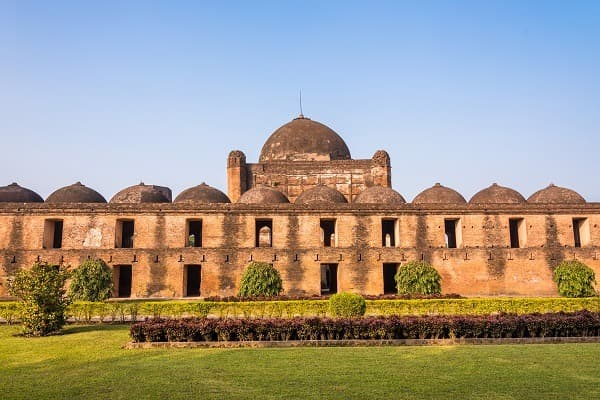
On the east bank, the Katra Mosque, erected by Murshid Quli Khan, founder of the city, houses his tomb beneath the entrance staircase — a deliberate gesture of humility. The Jafaraganj Cemetery brings together the burials of the nawab family. The temples of Kalna and the ghats of Jiaganj punctuate the riverbanks.
History and Context
Murshid Quli Khan, a Mughal governor, transferred the capital of Bengal from Dacca to Murshidabad in 1717 and gave the city his name. Under his successors — Alivardi Khan and then Siraj ud-Daulah — the city became one of the richest in Asia. Siraj's defeat against the East India Company at Plassey (1757) marked the end of this political splendor, but the city preserved its monuments intact.
The silk craft (murshidabadi silk) and kantha embroidery perpetuate a tradition of expertise dating back to the nawab era.
Highlights of Your Visit
Hazarduari Palace and Its Museum
The building indeed has a thousand doors (some of which are false, to mislead intruders). The museum houses a collection of Mughal weapons, palanquins and official portraits of the Nawabs. Plan at least an hour and a half to tour it thoroughly.
Katra Mosque
Built in 1724, this red-brick mosque is one of the oldest in Bengal. The tomb of Murshid Quli Khan, placed beneath the entrance steps so that the faithful would walk over it — an act of deliberate penance — strikes with its symbolism.
Boat Crossing of the Bhagirathi
Boatmen connect the two banks in minutes. The crossing offers an unobstructed view of the ghats, minarets and palm trees that line the river — the best vantage point to capture the silhouette of the city.
Silk Weavers' Quarter
In the alleys of Jiaganj and Azimganj, family workshops still produce Murshidabad silk, recognizable by its fine patterns and natural luster. You can observe the looms at work and purchase directly from the artisans.
Etiquette and Visiting Rules
- Remove shoes before entering mosques and certain temples.
- Covered clothing (shoulders and knees) required in places of worship.
- Ask permission before photographing people in weaving workshops.
- Respect prayer times in active mosques: avoid entering during salat.
Photography Tips
Morning light is ideal on the neoclassical façade of the Hazarduari, facing east. For the Katra Mosque, dusk gilds the red bricks. A late-afternoon boat crossing produces golden reflections on the Bhagirathi. Inside the museum, light is dim: a fast lens or lightweight tripod is useful.
Location and Access
Murshidabad is located in the district of the same name, north of West Bengal. The city of Berhampore, the district capital, is a few kilometers away and has a well-served railway station. From Kolkata, the train journey takes approximately three hours. Local agencies offer day trips or weekend circuits from Kolkata, including the main monuments and a boat crossing.
The sites are clustered on both banks of the Bhagirathi, accessible on foot or by rickshaw from the center.
Nearby Attractions
- Hazarduari Palace — the flagship monument of Murshidabad, a nawab museum in a neoclassical setting.
- Katra Mosque — 18th-century mosque with the tomb of Murshid Quli Khan.
- Plassey Battlefield — historic site about fifty kilometers away, marking the 1757 battle.
- Bishnupur — city of terracotta temples, a few hours to the southwest, famous for its ratna temples.
- Kolkata — departure metropolis, approximately 200 km to the south, the natural entry point for the region.
Frequently asked questions
From October to March, the heat is manageable and rainfall absent. Avoid June to September (monsoon): the banks of the Bhagirathi can be flooded.
It is possible but tight. An early morning train departure allows you to see the Hazarduari, the Katra Mosque and cross the river. Two days remain preferable to explore the silk workshops and secondary sites.
Yes. In mosques and temples, shoulders and knees must be covered. Shoes are removed at the entrance of places of worship.
Workshops in Jiaganj and Azimganj sell directly to visitors. Prefer purchasing in workshops rather than tourist shops to ensure the authenticity of the fabric.
A photography fee is generally required inside the museum. Inquire at the cashier when purchasing your entrance ticket.
Rowboats operate the crossing throughout the day from the main ghats. It is the most convenient and picturesque way to connect sites on both banks.
Photos
Want to discover this destination?
Our local advisors design your tailor-made trip.