Madurai
Madurai
Madurai, one of Asia's oldest cities, revolves around the Meenakshi Amman Temple and its sculpted gopurams. Tamil culture, Hindu devotion, and vibrant markets make it a major highlight of Tamil Nadu.
Madurai is one of the oldest continuously inhabited cities in South Asia. The cultural capital of Tamil Nadu, it orbits around the Meenakshi Amman Temple, whose carved gopurams have dominated the skyline for centuries. A crossroads of Tamil language, Hindu devotion, and living craftsmanship, Madurai draws pilgrims and travellers seeking an authentic Indian city, far from standardised tourist routes.
Quick Facts at a Glance
Access: Madurai International Airport (IXM), central railway station well connected to Chennai, Coimbatore, and Trichy.
Best time: October to March — bearable heat, active festivals.
Recommended duration: 2 to 3 days to cover the temple, markets, and surroundings.
Dress code: Clothing covering shoulders and knees is mandatory in temples.
Language: Tamil predominant; English understood in hotels and agencies.
What to See
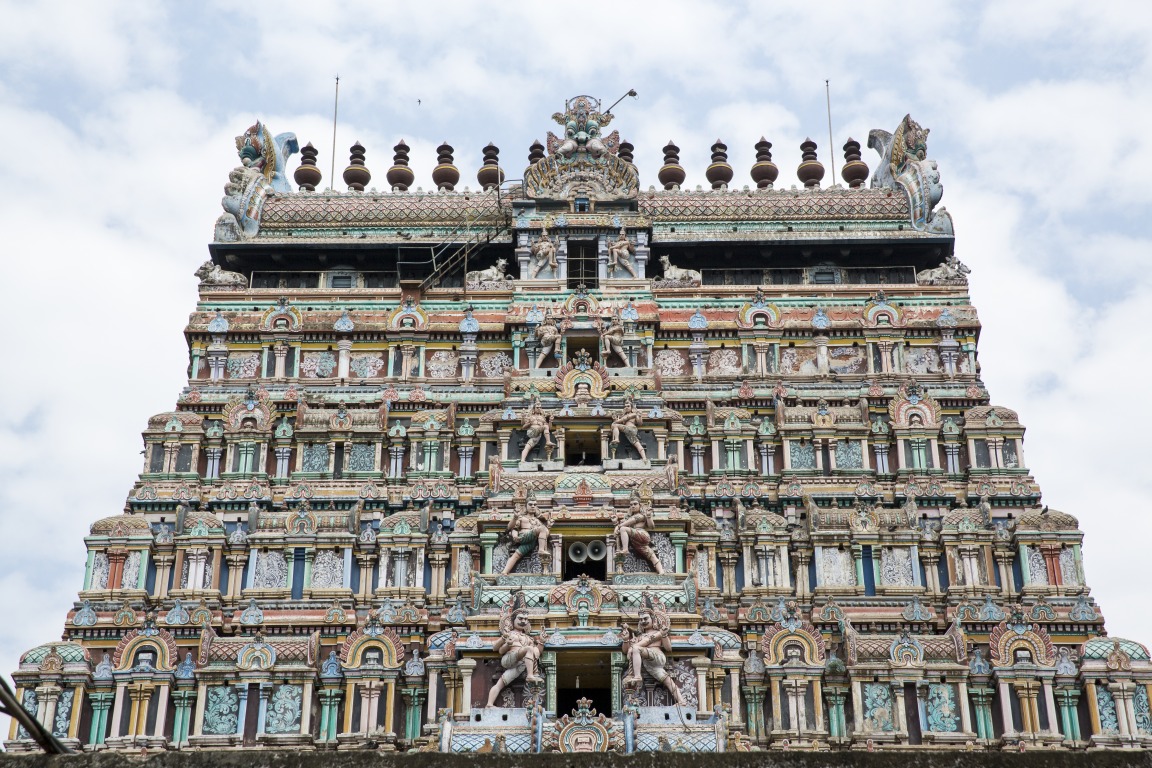
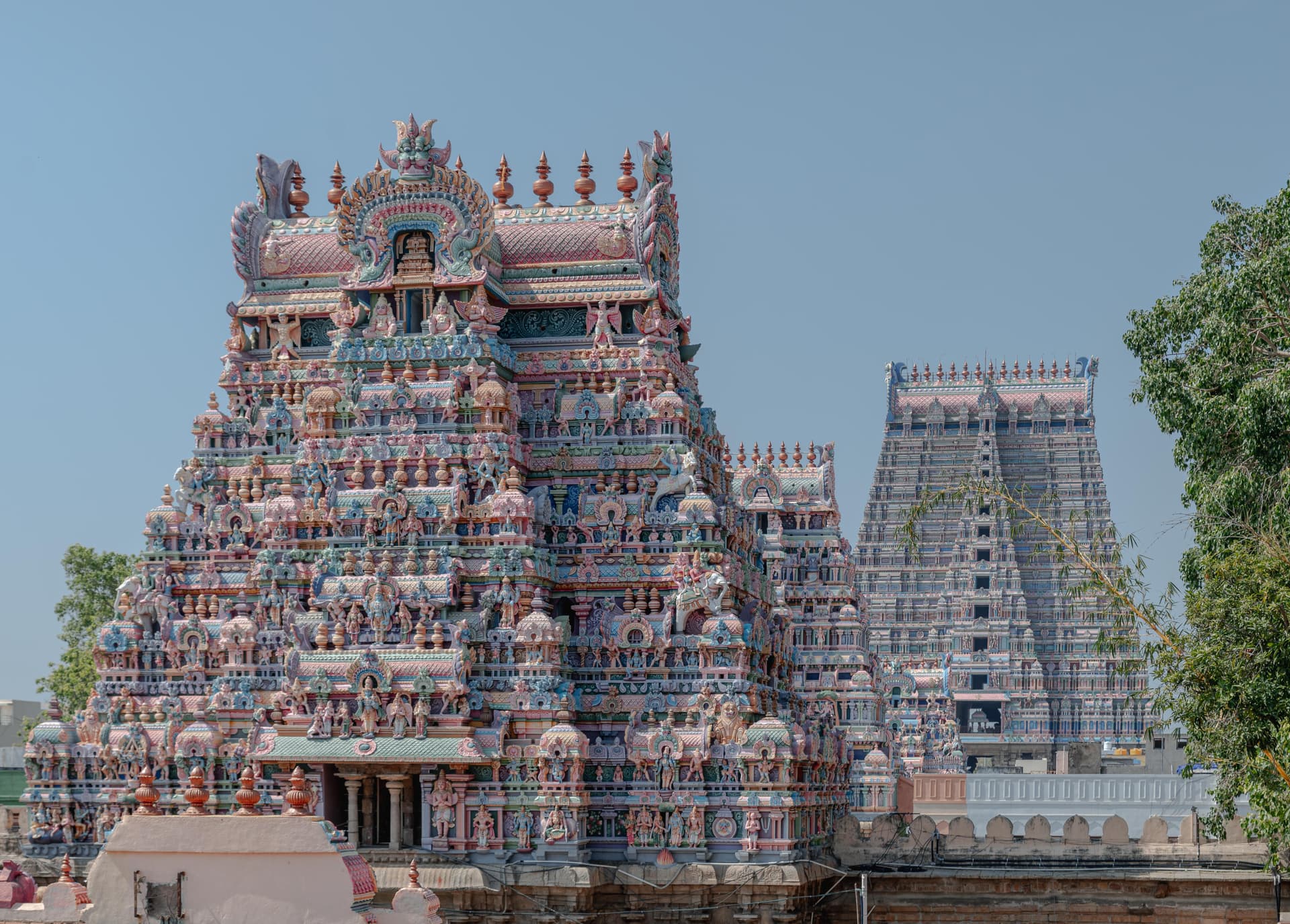
The Meenakshi Amman Temple is the absolute heart of the city: twelve gopurams adorned with thousands of colourful sculptures, a sacred tank, columned halls, and constant ritual activity. Around it, the Puthu Mandapam market sells flowers, silks, and devotional items. The Thirumalai Nayak Palace, minutes away, exemplifies 17th-century Indo-Saracenic architecture. The Vandiyur Mariamman Teppakulam quarter houses a vast reservoir with a central temple, vibrant during the floating chariot festival.
History and Context
Madurai is mentioned in ancient Greek and Roman texts as Methora. It was the capital of the Pandya kings, then came under Nayak control in the 16th century—a period of great building. The Meenakshi Temple, in its present form, owes most of its architecture to the Nayaks. The city also hosted the three Sangams, legendary academies of classical Tamil poetry, making it a symbol of Dravidian civilisation.
Highlights of Your Visit
Meenakshi Amman Temple
Visit early morning or evening for aarti ceremonies. The Hall of a Thousand Columns (actually 985) and the temple museum deserve a separate hour. Non-Hindus cannot access the inner sanctum, but the outer courtyards and gopurams are open to all.
Thirumalai Nayak Palace
Built in 1636, this palace blends Corinthian columns with Mughal arches. Only part of it is restored and open to the public. A sound and light show in Tamil and English runs in the evening—check schedules on-site.
Markets and Flower Street
The flower market around the temple opens at dawn. Jasmine, roses, and carnations are sold by weight for offerings. The atmosphere is dense and photogenic, especially between 6 and 8 a.m.
Vandiyur Mariamman Teppakulam
This square reservoir, one of Tamil Nadu's largest, is calm outside festival season. The central temple on its island is accessible by boat. The site comes alive during the Teppam festival (January–February).
Etiquette and Visit Guidelines
Remove your shoes before entering any temple.
Shoulders and knees must be covered — sarongs are sometimes available for hire at the entrance.
Photography in the Meenakshi Temple incurs an entry fee; mobile phones are generally tolerated in courtyards.
Avoid turning your back to deities in sanctuaries.
Non-Hindus cannot enter the main sanctum of Meenakshi.
Photography Tips
The gopurams are most photogenic early morning, before crowds and with raking light. For an overview, climb the roofs of hotels near the temple (check access on-site). The flower market offers saturated colours at dawn. Inside the temple, light is dim—a fast lens is helpful.
Location and Access
Madurai sits in southern Tamil Nadu, about 140 km south of Trichy and 450 km south of Chennai. The airport serves several Indian cities and a few international destinations. The central railway station is well connected by express trains. In the city, auto-rickshaws and app-based taxis reach all sites. The Meenakshi Temple sits at the geographic heart of the old town, less than 2 km from the station.
Nearby
Meenakshi Amman Temple — Madurai's central monument, a priority visit.
Thirumalai Nayak Palace — 17th-century Nayak architecture, 1.5 km from the temple.
Rameswaram — sacred island and Ramanathaswamy Temple, about 170 km away, accessible by train.
Kodaikanal — hill station in the Western Ghats, about 120 km away, ideal for a cool break.
Trichy (Tiruchirappalli) — temple town with Rock Fort and Ranganathaswamy Temple, about 140 km away.
Frequently asked questions
October to March offers bearable heat and festivals like Pongal (January) and Teppam (January–February). Avoid April–June when temperatures regularly exceed 38 °C.
Yes, the outer courtyards, gopurams, and columned hall are open to all. Only the inner sanctum (garbhagriha) is reserved for Hindus.
Two days allow you to cover the temple, Thirumalai Nayak Palace, and markets. A third day opens the possibility of an excursion to Rameswaram or Kodaikanal.
Photography fees apply for cameras in the Meenakshi Temple. Mobile phones are generally permitted in open spaces. Check at the entrance, as rules may change.
Jigarthanda (a cold drink made with milk, sarsaparilla, and ice) is a must-try local specialty. Restaurants around the temple serve vegetarian Tamil thalis served on banana leaves.
A classic circuit links Chennai, Mahabalipuram, Trichy, Madurai, and Rameswaram by train. Kodaikanal adds easily from Madurai as a highland stop before descending to the coast.
Want to discover this destination?
Our local advisors design your tailor-made trip.