Lucknow
Lucknow
Lucknow, city of the Nawabs of Awadh, blends Indo-Persian architecture, refined gastronomy and the artistry of chikankari embroidery. Bara Imambara, Rumi Darwaza, bustling bazaars: a destination in northern India in its own right.
Lucknow, capital of Uttar Pradesh, is the city of the Nawabs — sovereigns of the Mughal empire who shaped a refined culture between the 18th and 19th centuries. Indo-Persian architecture, renowned gastronomy, the artistry of chikankari embroidery: the city merges dense historical heritage with vibrant urban life. It remains one of the great metropolitan centers of northern India, often overlooked by travelers.
Quick facts at a glance
- Best time to visit: October to March (mild winters, avoiding the monsoon from July-August and the heat of May-June).
- Recommended duration: 2 to 3 days to cover major sites.
- Access: Chaudhary Charan Singh International Airport; Lucknow Charbagh railway station, well-connected to Delhi, Agra and Varanasi.
- Dress code: Covered clothing recommended for mosques and imambaras.
- Language: Hindi and Urdu; English understood in hotels and tourist sites.
What to see
The historic center concentrates the Nawab monuments: the two monumental imambaras, the Rumi Darwaza, the ruins of the British Residency. The Hazratganj quarter offers a colonial promenade. The bazaars of Chowk and Aminabad reveal local craftsmanship — chikankari embroidery, attar perfumes, street food.
History and context
Lucknow emerges as the capital of the Awadh kingdom in the 18th century under the Nawabs Asaf-ud-Daula. The city becomes a center of Persian culture, music, Urdu poetry and gastronomy. In 1857, it is the site of the famous Residency siege during the Sepoy Rebellion. Annexed by the British, it retains a dual identity: Nawab city and colonial city.
Highlights of the visit
Bara Imambara
Built in 1784 by Asaf-ud-Daula, this complex houses one of the world's largest vaulted halls without beams. The interior labyrinth — the bhul-bhulaiya — is a maze of corridors on multiple levels. The Asfi mosque and water basin complete the complex.
Chota Imambara
Erected in 1838 by Muhammad Ali Shah, this mausoleum is nicknamed the "Palace of Lights" for its thousands of lanterns that illuminate it during Shia celebrations. The interior houses chandeliers imported from Belgium and finely crafted Quranic calligraphy.
Rumi Darwaza
This monumental gate of 18 meters, built in 1784, draws inspiration from the Sublime Gate of Constantinople. It marks the entrance to the Nawab quarter and remains the architectural symbol of Lucknow. Its silhouette appears on many official emblems of the city.
The Residency
These ruins of the British colonial era preserve traces of the 1857 siege. The site, now protected, includes a museum and cemetery. The bullet-riddled walls have been deliberately left as they were.
Hazratganj and the bazaars
Hazratganj Avenue, laid out under the British, lines shops and cafés in colonial architecture. The bazaars of Chowk and Aminabad are the territory of chikankari embroidery — a technique of white embroidery on muslin, inscribed in India's artisanal heritage.
Etiquette and visiting rules
- Remove your shoes before entering the imambaras and Asfi mosque.
- Wear clothing covering shoulders and knees in all places of worship.
- Women may be offered a veil at the entrance to mosques; accept it.
- Avoid visits during Friday prayers at the Asfi mosque.
- Speak quietly in contemplative spaces within the imambaras.
Photography tips
The Rumi Darwaza is most photogenic early in the morning, before the rush of traffic. The Bara Imambara offers diffuse interior light ideal in mid-morning. The bhul-bhulaiya is dark: a phone with good night mode or a light source is useful. Check photography restrictions inside the Chota Imambara before bringing out your camera.
Location and access
Lucknow sits in the Ganges plain, approximately 500 km from Delhi and 300 km from Varanasi. The airport is connected to major Indian cities. Charbagh station, itself an architectural monument, serves rapid trains to Agra and Varanasi. In the city, auto-rickshaws and ride-hailing apps (Ola, Uber) cover all sites. The Bara Imambara and Rumi Darwaza are within walking distance of each other.
Around the area
- Agra — The Taj Mahal and Agra Fort, accessible by rapid train from Lucknow.
- Varanasi — The sacred city of Ganges ghats, a few hours by train.
- Ayodhya — Hindu sacred city, approximately 130 km away, accessible by train or car.
- Prayagraj — Confluence of the Ganges, Yamuna and mythical Saraswati, site of the Kumbh Mela.
Frequently asked questions
October to March, the climate is pleasant. Summers (April-June) are very hot and the monsoon (July-September) makes some travel difficult.
Yes. Covered shoulders and knees are mandatory. Wear socks or easy-to-remove shoes, as you will remove your shoes at the entrance.
Yes, the three cities are connected by train. A northern India circuit can include Delhi, Agra, Lucknow and Varanasi over one to two weeks.
Awadh biryani (dum pukht cooking), galauti kebabs (tender, boneless), nihari and sheermal (saffron-sweetened bread) are unmissable specialties of Nawab cuisine.
The labyrinth has hundreds of corridors and can be disorienting. A local guide offered on-site is recommended to avoid getting lost and to understand the architecture.
The bazaars of Chowk and Aminabad concentrate chikankari workshops and shops. Prefer cooperatives or shops recommended by your agency to avoid counterfeits.
Photos
Attractions in Lucknow
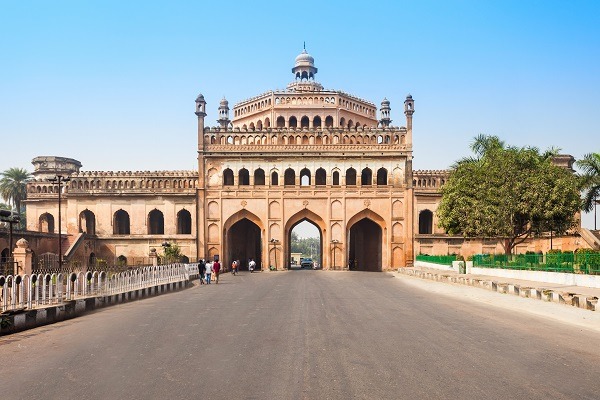
Rumi Darwaza
Érigée vers 1784 sous le nawab Asaf-ud-Daula, la Rumi Darwaza est la porte emblématique de Lucknow. Haute de 18 mètres, ornée de stuc, elle marque l'entrée du quartier historique de Husainabad.
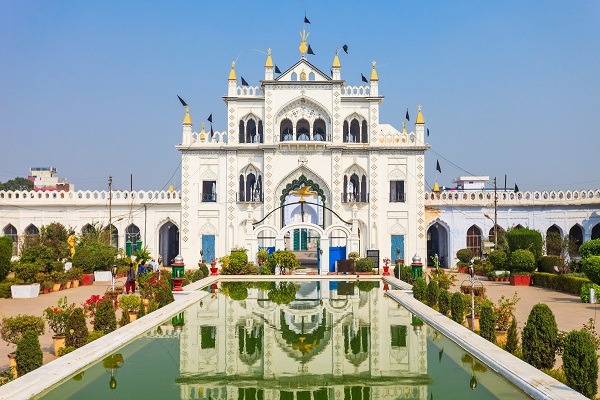
Chota Imambara (Hussainabad Imambara)
Le Chota Imambara, ou Hussainabad Imambara, est un mausolée chiite du XIXe siècle à Lucknow, célèbre pour ses lustres en verre de Belgique et son architecture mêlant influences mogholes et européennes.
Want to discover this destination?
Our local advisors design your tailor-made trip.