Tsokar Lake
Tsokar Lake
A salt lake at 4,500 m on the Changthang plateau, Tsokar is a rarely visited Ramsar site where flamingos nest and wild asses roam, at the heart of nomadic Ladakh.
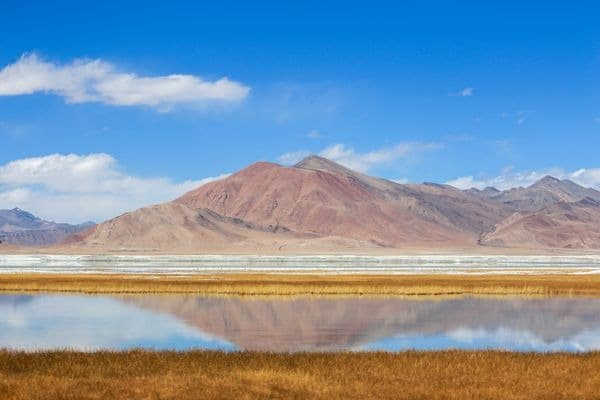
Tsokar Lake is a high-altitude salt lake situated on the Changthang plateau in Ladakh, at approximately 4,500 metres. Its name means "white lake" in Tibetan, referring to the salt deposits that line its shores. Less visited than Pangong Tso or Tso Moriri, it attracts birdwatchers and travellers seeking vast desert landscapes. The nomadic Changpa people have grazed their cashmere goat herds here for centuries.
Essential Information at a Glance
- Altitude: approximately 4,500 m — prior acclimatation is essential.
- Permit: an Inner Line Permit (ILP) is required to access the Changthang area; obtain it in Leh before departure.
- Best time to visit: June to September (road accessible, wildlife present); harsh winters make access difficult.
- Recommended duration: half a day to a full day depending on your itinerary.
- Accessibility: unimproved terrain; wheelchair access is challenging.
What You'll See Here
The lake divides into two distinct basins: a freshwater basin to the north and a salt basin to the south, whose salt-whitened shores contrast with the deep blue water. Pink flamingos (Phoenicopterus roseus) nest here in summer, alongside bar-headed geese, grebes, and numerous waders. The ochre hills and grassy plains nearby are home to kiangs (wild Tibetan asses) and occasionally wolves.
History and Context
The Changthang plateau has been inhabited for millennia by the Changpa, a nomadic people whose economy rests on herding the changthangi goat, source of precious pashmina cashmere. Salt extracted from Tsokar Lake was once traded along caravan routes linking Ladakh to Tibet. The lake is now part of the Changthang Wildlife Sanctuary, designated as a Ramsar wetland site.
Highlights of Your Visit
Pink Flamingos in Summer
Between June and August, colonies of pink flamingos settle on the shallow shores of the salt basin. This is one of the rare breeding colonies of the species in India. Approach slowly and maintain distance to avoid disturbing the birds.
Kiangs on the Plateau
Kiangs, wild asses native to the Tibetan plateau, move in herds across the grassy plains surrounding the lake. Dawn and dusk are the best times to observe them.
Changpa Encampments
Black yak-hair tents dot the shoreline. Some nomads welcome respectful visitors. It's an opportunity to observe pastoral life and, sometimes, to taste butter tea made from yak milk.
Photography Tips
The soft morning light reveals the lake's blue reflections and salt deposits in the foreground. Use a polarising filter to reduce glare and saturate colours. Avoid midday: sunlight at this altitude is harsh. For flamingos, a telephoto lens (300 mm minimum) is necessary to avoid disturbing them.
Location and Access
Tsokar Lake lies on the route connecting Leh to Tso Moriri, in the Changthang district. The track passes over Tanglang La Pass before descending to the plateau. Most visitors stop here en route to Tso Moriri Lake. A 4×4 vehicle with driver is essential; no public transport serves the area. Budget for extra fuel, as petrol stations are scarce beyond Leh.
Nearby Attractions
- Tso Moriri Lake — a larger high-altitude lake, also Ramsar-designated, a few hours' drive to the south-east.
- Pangong Tso Lake — Ladakh's most famous lake, to the east, known for its shifting water colours.
- Leh — capital of Ladakh, the logistics hub for any journey in the region.
- Tanglang La Pass — one of the world's highest road passes, on the route between Leh and Tsokar.
Frequently asked questions
Yes. The Changthang area is subject to the Inner Line Permit (ILP), issued in Leh by the relevant authorities. Obtain it before leaving the city.
Pink flamingos are present from June to August, during the nesting season. By September, numbers decline before migration.
Camping is possible in the area, but infrastructure is very limited. A few Leh-based operators offer seasonal equipped camps. Check current authorisations at the time of your visit.
The two lakes link naturally on a two- to three-day circuit from Leh. Tsokar makes an ideal intermediate stop before reaching Tso Moriri.
At 4,500 m, the risk is serious. Spend at least two nights in Leh (3,500 m) before ascending to the plateau. Stay hydrated, avoid alcohol, and ascend gradually.
Photos
Want to discover this destination?
Our local advisors design your tailor-made trip.