Dhotrey
Dhotrey
Dhotrey is a high-altitude village in the Darjeeling hills, gateway to Singalila National Park and key stop on the trek to Sandakphu. Rhododendron forests, red pandas and Himalayan vistas await.
Dhotrey is a small forested village nestled in the hills of Darjeeling district, West Bengal. At approximately 2,600 metres altitude, it sits within the buffer zone of Singalila National Park. The village appeals to trekkers seeking a quiet starting point for the Singalila ridge, far from the bustle of Darjeeling or Sandakphu.
Essential information at a glance
- Access: Dhotrey is reached from Manebhanjan, the usual entry point to Singalila Park, by road or on foot.
- Permit: Entry permit to Singalila National Park is mandatory; it can be obtained at Manebhanjan.
- Clothing: Warm garments are essential, even in the dry season — nights drop well below 10°C.
- Recommended duration: One night on site is sufficient if Dhotrey is a trekking stage; two nights to explore the surroundings on foot.
What to see
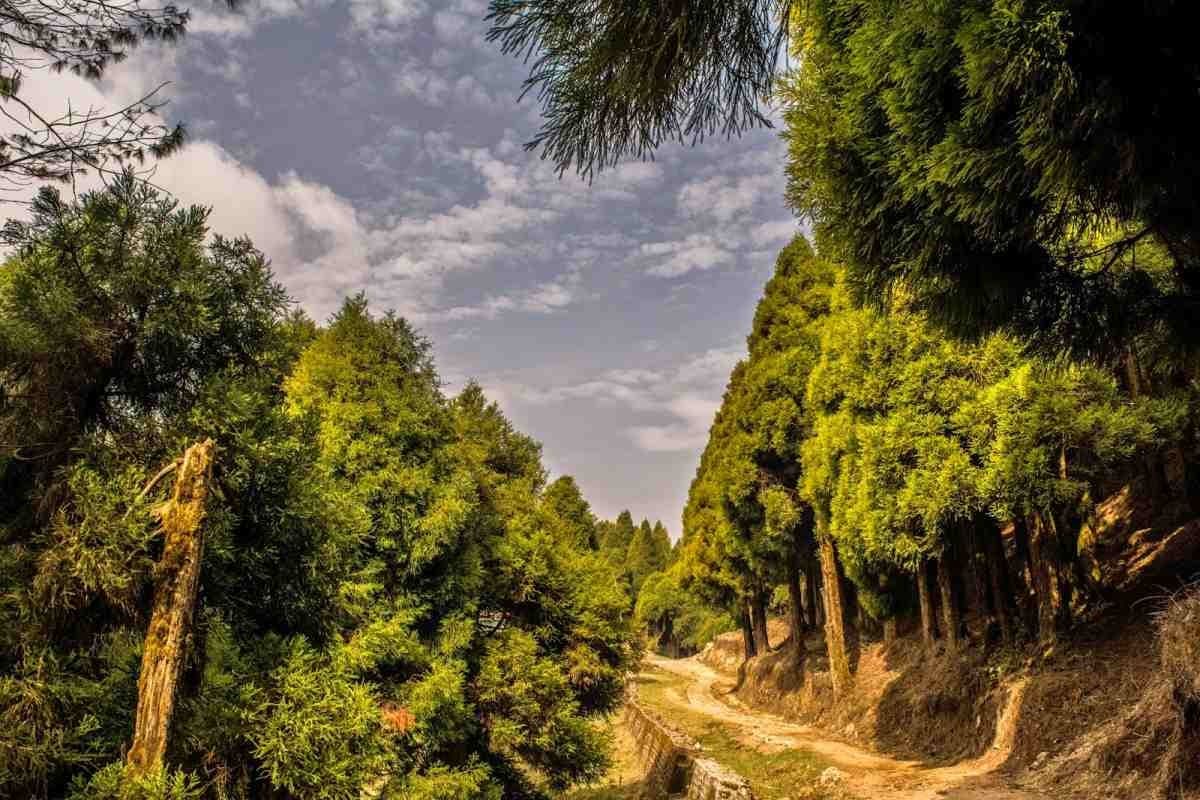
The village is surrounded by rhododendron and oak forests. In April, the blooming rhododendrons paint the trails in shades of red and pink. On clear days, the peaks of the Himalayan chain — including Kangchenjunga — loom to the north. The village itself is modest: a handful of wooden houses, trekkers' huts and a rural pace of life.
History and context
Dhotrey developed as a logistical stop on the Manebhanjan–Sandakphu–Phalut trekking route, one of West Bengal's busiest hiking itineraries. Singalila National Park, established in 1986, formalised protection of this border region with Nepal, rich in Himalayan wildlife.
Highlights of the visit
Gateway to Singalila
Dhotrey marks the effective start of the ascent to the Singalila ridge. Trails from the village traverse dense forests before opening onto broad alpine meadows, with progressive views of the peaks.
Wildlife watching
Singalila Park is home to red pandas, muntjac deer and numerous species of Himalayan birds. Early mornings, before trekkers wake, offer the best viewing opportunities.
Rhododendron blooms
From March to mid-April, the forests around Dhotrey are blanketed with flowering rhododendrons. This is the most photogenic and busiest season of the year.
Photography tips
Morning light, before mist rises, is ideal for photographing snow-capped peaks from the heights above the village. Rhododendron forests are best shot with a slight upward angle in late morning. No known photographic restrictions in the village.
Location and access
Dhotrey sits a few kilometres north of Manebhanjan, itself accessible from Darjeeling by road. Most trekkers arrive at Manebhanjan via shared jeep from Darjeeling, then reach Dhotrey on foot or by jeep depending on trail conditions. Wheelchair access is very limited due to mountainous terrain.
Nearby
- Manebhanjan — official starting point of the Singalila trek, with permits and accommodation.
- Sandakphu — highest point in West Bengal, with panoramic views of four of the world's five highest peaks.
- Darjeeling — reference city for organising the trek, with its tea plantations and rack railway.
- Singalila National Park — protected natural setting encompassing Dhotrey and its trails.
Frequently asked questions
October–November (clear skies, sharp Himalayan views) and March–April (rhododendron blooms) are the two prime windows. The June–September monsoon makes trails slippery and visibility poor.
Yes. Entry permit to Singalila National Park is mandatory and can be obtained at Manebhanjan, before proceeding to Dhotrey.
Yes, the village has trekkers' huts and a few basic lodges. Accommodation capacity is limited; advance booking is recommended during peak season.
The village itself is accessible, but trails to Sandakphu involve several days of high-altitude hiking. Good fitness and cold-weather gear are essential.
Take a shared or private jeep from Darjeeling to Manebhanjan, then continue on foot or by jeep depending on trail conditions to Dhotrey.
Photos
Want to discover this destination?
Our local advisors design your tailor-made trip.