Dhar
Dhar
A former capital of the Paramara dynasty in Madhya Pradesh, Dhar preserves a 14th-century fort, King Bhoja's Bhojshala and the Lat Masjid. A historic stop to combine with Mandu, about thirty kilometers away.
Dhar is a historic city in Madhya Pradesh, in western central India. The former capital of the Paramara kingdom, it holds remarkable medieval remains: a 14th-century fortress, a mosque converted from a Hindu temple, and celebrated Sanskrit inscriptions. Less crowded than Mandu — about thirty kilometers away — it offers direct access to medieval Malwa history without the crowds.
Practical Information at a Glance
- Access: Dhar lies on the route between Indore and Mandu; Indore is the nearest city with an airport and major railway station.
- Recommended duration: Half a day suffices for the main sites; a full day if you combine with the surrounding area.
- Dress code: Covered clothing recommended for religious sites and the mosque.
What to See
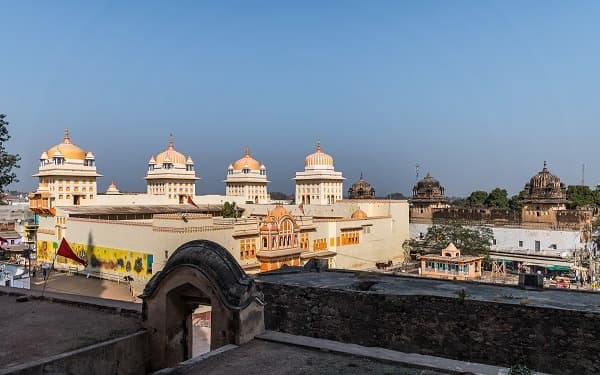
Dhar Fort, built in the 14th century under the Malwa sultans, overlooks the city from a hilltop. Within the ramparts stands the Lat Masjid, a mosque built from elements of an earlier Hindu temple — sculpted columns and repurposed capitals remain visible. In front of the mosque rises an iron pillar (lat) from ancient times, comparable in principle to the celebrated Iron Pillar of Delhi.
The Bhojshala is another central monument: an 11th-century complex associated with King Bhoja of the Paramaras, used both as a Hindu place of worship (dedicated to the goddess Saraswati) and as a Friday mosque. This shared status makes it a sensitive site, managed by the Archaeological Survey of India.
History and Context
Dhar was the capital of the Paramaras, a Rajput dynasty that ruled Malwa from the 9th to the 13th century. King Bhoja (r. circa 1010–1055), a philosopher, astronomer and builder, left a lasting imprint here. After conquest by the Delhi sultans and later the Malwa sultans, the city lost its prominence to Mandu, yet retained its monuments. Several major Sanskrit inscriptions, including the Dhar Prasasti, were discovered here.
Highlights of Your Visit
Dhar Fort
The medieval ramparts offer views over the Malwa plain. The gates and bastions of local sandstone bear witness to the military architecture of the 14th-century sultans. The interior houses the Lat Masjid and a few ruined structures.
The Bhojshala
This 11th-century complex blends finely sculpted columns with Sanskrit inscriptions. Its status as a shared place of worship gives it a distinctive atmosphere. The Archaeological Survey of India manages access; check opening days and hours before visiting, as they vary according to the religious calendar.
The Iron Pillar (Lat)
Standing before the Lat Masjid, this ancient metal column intrigues historians with its composition and origins. It recalls, on a smaller scale, the iron pillar at Qutb Minar in Delhi.
Etiquette and Visiting Rules
- Remove your shoes before entering active places of worship.
- Wear covered clothing (shoulders and knees) at the Bhojshala and Lat Masjid.
- The Bhojshala is a sensitive site: follow the caretakers' directions and avoid any behavior that might create tensions.
- Photography may be restricted inside certain areas; check on-site.
Photography Tips
Morning light is ideal for photographing the Bhojshala's sculpted columns, whose reliefs stand out better in low-angle light. The fort offers fine views of the city in late afternoon. Avoid using flash inside covered spaces.
Location and Access
Dhar is located in the district of the same name in Madhya Pradesh. The city is accessible from Indore (approximately 65 km to the east) by road, bus or taxi. Mandu, the former capital of the Malwa sultans, lies about thirty kilometers to the south and can be easily combined. The nearest airport is Indore (Devi Ahilya Bai Holkar).
Nearby
- Mandu — Medieval walled city perched on a plateau, with palaces, mosques and tombs of the Malwa sultans.
- Indore — Major city in Madhya Pradesh, a logistics hub with bustling markets and renowned street food.
- Maheshwar — Sacred city on the banks of the Narmada, known for its ghats and textile crafts (Maheshwari saris).
Frequently asked questions
The dry season, from October to March, is the most pleasant. Temperatures remain moderate and roads are passable. Avoid the monsoon (July–September) if you plan to combine your visit with Mandu, where roads can be difficult to access.
Yes, it's the most common itinerary from Indore. Spend the morning in Dhar (fort, Bhojshala, Lat Masjid), then head to Mandu in the afternoon for palaces and sunset views.
The site is managed by the Archaeological Survey of India and is generally open to visitors. However, access may be restricted on certain days according to the religious calendar. Check with your local agency before planning your visit.
Covered clothing (shoulders and knees) is recommended for the Lat Masjid and Bhojshala. Wear shoes that are easy to remove for active places of worship.
Regular buses connect Indore to Dhar. The most flexible option is renting a taxi or vehicle with a driver, especially if you plan to continue to Mandu the same day.
Photos
Want to discover this destination?
Our local advisors design your tailor-made trip.