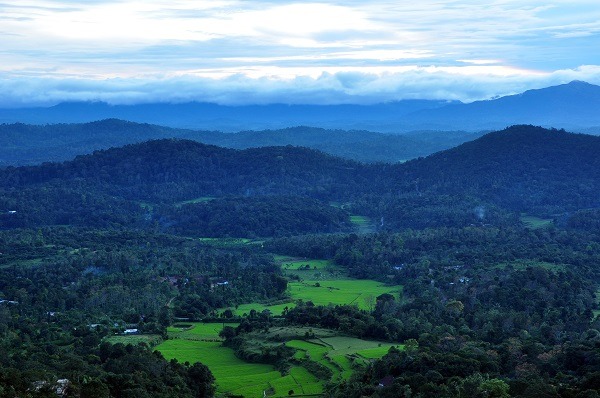
Ang Tingmosgam
A quiet village in the western Indus Valley, Tingmosgang preserves an active Buddhist monastery and the ruins of a Ladakhi royal palace, far from crowded tourist circuits.
Tingmosgang — sometimes spelled Ang Tingmosgam — is a village perched in the Indus Valley, in western Ladakh, India. Known for its Buddhist monastery and the ruins of its ancient royal palace, it offers a glimpse into the history of Ladakhi kingdoms away from saturated tourist circuits. The village remains relatively untouched, making it an authentic halt on the route connecting Leh to Kargil.
What to see
The site comprises two main elements: the Tingmosgang monastery, affiliated with the Gelugpa order of Tibetan Buddhism, and the ruins of the royal palace that dominate the village from a rocky outcrop. The monastery preserves thangkas, statues, and wall frescoes. The palace, largely in ruins, bears witness to the former power of the kings of this region before Ladakh's unification.
History and context
Tingmosgang was one of the centers of power in the medieval Ladakhi kingdoms. The palace is believed to date from periods preceding the consolidation of the Leh kingdom. The western Indus Valley region long served as a commercial and military corridor between Ladakh, Baltistan, and Kashmir. The local monastery perpetuates a continuous religious tradition spanning several centuries.
Highlights of the visit
The Gelugpa monastery
The gompa houses an active prayer hall. Monks conduct regular services here. The interior frescoes and Buddha statues merit particular attention. Visits are possible outside of ceremonies, provided you respect the rules of the place.
The royal palace ruins
The climb to the palace offers an unobstructed view over the Indus Valley and the surrounding mountains. The partially collapsed adobe walls give an idea of traditional Ladakhi palatial architecture. No tourist infrastructure is present on site.
The village and its immediate surroundings
The agricultural village retains vernacular stone and earthen architecture. Terraced fields, prayer wheels, and chortens (stupas) dot the pathways. The atmosphere is serene, far removed from the bustle of Leh.
Etiquette and visiting rules
- Remove your shoes before entering the monastery's prayer hall.
- Dress modestly (shoulders and knees covered).
- Ask permission before photographing monks or the interior of the gompa.
- Circumambulate chortens and prayer wheels clockwise.
- Avoid visits during ceremonies without explicit invitation.
Photography tips
Morning light is ideal for photographing the monastery, which faces the valley. The palace ruins photograph well in late afternoon, when raking light emphasizes the texture of the adobe. Avoid using flash inside the gompa.
Location and access
Tingmosgang is located on the national highway connecting Leh to Kargil, in the western Indus Valley. The village is accessible by vehicle from Leh, with the road being passable during the summer season (typically May to October). No regular public transport serves the village directly; a private or rental vehicle from Leh is recommended. The route passes through Lamayuru, another major monastic site in the region.
Nearby attractions
- Lamayuru — one of Ladakh's oldest monasteries, perched on a lunar landscape, nearby on the same route.
- Alchi — a monastic village famous for its 11th-century frescoes, ranked among Ladakh's oldest.
- Leh — Ladakh's capital, an essential logistical starting point for any exploration of the region.
- Kargil — a stopover town on the route toward Kashmir, west of Tingmosgang.
Frequently asked questions
The road is passable from May to October. Summer (June-August) offers the best weather conditions. Outside this window, passes and roads may be closed by snow.
Tingmosgang is located in an area of Ladakh accessible to foreigners without a specific permit, unlike certain restricted border zones. Check regulations in force at the time of your visit, as they may change.
Yes. The Leh-Kargil route runs alongside several major sites: Alchi, Lamayuru, and Tingmosgang can all be visited in one day of travel, provided you depart early from Leh.
Village homestays exist in the region, but supply remains very limited. Most travelers make Tingmosgang a daytime stop, returning to Leh or Kargil for the night.
A voluntary contribution or modest entrance fee may be requested, as is common in most Ladakhi gompas. The exact amount is not standardized; bring local currency.
Want to discover this destination?
Our local advisors design your tailor-made trip.