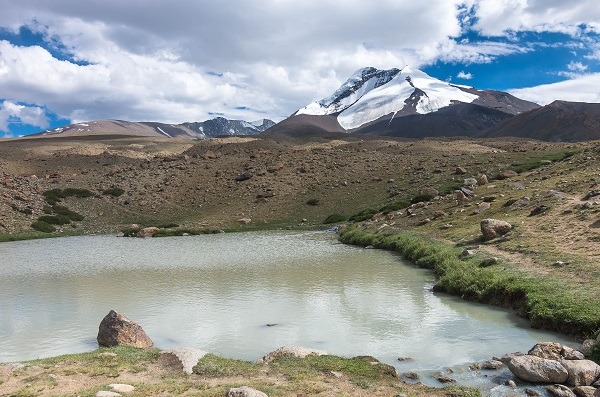
Zanskar River
The Zanskar River carves one of the deepest gorges in the Indian Himalaya. In winter, its frozen bed forms the Chadar Trek; in summer, its rapids attract rafting enthusiasts.
The Zanskar River originates in the high plateaus of Zanskar in Ladakh, before joining the Indus near Nimmu. Nestled between red sandstone and limestone cliffs, it carves one of the most spectacular gorges in the Himalaya. In winter, its frozen bed becomes the Chadar Trek, the historic sole communication route between the isolated villages of Zanskar and the rest of Ladakh.
Practical information at a glance
- Access: the Padum–Kargil road runs along the upper valley; the confluence with the Indus is accessible from Leh via Nimmu (approximately 35 km).
- Best rafting season: June to September, when waters are navigable.
- Chadar Trek: January–February only, depending on ice conditions; permit required for restricted zones.
- Recommended duration: half a day for the Nimmu confluence; several days for the complete Chadar Trek.
- Altitude: the valley ranges between 3,500 m and over 4,000 m — acclimatization is essential.
- Accessibility for visitors with reduced mobility: very limited; mountainous terrain and unmaintained tracks.
What you'll see
The river presents two radically different faces depending on the season. In summer, a tumultuous turquoise torrent winds between ochre and grey walls, prized for rafting and kayaking. In winter, the frozen surface forms the Chadar — literally "sheet" — a corridor of blue ice that Zanskar inhabitants have crossed on foot for centuries.
The confluence with the Indus at Nimmu is striking: the milky waters of the Zanskar contrast sharply with the blue-green of the Indus, the two hues remaining distinct for several hundred meters.
History and context
Before the opening of the Padum–Kargil road, the Chadar was the only winter exit for Zanskar inhabitants, cut off from the world by snow. They transported goods and the sick to Chilling, then to Leh. This ancestral practice dates back several centuries and still shapes the region's identity. Today, the Chadar Trek attracts trekkers from around the world, raising questions about preserving this fragile ecosystem.
Highlights of the visit
The Nimmu confluence
Accessible by car from Leh, this meeting point between Zanskar and Indus is one of Ladakh's most photographed panoramas. The color difference between the two rivers is visible to the naked eye, particularly in summer when snowmelt loads the Zanskar with light sediments.
The Chadar Trek
Walking on the frozen river, between walls of ice and vertical cliffs, is an unparalleled experience in India. The trek typically connects Chilling to Lingshed over several days. The ice cracks, lifts, fissures — each day is different. A local guide and serious winter equipment are essential.
Whitewater rafting
The rapids of the Zanskar, graded between III and IV depending on water flow, attract water sports enthusiasts in summer. Descents typically depart from Padum or Zangla and reach the confluence with the Indus over several days.
Photography tips
- Nimmu confluence: morning light (before 9 a.m.) to avoid heat haze and obtain sharp contrast between the two rivers.
- Chadar Trek: blue ice textures show best mid-day; extreme cold drains batteries quickly — keep them warm under your clothing.
- Summer gorges: a wide-angle lens emphasizes the verticality of the walls; from a raft, reflections on turquoise water are particularly intense.
- No known photography restrictions on the river itself; check local rules near riverside monasteries.
Location and access
The Zanskar River flows entirely within the territory of Ladakh (India). The confluence with the Indus is located at Nimmu, approximately 35 km west of Leh via the NH1 national highway. The upper Zanskar valley, around Padum, is accessible via the Kargil–Padum road (open in summer only) or by helicopter in winter. No regular public transport serves Padum from Leh; shared jeeps depart from Kargil.
Nearby places accessible from Leh: Thiksey Monastery, Hemis Monastery, Indus-Zanskar confluence at Nimmu.
Surroundings
- Phugtal Monastery — cave monastery clinging to a cliff in the upper Zanskar valley, accessible only on foot.
- Padum — administrative capital of Zanskar, departure point for treks and long-distance rafting.
- Karsha Monastery — the largest monastery in Zanskar, visible from Padum on the opposite bank.
- Chilling — departure village for the Chadar Trek, also known for its copper artisans.
Frequently asked questions
January and February, when the river is sufficiently frozen to be passable. Conditions vary each year depending on temperatures; check with a local agency before departing.
Certain areas of Zanskar are classified as "restricted zones" and require an Inner Line Permit (ILP), obtained in Leh. Check current requirements with local authorities or your agency, as regulations evolve.
Some sections feature grade III-IV rapids, not recommended for inexperienced beginners. Calmer sections exist; specify your level to the operator to choose the right itinerary.
By taxi or rental car from Leh, the confluence is approximately 35 km via NH1 toward Kargil. Expect less than an hour's drive. No regular buses stop there specifically.
Extreme cold gear is essential: down jacket, thermal base layers, waterproof gloves, ice-suitable crampons. Temperatures regularly drop below −20 °C at night.
Yes. The upper valley concentrates several major monasteries (Phugtal, Karsha, Stongdey). A multi-day circuit from Padum allows you to combine trekking, rafting and cultural visits.
Interested in this visit?
We can include it in your personalised itinerary.